


More Episodes to Explore
Find your next favorite episode and keep the conversation going.
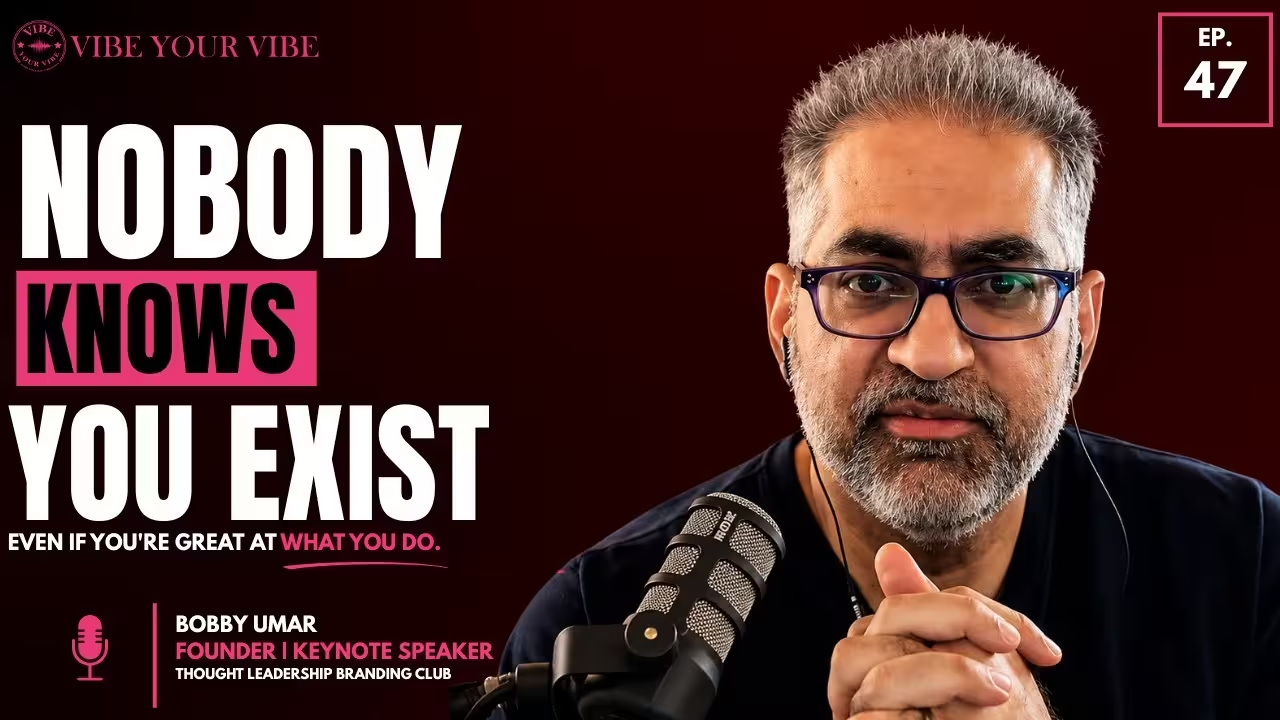
Nobody Knows You Exist: Bobby Umar on Visibility, Influence & Personal Branding
Bobby Umar Learn More About Bobby Play Episode Facebook Instagram Youtube Linkedin Keep Listening...
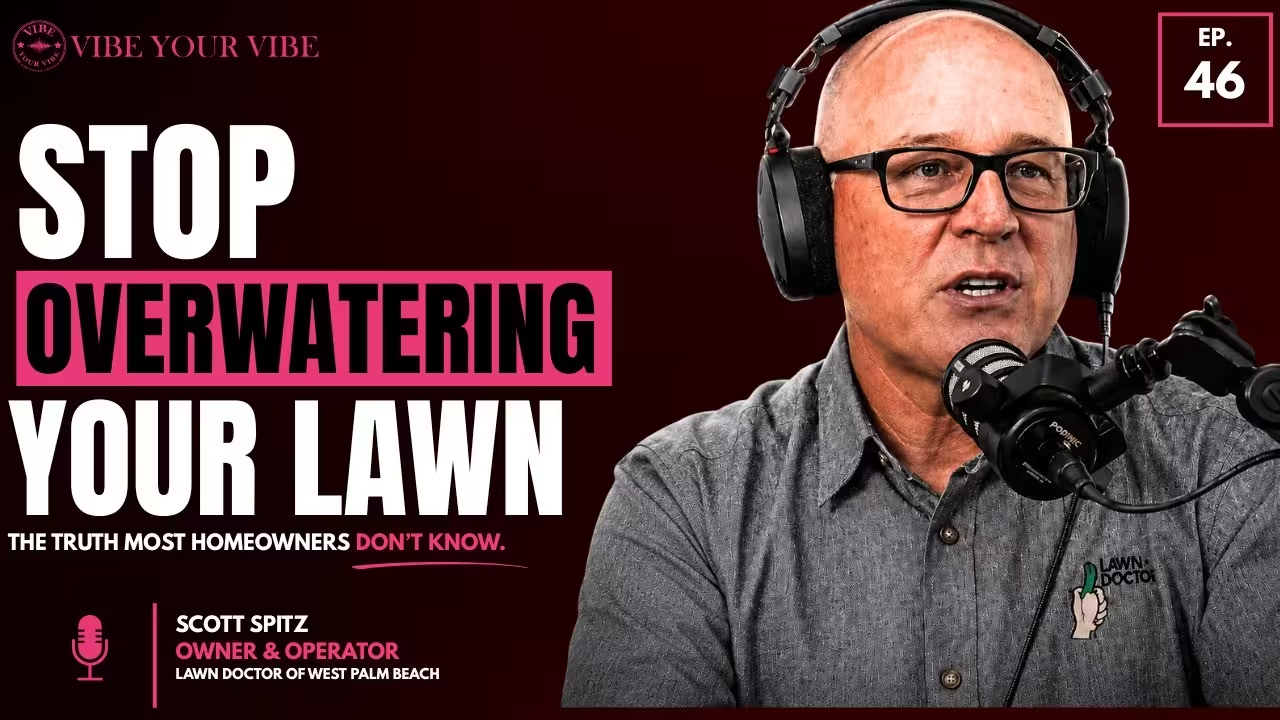
Stop Overwatering Your Lawn (And Every Other Mistake Florida Homeowners Make)
Scott Spitz Learn More About Scott Play Episode Facebook Instagram Youtube Linkedin Keep Listening...

From Empty Warehouse to 120 Creators: Trina’s Studio 1016 Story
Trina Chaney-Hoo Learn More About Trina Play Episode Facebook Instagram Youtube Linkedin Keep Listening...
- Why chronic inflammation is linked to many modern diseases
- The difference between symptom treatment and root-cause medicine
- How stress, diet, and lifestyle quietly drive inflammation
- Functional medicine testing and how doctors identify hidden health issues
- The connection between hormones, gut health, and immune balance
- Practical lifestyle changes that help reduce inflammation naturally
- Why prevention and education are becoming the future of healthcare
- Chronic inflammation can affect energy, mood, brain function, and overall health.
- Gut health plays an important role in immunity and brain function.
- Leaky gut can contribute to inflammation throughout the body.
- An unhealthy gut microbiome can become a major source of inflammation.
- Food sensitivities may be an overlooked trigger of chronic inflammation.
- Functional testing can help identify hidden health issues and root causes.
- High sugar and processed foods can contribute to inflammation.
- Stress, diet, and lifestyle habits can all influence chronic inflammation.
- Toxic exposure, mold, and heavy metals may also affect overall health.
- A personalized approach can help address the underlying causes of health problems.
[00:00:05] Try to stay away from high sugar loaded
[00:00:09] food such as tropical fruits like a
[00:00:11] mango and watermelon like you mentioned
[00:00:14] pineapple. Those are loaded with
[00:00:17] fructose.
[00:00:18] >> [music]
[00:00:26] [music]
[00:00:30] >> Today's conversation is about
[00:00:32] inflammation, the silent fire in the
[00:00:35] body. Most of us only notice it when
[00:00:37] things go wrong. Fatigue, brain fog,
[00:00:40] hormone issues, pain. We typically see
[00:00:43] doctors to treat the symptoms, but we
[00:00:45] rarely ask why am I going through this?
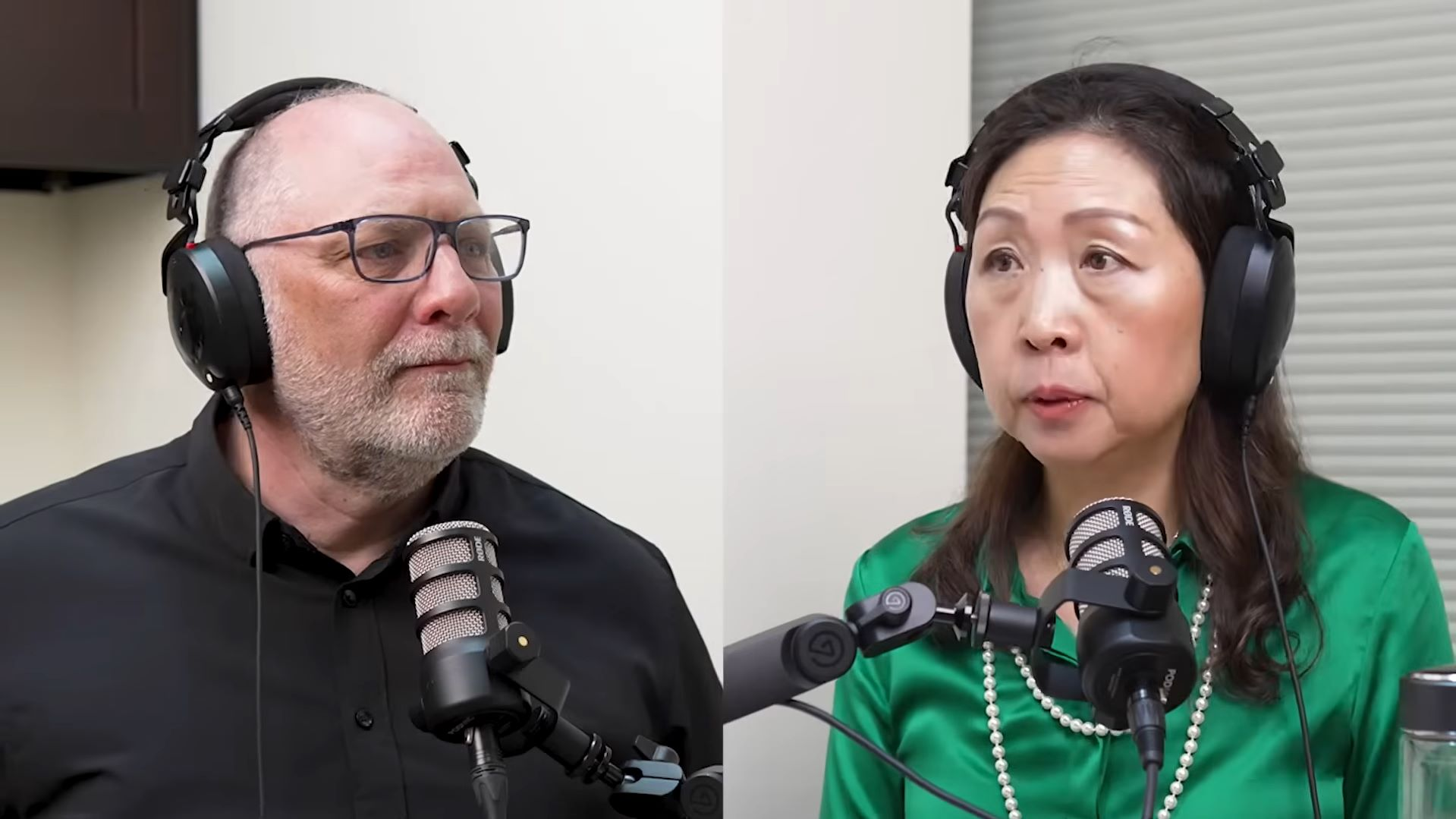
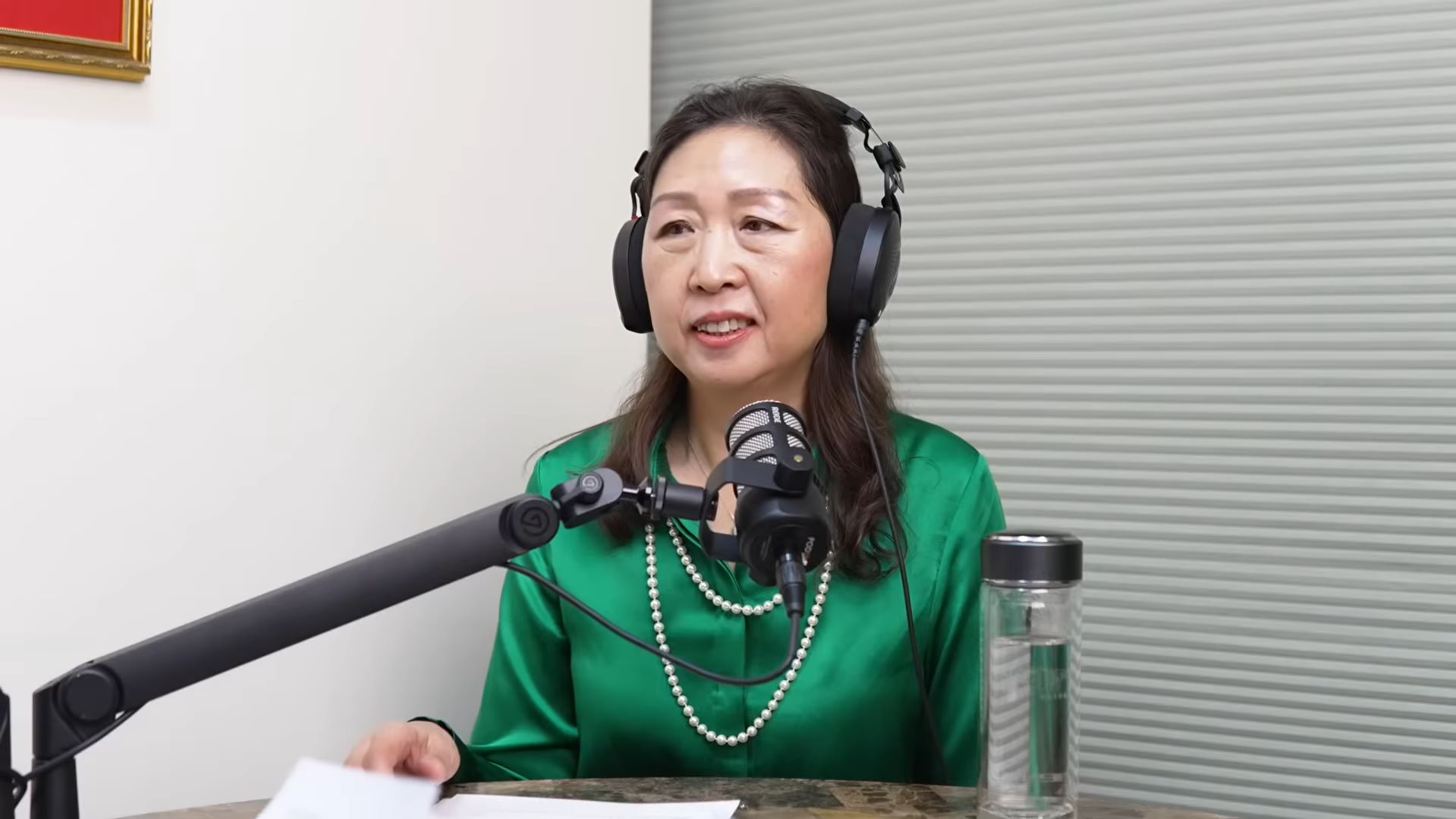
[00:00:48] So my guest today is my doctor, Dr. Joy
[00:00:51] How. She's a functional and integrative
[00:00:53] medicine physician in Boca Raton. She
[00:00:56] helps people uncover the root cause of
[00:00:58] chronic issues by blending western
[00:01:00] science and eastern healing. Dr. How,
[00:01:02] welcome to Vibe Your Vibe. Thanks for
[00:01:04] being here. Oh, thank you. Thank you
[00:01:06] Kirk for inviting me. Today, you know,
[00:01:09] we want to talk about a chronic
[00:01:10] inflammation. So if you could stop a
[00:01:13] single process in your body and that one
[00:01:17] can silently drive a heart disease,
[00:01:21] Alzheimer's, autoimmune disorders, and
[00:01:24] even cancer. So would you want to know
[00:01:26] how? This process is our topic is the
[00:01:30] chronic inflammation. Chronic
[00:01:32] inflammation majority of us all
[00:01:34] experience and is low grade
[00:01:38] systemic inflammation. Sometimes you
[00:01:40] don't even see. You cannot eat
[00:01:43] invisible. Well, it's like it's like the
[00:01:46] the frog in the pot, right? And you just
[00:01:48] keep turning the heat up a little by
[00:01:49] little by little. The inflammation keeps
[00:01:52] growing very gradually over time.
[00:01:55] >> Exactly. And you don't even really and
[00:01:57] the next thing you know, now you've got
[00:02:00] all these different symptoms I went
[00:02:01] through with chronic the brain fog, the
[00:02:04] fatigue, your hormone, pain.
[00:02:06] >> Yeah, lots of people wait until like
[00:02:09] we normally ignore
[00:02:11] the little signals. Yeah.
[00:02:13] >> What are some of those small signals
[00:02:14] that we might not
[00:02:15] >> Small signals, small signals like you
[00:02:18] know, fatigue persistently.
[00:02:22] Persistent fatigue and when you rest
[00:02:26] the fatigue continues.
[00:02:28] So the the rest couldn't fix the
[00:02:31] fatigue. So that's a very common one of
[00:02:34] the common symptoms.
[00:02:35] >> Ah, so you're resting, but you're not
[00:02:38] really resting. Yeah. Yeah, you're
[00:02:40] resting, but you still after you rest,
[00:02:44] the fatigue is still continue. Like you
[00:02:46] still feel like low energy. You don't
[00:02:48] feel you refreshed. Mhm. So that's one
[00:02:53] and the brain fog is a very common like
[00:02:56] we hear clinically and
[00:02:59] probably the next one, the second most
[00:03:03] common
[00:03:04] complaint right after fatigue.
[00:03:07] >> not you're just not
[00:03:08] You're not sharp. You have a trouble
[00:03:10] concentrating. You couldn't finish your
[00:03:13] task. So sort of is it sort of like ADD
[00:03:16] or ADHD, but that you don't have a
[00:03:18] history of it?
[00:03:19] >> Yeah. And and so all of a sudden you're
[00:03:22] having struggles with concentration.
[00:03:24] >> patient mentioned to me, she said my
[00:03:26] husband and my mother both confronted me
[00:03:30] said we had some conversation, but I
[00:03:33] don't remember them at all. Oh, wow.
[00:03:36] >> Yeah, so she just don't remember. She
[00:03:38] just she doesn't remember. Yeah.
[00:03:40] >> Both her
[00:03:41] husband and her mother
[00:03:42] >> mother said yes, we talked about this.
[00:03:45] Yeah.
[00:03:45] >> but I she has no recollection So that
[00:03:48] really That's kind of a definition of
[00:03:50] kind of what this brain fog is. Is there
[00:03:52] a clinical term for brain fog? It's kind
[00:03:54] of like a precursor to cognitive
[00:03:57] decline. You know, it's not that severe
[00:03:59] yet. Mhm. But it's just like also you in
[00:04:02] your brain is in a cloud or like we have
[00:04:05] a patient patients coming here and you
[00:04:09] know, you explain to you explain certain
[00:04:12] concept and so you I have to explain
[00:04:14] like a three or four times because they
[00:04:17] just very slow for them to understand.
[00:04:22] That's also brain fog. Okay. Yeah, also
[00:04:25] if you tell them to do certain thing the
[00:04:27] following is not like they are not
[00:04:29] willing to. They just don't remember.
[00:04:31] >> Is this age based at all or do you see
[00:04:33] it at all ages or
[00:04:35] >> All ages. All ages. Yeah, especially
[00:04:38] post pandemic and we we see lots of
[00:04:43] young people. Younger people
[00:04:45] >> Younger people also have a brain fog.
[00:04:47] Mhm. Is this impacting
[00:04:50] like their work and
[00:04:51] >> Oh, yeah, absolutely.
[00:04:53] Job situation,
[00:04:55] relationship.
[00:04:56] >> I guess in any relationship, right? I
[00:04:58] think maybe they're not remembering,
[00:05:01] they're forgetting, people are losing
[00:05:03] their patience or maybe even getting
[00:05:05] angry with them. And they're not doing
[00:05:08] they're Yeah. Like they're doing it on
[00:05:09] purpose, I guess is what I'm saying and
[00:05:11] they're not doing it on purpose. They're
[00:05:12] just they're just not the the brain
[00:05:14] doesn't working like it used to.
[00:05:15] >> Exactly. It's it's not
[00:05:17] >> people are people that they've known. So
[00:05:19] they've known them before and now
[00:05:21] there's this situation going on and
[00:05:24] you're saying this is a this is part of
[00:05:26] the
[00:05:27] chronic
[00:05:27] >> of like the chronic inflammation.
[00:05:29] >> Yeah, your body give you the red flag or
[00:05:35] we call signals. But lots of times we
[00:05:37] just ignore it, you know, but we do have
[00:05:40] we also do have a people of try to be on
[00:05:43] top of things. So they realize this is
[00:05:45] not normal. Those are the common
[00:05:48] clinical signs like indicating you do
[00:05:51] have a chronic fatigue. Fatigue we talk
[00:05:54] about chronic inflammation. We talk
[00:05:56] about a fatigue. We talked about a brain
[00:05:58] fog. Also lots of joint pain, body
[00:06:00] aching, muscle soreness, weight gain.
[00:06:04] Weight gain is a big deal. Lots of
[00:06:06] weight gain unexplained. Like you know,
[00:06:09] I'm eating right, you know, I try to
[00:06:11] exercise. So I'm still have a weight
[00:06:14] gain. So weight gain, skin problem. Lots
[00:06:17] of people come in for skin problem
[00:06:20] because skin is our largest organ.
[00:06:22] Largest by weight or by
[00:06:25] >> Largest by the surface. Surface.
[00:06:27] >> Yes, so acne, psoriasis, eczema, you
[00:06:31] know, we treat those, you know, on daily
[00:06:33] basis. Oh, wow.
[00:06:35] >> So but but that is not just your skin.
[00:06:39] Really indicating the chronic
[00:06:41] inflammation.
[00:06:42] >> is being a functional functional and
[00:06:44] integrative
[00:06:46] medicine physician. Yeah. Is that you're
[00:06:49] not just giving a creams that are not
[00:06:50] itching anymore. Right. Yeah, we tried
[00:06:53] to
[00:06:53] >> okay, we can you know, you can go to the
[00:06:55] doc, they're going to give you a you
[00:06:57] know, I don't know, hydrocortisone or
[00:06:58] some other kind of cream that would
[00:07:00] prevent itching. I guess that's Is that
[00:07:02] the main complaint and discomfort with
[00:07:06] psoriasis as an example is does it itch?
[00:07:09] I don't have psoriasis so I don't know.
[00:07:11] Yeah, you know, acne you know, like acne
[00:07:13] now is not just
[00:07:16] limited to like you know, teenager and
[00:07:19] young people, but a lots of adults like
[00:07:21] older also have acne problem. Recently I
[00:07:24] saw a patient
[00:07:26] 41 year old. So her she just couldn't
[00:07:30] have control her acne. Really? So she
[00:07:33] went through possibly acne in
[00:07:34] adolescence and she grew out of that
[00:07:37] and now as a 40 year old
[00:07:39] >> 41 year old. So she's still
[00:07:41] dealing
[00:07:41] >> still dealing with acne and can be
[00:07:44] sometimes can be cystic bad for her.
[00:07:47] Definitely I needed to dig out, you
[00:07:49] know, what exactly
[00:07:52] wrong. Also where is her inflammation?
[00:07:56] Where is the location? How we
[00:07:58] you know, how we how for her control the
[00:08:01] inflammation.
[00:08:02] >> And then how how do you find that out?
[00:08:04] >> yeah, we are going to talk about the
[00:08:06] treat the diagnosis. So what are some of
[00:08:09] the things that you can you can do that
[00:08:13] you we talked kind of about these subtle
[00:08:14] signs and the hidden triggers and
[00:08:16] whatnot. I guess what I want to get into
[00:08:18] now is how is functional medicine
[00:08:20] different? And maybe talk about your
[00:08:22] background cuz did you did you start out
[00:08:24] in functional medicine? Was that how you
[00:08:26] got started or Yeah, so Kirk, you know,
[00:08:30] my background is very unique. So I had
[00:08:35] my medical education in China. And in
[00:08:39] China we have two different types of
[00:08:42] medical school. One kind is all western
[00:08:46] medicine teaching, you know, all the
[00:08:48] western medicine. But in my medical
[00:08:50] school was a mix. We trained us for both
[00:08:54] both western medicine and the Chinese
[00:08:56] medicine. And also I did a like eight
[00:08:58] years training in China. Five years
[00:09:01] medical school in China, then I also did
[00:09:04] a my master
[00:09:06] degree in longevity medicine. And so but
[00:09:09] you know, so I have a both trainings.
[00:09:11] Western medicine and the traditional
[00:09:13] Chinese medicine.
[00:09:14] >> viewers who don't quite understand the
[00:09:16] difference, can you maybe explain a
[00:09:17] little bit what the difference is with
[00:09:19] the
[00:09:20] the Chinese The differences?
[00:09:22] >> Yeah, medicine.
[00:09:23] >> So western medicine,
[00:09:26] you know, I'm
[00:09:27] I'm kind of like because I have both
[00:09:29] trainings. So I see
[00:09:33] both at event, you know, both have their
[00:09:34] advantages. Western medicine is good for
[00:09:37] urgent care, surgery, acute care. But in
[00:09:41] terms of a chronic disease prevention or
[00:09:45] treatment or management, so definitely
[00:09:48] not sufficient or not even that's not
[00:09:52] their advantage. Not a western medicine.
[00:09:54] Not
[00:09:55] >> Right, when you talk about that, It's
[00:09:57] the
[00:09:58] like the care process or something. Like
[00:10:00] you come see a doctor, the way it works
[00:10:03] is you really the way Western medicine
[00:10:05] works is you go for like an annual
[00:10:07] checkup. They run maybe some traditional
[00:10:10] laboratory blood laboratories. They look
[00:10:12] at those results and as long as
[00:10:14] everything's in range, you're good.
[00:10:16] Right. Yes.
[00:10:18] >> come back and see me if you get, you
[00:10:19] know, sick or you get an infection or
[00:10:21] something like come back and see me I
[00:10:22] can give you you know, medicines and
[00:10:25] prescriptions to
[00:10:26] to address those issues. And typically
[00:10:29] those medicines address the symptoms.
[00:10:32] Right. Almost like we can think about
[00:10:36] Western medicine as
[00:10:38] firefighter. Like when the fire really
[00:10:41] visible, okay, let's go. Let's let's put
[00:10:43] it down the fire, you know, like the
[00:10:45] patient already develop a heart disease
[00:10:47] and you know, diabetes
[00:10:49] out of control and Alzheimer's and
[00:10:54] autoimmune, you know, Crohn's, colitis,
[00:10:58] psoriasis,
[00:10:59] psoriatic arthritis, you know, like have
[00:11:02] to really visible like a really to the
[00:11:05] extreme. Okay.
[00:11:06] >> Okay. Okay, let's let's see we have
[00:11:08] anything we can put it down the fire.
[00:11:11] But after put it down the fire, so it's
[00:11:13] not the fire is not a completely gone
[00:11:15] because the the still is the inside is
[00:11:17] still still boiling. Really not try to
[00:11:21] solve the problem from the root.
[00:11:24] It's almost like a Like you could get a
[00:11:26] I guess a good example would be even you
[00:11:28] could get a like a stent put in. Yeah.
[00:11:31] >> Which actually fixes the problem. If you
[00:11:33] don't change some behaviors and living
[00:11:36] if you don't change any behaviors
[00:11:39] >> what you're doing on a daily basis,
[00:11:41] you're probably going to have to
[00:11:43] possibly redo that or am I right? Is
[00:11:45] that Yeah, yeah, no. I had a patient uh
[00:11:48] had
[00:11:49] five or six stents put in. So it's
[00:11:52] really not really not a good solution,
[00:11:55] right? So Well, it it it fixes the
[00:11:58] initial
[00:12:00] you know, risk of of of
[00:12:03] >> yeah. So like Firefighter. I think
[00:12:04] [laughter] I I think that's a good
[00:12:05] that's a really good Yeah, but it's
[00:12:06] still there's still some smoldering
[00:12:08] going on.
[00:12:08] >> Exactly. Yes.
[00:12:10] And there's there's some structure
[00:12:12] that's damaged.
[00:12:13] >> Yes. Yes, absolutely. And also now we
[00:12:17] talk about the Now we talk about a lots
[00:12:19] of uh
[00:12:20] not a lifespan, health span. Like how
[00:12:23] many years you can live a healthy,
[00:12:27] uh productive, a joyful life. Exactly.
[00:12:31] >> not like you laying in your bed Yeah.
[00:12:34] and then you're popping these drugs to
[00:12:36] manage that pain and you don't have the
[00:12:39] energy you used to and you're just the
[00:12:41] quality of life just isn't quite the
[00:12:42] same as if you're feeling invigorated
[00:12:45] and you wake up every day and you're
[00:12:46] ready to go and Yes. and uh Yeah, so
[00:12:50] >> a restful and you have a restful sleep.
[00:12:52] I mean cuz you can I guess with the meds
[00:12:54] they work, right? There's meds that you
[00:12:56] can take that help you sleep and I'm
[00:12:58] sure you're able to prescribe those too,
[00:13:00] right?
[00:13:00] >> Yeah. Except there's always a counter to
[00:13:03] that.
[00:13:04] >> Yeah. Typically. Mhm. Usually there's
[00:13:06] pages of all the potential side effects
[00:13:09] and things that can happen. Yeah. And
[00:13:12] versus going in really addressing a lot
[00:13:16] of the things that you can do as an
[00:13:18] example I go back to the sleep thing. I
[00:13:19] just happen to know this cuz I know
[00:13:21] someone who's struggling with this and
[00:13:23] you know, having a good routine for
[00:13:25] sleep is probably again going back to
[00:13:28] the root cause if someone's not asking
[00:13:30] the right questions like hey doc, I'm
[00:13:31] not sleeping very well, which is why you
[00:13:33] have longer sessions with your patients.
[00:13:35] Mhm. Yeah. So you can dig in a little
[00:13:37] deeper. Yeah, that's that's another
[00:13:39] problem, you know,
[00:13:41] I practice the under insurance coverage
[00:13:44] for for a while. So I realized I cannot
[00:13:49] I couldn't just continue like that
[00:13:51] because you couldn't you you you go go
[00:13:54] go. You didn't they limit
[00:13:56] >> limit your time and
[00:13:57] >> Did they limit your time or is it just a
[00:13:59] matter of the pay was just you had to
[00:14:02] see so many patients just to make it
[00:14:03] worthwhile. You got a large facility,
[00:14:05] you have staff, you got obviously
[00:14:07] there's a cost to running a practice,
[00:14:09] right?
[00:14:10] >> You're right, but many factors in the
[00:14:13] reimbursement are really bad and also uh
[00:14:16] the time limit and plus you you have to
[00:14:22] follow so-called the guidelines. That's
[00:14:25] go back to what I was talking about the
[00:14:26] guidelines.
[00:14:27] >> so it's a really
[00:14:28] >> What's that What are those guidelines
[00:14:29] called?
[00:14:30] >> You know, like you you have
[00:14:32] >> guideline.
[00:14:32] >> Yeah, you you give this, you treat a
[00:14:35] cholesterol, high cholesterol, you give
[00:14:37] a statin, you know,
[00:14:39] uh pre-diabetes, you give a metformin
[00:14:43] and you know, if already
[00:14:45] diabetes, you you treat it like this
[00:14:48] drugs. So it's really really limit the
[00:14:53] physicians to you know, try to educate a
[00:14:57] patient, find out a root causes, to
[00:15:00] educate patient on lifestyle changes,
[00:15:04] mental health, weight you know, good
[00:15:07] weight control, weight management
[00:15:09] anti-inflammatory diet, you know, so
[00:15:11] many I want to talk about. So it's just
[00:15:13] a really not no way to do it. Now I feel
[00:15:18] definitely I'm you know, I don't take
[00:15:20] insurance. We are fee for service. I
[00:15:22] think it's giving me so much uh power.
[00:15:26] So much uh time also to to do what you
[00:15:30] know, the things I want to do. The
[00:15:32] message I want to relay to the patient
[00:15:35] and also I see them, you know, one by
[00:15:38] one. We help people I always tell my
[00:15:40] staff
[00:15:41] my team. So we help one patient at a
[00:15:44] time. Mhm. Yeah. Right. Yes, we want to
[00:15:47] also educate our community. But when
[00:15:49] patient come to me, we are the office
[00:15:52] really treating patient. Lots of Now
[00:15:56] like you you know,
[00:15:58] quite a lot of centers and clinics. So
[00:16:03] they they do IVs, they sell products and
[00:16:07] then So the some of them don't even have
[00:16:10] a physician on site. Most of the lots of
[00:16:13] them don't treat a patient. Don't like
[00:16:16] you know, do like a face-to-face
[00:16:18] conversation or consultation with the
[00:16:20] patients and we do. I spend a whole hour
[00:16:24] or even longer if a patient desires. So
[00:16:28] and to go through detail
[00:16:31] medical history and you know, symptoms,
[00:16:35] their concerns, their you know, their
[00:16:38] their goal, their lifestyle. So
[00:16:41] we able to you know, what to order, what
[00:16:45] to test, what to you know, how to
[00:16:47] identify their root causes, their the
[00:16:50] problem of their problem, clinical
[00:16:52] symptoms. And that's the thing is that
[00:16:54] it's still a layered approach. Yeah. I I
[00:16:57] don't I guess can I share my story? I
[00:16:58] guess I can. It's my choice, right? It's
[00:17:00] my story. So I came to Dr. Hall Well, I
[00:17:04] came to Dr. Hall before this. This is
[00:17:06] while Dr. Hall was still my physician.
[00:17:08] And so I came to Dr. Hall after she's my
[00:17:10] physician and I was having some gut
[00:17:13] issues. She's like, oh wow.
[00:17:15] Yeah, that's not good. So we did some
[00:17:18] tests, took the test and she's like,
[00:17:19] okay, we're going to put you on this
[00:17:21] diet, put me on the diet and then I
[00:17:23] didn't get any better. And this is the
[00:17:25] whole thing.
[00:17:26] >> [laughter]
[00:17:27] >> So she's like, hmm, this isn't making
[00:17:29] any sense. We need to do another test.
[00:17:31] So what the test that we did I forgot
[00:17:34] what it's called. It's
[00:17:35] >> Food sensitivity.
[00:17:37] >> and we found out that the diet I was on
[00:17:39] she it's really good. It's highly rated.
[00:17:41] You go look at the reviews, you look at
[00:17:43] the research, you look at everything
[00:17:45] about that particular diet supplement
[00:17:47] shake thing that you had me on to try to
[00:17:50] help me.
[00:17:51] And guess what? It had I don't know,
[00:17:53] three or four five
[00:17:54] >> [laughter]
[00:17:55] >> ingredients
[00:17:56] >> Yeah. from the food sensitivities going
[00:17:58] back to causing inflammation, which is
[00:18:00] why I wasn't getting any better. So then
[00:18:02] we focused on the food sensitivities,
[00:18:05] changed up the diet. We did several
[00:18:07] tests cuz we found out there was
[00:18:08] yeast cuz I had been chugging kombucha.
[00:18:13] >> [laughter]
[00:18:14] >> So my yeast was out of control and so
[00:18:18] the supplement What was that supplement?
[00:18:19] Cuz it originally you had put me on it
[00:18:21] was in a in a capsule form. Mhm. Then we
[00:18:24] had to go to like large amounts of
[00:18:26] powder. Was that probiotic? Is that what
[00:18:29] it is? I believe you I put you on high
[00:18:32] dose probiotic. Right. I'm not on it
[00:18:35] anymore.
[00:18:36] >> 350 billion a day for you. Yeah.
[00:18:40] But it worked.
[00:18:40] >> Yeah. So we got rid of the inflammation
[00:18:43] inflammatory foods,
[00:18:45] on a high probiotic and wow, I'm doing
[00:18:49] great now and then found out that I'm
[00:18:50] low on fiber.
[00:18:52] Um we did another test and so
[00:18:55] So I'm doing the avocados. Yeah. For
[00:18:58] those folks out there, I'm just going to
[00:19:00] tell you it's it's really tough cuz
[00:19:01] you're like, you know, you have to
[00:19:03] really weigh do I like eating this or do
[00:19:05] I want to feel better? I'm going to I'm
[00:19:07] not going to lie to you. I do not like
[00:19:08] eating avocados.
[00:19:10] >> [laughter]
[00:19:10] >> But they make me feel better and they're
[00:19:12] so dense in fiber.
[00:19:13] >> Yes. I mean what is it? 4 g for one
[00:19:15] avocado or something crazy?
[00:19:17] >> One medium size avocado give you 9 g of
[00:19:21] fiber.
[00:19:22] >> And plus you have no trouble like on
[00:19:25] your food sensitivity test you had no
[00:19:29] trouble with avocado.
[00:19:31] >> So it's a it's a That's the thing like
[00:19:33] if avocado was on what is it? orange red
[00:19:36] or definitely don't eat it, you wouldn't
[00:19:38] we wouldn't be going down that path. But
[00:19:40] But I have two of those. So I'm getting
[00:19:41] like
[00:19:42] >> a 18 plus you know, you probably got a
[00:19:45] fiber from other foods. Well, I do a
[00:19:47] shake and I add fiber to that. So I'm
[00:19:49] getting another it's what is it? 4 g per
[00:19:52] 4 g per scoop? I'm doing two scoops of
[00:19:54] that, so that's giving me
[00:19:55] >> That's eight. Yeah. So, I'm at like 26.
[00:19:59] >> plus eight you got 26.
[00:20:03] >> And I'm probably getting a little bit
[00:20:04] from some other stuff.
[00:20:05] >> Yeah, you got the other stuff, so you
[00:20:06] good.
[00:20:07] >> Yeah. And that's and and the thing is is
[00:20:10] you don't Everybody's different.
[00:20:12] >> Yeah, everybody different.
[00:20:13] >> You could eat the exact same diet that
[00:20:14] I've got and you're going to be having
[00:20:16] way too much. Yeah.
[00:20:17] >> Right? Like you could have you could eat
[00:20:19] the two scoops and the avocados and all
[00:20:21] that and you could be going like, you
[00:20:23] know, for whatever reason the way your
[00:20:24] body reacts to everything, I'm not
[00:20:26] advocating everybody eat avocados. It's
[00:20:27] just you have to come see Dr. Hahl, you
[00:20:29] got to do these tests, you got to figure
[00:20:31] out
[00:20:32] >> Yes. what is my approach going to be to
[00:20:35] get to where I want to go.
[00:20:36] >> Yeah, but once you mentioned that
[00:20:39] I do want to tell you
[00:20:42] my patient of from yesterday. He's in
[00:20:44] her in his early 30s. So, this yesterday
[00:20:49] was his second visit with me. The first
[00:20:52] visit
[00:20:53] was
[00:20:55] a few weeks ago. He came in really low
[00:20:58] mood because he's he has been suffered
[00:21:02] from Crohn's disease since age of 16.
[00:21:05] Oh, wow. Um over the years saw so many
[00:21:09] GI doctors, you know, specialists for
[00:21:12] his Crohn's and they put him on many
[00:21:16] different biologics, steroids, you know.
[00:21:20] I kind of like like I mentioned to you
[00:21:21] is like a firefighter. Okay, oh yeah,
[00:21:24] it's another flare up. Okay, we we just
[00:21:26] threw the do this, do every flare up.
[00:21:28] Okay, steroid and after steroid, okay,
[00:21:31] you are immune suppressant, you are
[00:21:34] biologic. Two or three years ago he
[00:21:36] said, "I'm done. I'm just fed up so it
[00:21:39] because I just don't feel well at all."
[00:21:42] And those drugs actually made me really
[00:21:45] even sicker. So, he gave up that. In
[00:21:49] between he kind of like a saw a couple
[00:21:51] other, you know, so I don't know
[00:21:53] functional
[00:21:54] providers. I don't really know. He said
[00:21:57] that he didn't feel didn't feel right.
[00:22:00] So, when he came to me, he was really
[00:22:02] like in no appetite, losing weight
[00:22:05] quickly
[00:22:07] and still like have,
[00:22:09] you know, blood in the past in the
[00:22:11] stool,
[00:22:12] really weak. So, he said, "Dr. Hahl, can
[00:22:15] you like I need a feel better as soon as
[00:22:19] possible and I cannot work like this.
[00:22:22] Uh
[00:22:23] you know, I cannot function like this. I
[00:22:25] also affect my work. And so, I look at
[00:22:29] it he brought some bunch of blood work.
[00:22:31] So, I look at I said, "Okay, we needed
[00:22:33] to get your iron up. Your iron is really
[00:22:36] extremely low." So, I I said, "I'm going
[00:22:38] to let you do some stool testing and
[00:22:42] food testing, food sensitivity testing
[00:22:45] because those two testing are essential
[00:22:46] for you." He said, "Okay, let's do it."
[00:22:48] He's very compliant. So, I said, "After
[00:22:51] you send out your stool kit, you know,
[00:22:54] to for the testing,
[00:22:55] I want you to start taking high dose
[00:22:58] probiotic,
[00:23:00] uh the one I put you on, 350." He
[00:23:03] definitely followed the instructions.
[00:23:04] Yesterday he came back. He was like
[00:23:07] completely like already like a different
[00:23:09] person. He said, "Dr. I feel so much
[00:23:12] better. My stool started to form to be,
[00:23:15] you know, formed and I have a better
[00:23:18] energy." So, we review the food
[00:23:21] sensitivity testing together. And very
[00:23:23] interesting you mentioned avocado and
[00:23:26] he's think he he actually eats avocado
[00:23:30] on daily basis. He thought avocado is
[00:23:32] good for him.
[00:23:33] >> Yeah, cuz of the fiber.
[00:23:34] >> Yeah, so he actually have a few things
[00:23:36] he's eating a not a not a good for him.
[00:23:40] So, yesterday we find out avocado is he
[00:23:43] has a moderate sensitivity to avocado
[00:23:45] and he has a moderate sensitivity to
[00:23:47] gluten and dairy. There you go. You
[00:23:51] know, so he's doing it to himself. He's
[00:23:52] thinking he's eating right.
[00:23:53] >> Yeah, yeah. You know, by having an
[00:23:55] avocado.
[00:23:56] >> moderate sensitivity to apple and the
[00:23:58] white potato. That's the few things we
[00:24:01] circled. I said, "Okay,
[00:24:03] take a home point,
[00:24:04] >> [laughter]
[00:24:04] >> stay away from those for three to six
[00:24:06] months."
[00:24:06] >> I was eating apples, too, and apples on
[00:24:09] my list is since it sensitive.
[00:24:11] >> Yeah. So, it's a very important is this
[00:24:14] is we call it individualized
[00:24:16] or personalized medicine.
[00:24:18] >> Mhm. Yeah. I have since you're talking
[00:24:19] about the test, I thought this is kind
[00:24:20] of funny, too, cuz I you had me come in
[00:24:22] you're like, you know, "How's your mood?
[00:24:24] How's this?"
[00:24:25] And I was like, "I'm good. I'm all
[00:24:27] right. How's your anxiety? Yeah, I'm all
[00:24:29] right. I don't have any anxiety." So, I
[00:24:31] don't know why we did it, but we decided
[00:24:33] to do a
[00:24:34] neurotransmitter. Yeah.
[00:24:37] >> [laughter]
[00:24:37] >> And I'll I'll never forget it. It was
[00:24:39] like very I don't know what the word is
[00:24:43] and she's like, "So, you even asked me
[00:24:44] again, so how's your anxiety?" Like I'm
[00:24:46] okay. And she's like, "Well, this test
[00:24:49] here says a little different."
[00:24:52] >> [laughter]
[00:24:53] >> I guess you can't fake out the the test,
[00:24:56] can you?
[00:24:57] >> [laughter]
[00:24:58] [gasps]
[00:24:58] >> So, it's a very important to do
[00:25:00] functional testing. So, now you know,
[00:25:04] ask we can ask producer Christian over
[00:25:06] here, how is how is dad's mood?
[00:25:09] Is it better? I'm not perfect, but it's
[00:25:12] [laughter] definitely better. So, yeah,
[00:25:14] so that's it's very important to do all
[00:25:17] of these different
[00:25:18] >> interesting. Come back to our chronic
[00:25:20] inflammation. So, the chronic
[00:25:23] inflammation, you know, affecting almost
[00:25:25] every everything in your body, right?
[00:25:28] The energy, the brain function, the
[00:25:30] mood, Well,
[00:25:32] well, you I'm going to I'm going to
[00:25:34] interrupt you cuz maybe you can speak to
[00:25:36] this, too, cuz a lot of this information
[00:25:38] is contained in the gut.
[00:25:39] >> Yes. But isn't the gut like the second
[00:25:42] brain or something?
[00:25:43] >> Yes. Can you maybe talk about that a
[00:25:45] little bit about how cuz if you got all
[00:25:47] this inflammation and it's all happening
[00:25:49] down here and this is like your second
[00:25:51] brain or first brain maybe even?
[00:25:53] >> Yeah. So, the
[00:25:54] gut is so so important we cannot
[00:25:58] emphasize enough.
[00:26:00] So, you think about 90% of your
[00:26:04] serotonin produced in the gut.
[00:26:06] >> In the gut?
[00:26:06] >> Yeah. And you need that in the brain.
[00:26:08] >> Yes. And also over 70% of our immune
[00:26:12] system reside in the gut. Really depend
[00:26:15] on
[00:26:15] >> gut's not healthy,
[00:26:17] >> IGA level.
[00:26:19] So, [snorts] it's a very important and
[00:26:20] also don't overlook our the little
[00:26:24] friends, you know, the good bacteria.
[00:26:26] So, the good bacteria is so important
[00:26:29] for our immune function. And so, we have
[00:26:32] over the years because I test the gut
[00:26:34] function a lot. Almost every single
[00:26:38] patient I would recommend
[00:26:40] recommend the gut function testing.
[00:26:43] So, majority people don't have enough
[00:26:46] good flora, the little guys, the good
[00:26:49] guys, especially the lactobacillus
[00:26:52] family
[00:26:53] and the bifida bacterium family. So, we
[00:26:56] big on like we really big on give you
[00:27:00] the high quality,
[00:27:02] high
[00:27:03] right dose, not a high dose, but the
[00:27:05] right dose probiotic.
[00:27:07] >> Based on based on you your personal
[00:27:09] situation. Now,
[00:27:10] one of the other results of that that
[00:27:13] stool test, if I'm not mistaken, was
[00:27:15] also parasites. Yes. Now, mine came back
[00:27:18] negative for parasites. Do you come
[00:27:20] across people here in the United States
[00:27:22] that are patients that still end up
[00:27:24] having parasites? Yes. We do find a
[00:27:27] parasites. Yeah. Uh even some patients
[00:27:31] >> that impact inflammation?
[00:27:33] Oh, that's definitely work
[00:27:35] function as
[00:27:37] inflammation trigger. Mhm. Yeah. Uh not
[00:27:40] only, you know, like in the gut you can
[00:27:42] find a so many inflammation triggers
[00:27:46] like
[00:27:47] dysbiosis, which is bad bacteria
[00:27:50] overgrow like in your gut. And also
[00:27:54] uh
[00:27:54] candida, yeast, parasites like you
[00:27:57] mentioned, even like poor digestion. If
[00:28:00] you don't digest your food really well,
[00:28:03] the food particle can be inflammation
[00:28:05] trigger. And don't even mention the
[00:28:09] leaky gut. Lots of people suffer from
[00:28:12] leaky gut.
[00:28:13] >> What what is that? Leaky gut is
[00:28:15] basically means your intestinal
[00:28:18] permeability
[00:28:19] uh increase.
[00:28:21] So, they they normally is like a bricks.
[00:28:23] They they tightly joint together.
[00:28:27] A tight junction. But uh when you have
[00:28:30] certain triggers make them
[00:28:32] almost like a wall you have a many
[00:28:34] holes. Some of the food particle, the
[00:28:37] bad bacteria certain can leak out from
[00:28:41] your intestinal wall to your bloodstream
[00:28:44] Oh, really? causing low grade systemic
[00:28:47] inflammation. So, for leaky gut we uh we
[00:28:50] yeah, we we actually specialize in
[00:28:52] treating leaky gut. So, you you
[00:28:55] definitely How would you know you have a
[00:28:57] leaky gut? So, that's the the functional
[00:29:00] gut testing can No, but
[00:29:02] what's like one of the small Is that
[00:29:04] back to your Back to the inflammation.
[00:29:07] fatigue and brain fog and stuff like
[00:29:09] that. It could be just caused maybe by a
[00:29:11] leaky gut. Oh, yeah. Absolutely. Leaky
[00:29:14] gut the researches show the new research
[00:29:17] show lots of autoimmune disorders
[00:29:20] actually link to leaky gut.
[00:29:23] Oh, really?
[00:29:24] >> Yeah, because why you why your body
[00:29:26] develop a autoimmune? So, why your
[00:29:28] immune system get a confused attacking
[00:29:30] your own tissue or even your DNA, your
[00:29:34] spine, you know, everything, you know,
[00:29:36] so many autoimmune conditions, you know,
[00:29:39] a countless now.
[00:29:41] So, because certain things irritating
[00:29:44] your immune function they make them get
[00:29:46] confused. Almost like you have a
[00:29:48] watchdog. See if guarding your house,
[00:29:50] now the dog attacking the owner. Right.
[00:29:53] That's exactly what happened. So So,
[00:29:55] inflammation, yeah, we can So, two of us
[00:29:59] can probably talk about
[00:30:01] chronic inflammation for forever, but
[00:30:05] but I want to send a message out is like
[00:30:08] a chronic inflammation is a big deal.
[00:30:11] Right. So, it's treatable. Yeah, it's a
[00:30:13] reversible, but it's a big deal because
[00:30:16] now like a really like more and more
[00:30:18] research
[00:30:19] link the chronic inflammation
[00:30:22] as as one of the like
[00:30:25] serious like a health threat threats to
[00:30:29] us. You know, heart disease You know,
[00:30:31] heart disease is leading cause of death
[00:30:34] globally. Type 2 diabetes, you know, so
[00:30:37] many. This year last year actually 2025
[00:30:41] way before 2025 the prediction is the by
[00:30:44] 2025 half of the country are
[00:30:46] prediabetic.
[00:30:48] Half of the That means half of the US
[00:30:51] population suffer
[00:30:53] from prediabetic. You know, prediabetic
[00:30:56] the next step is the is diabetic. So,
[00:30:59] type 2 you know, Alzheimer's,
[00:31:01] Parkinson's,
[00:31:03] you know,
[00:31:04] even cancer, autoimmune we already
[00:31:06] talked about it, you know, like
[00:31:08] you can go on and on. Right. You just
[00:31:10] really have to watch that sugar intake,
[00:31:12] right? I mean, it's in so much of the
[00:31:14] what we eat. You are right. Cook, it's
[00:31:17] like a diet is super important. High
[00:31:20] sugar, refined sugar, and too much
[00:31:24] carbohydrates,
[00:31:26] gluten, preservatives.
[00:31:28] >> Is sugar one of the causes of
[00:31:29] inflammation? Yeah. Yeah, absolutely.
[00:31:32] Yeah.
[00:31:32] >> So, how So, reducing your sugar intake
[00:31:35] could be one thing that you do to
[00:31:36] reverse inflammation. What are What are
[00:31:38] some other ways that you can do to
[00:31:40] change your daily habits to reverse
[00:31:43] inflammation? You can do so much. Like
[00:31:45] you know, the daily habits, the
[00:31:48] exposures, the stresses is all
[00:31:51] contributed to chronic inflammation. So,
[00:31:56] daily habits such as eating clean. Clean
[00:32:00] means you
[00:32:02] to me
[00:32:03] Look, I normally tell my patient to stay
[00:32:07] away or reduce or try to eliminate three
[00:32:12] things. Sugar,
[00:32:14] carbohydrates, and dairy because it's
[00:32:17] not just I came up with this.
[00:32:19] >> Those are all on my list, too, by the
[00:32:21] way, on my
[00:32:22] food sensitivity list. Yeah, based on
[00:32:24] research and the science, but also based
[00:32:28] on
[00:32:29] so many years clinical experience. I I
[00:32:33] see so many
[00:32:35] patient reports and you know, talking to
[00:32:39] each individual and so, this is like
[00:32:42] come down to
[00:32:45] This is the key.
[00:32:47] You know, the sugar, the carbs,
[00:32:50] and especially refined carbs. So, it's
[00:32:52] not so much So, So, what you're saying
[00:32:54] at least one of the things at least me
[00:32:56] personally cuz I'm on the downward trend
[00:32:59] it's not so much quantity. Not so much
[00:33:02] quantity. You are right.
[00:33:04] >> you're eating. Qua Quality.
[00:33:06] >> Quality
[00:33:07] Quality matters. And what I've found is
[00:33:10] if you upgrade your quality, the
[00:33:12] quantity goes down naturally. Yeah.
[00:33:15] That's at least my personal experience
[00:33:17] for the last few months.
[00:33:18] >> Yeah. That's interesting you mentioned.
[00:33:20] It's almost like you upgrade your
[00:33:23] eating. Mhm. You upgrade your sleep
[00:33:26] sleep.
[00:33:26] >> I this morning as an example, I had a
[00:33:29] hot and even today I skipped, you know,
[00:33:31] I think I feel seem pretty up with it,
[00:33:34] you know, awake. [laughter]
[00:33:35] I've been up since 4:45 this morning and
[00:33:40] I had my hot water with salt and lemon.
[00:33:43] So, I haven't had coffee yet. Do I want
[00:33:44] a coffee? I still want a coffee. I'm not
[00:33:46] going to lie. I still like to have a
[00:33:47] coffee. I'm having a I don't know what
[00:33:49] is this? Matcha. Matcha.
[00:33:51] >> a matcha tea for you.
[00:33:52] >> a matcha tea for me. It's very good.
[00:33:53] >> This is my water.
[00:33:56] And so, I have it So, Dr.
[00:33:59] Sorry. I can go down so many different
[00:34:00] rabbit holes. Hopefully you don't mind
[00:34:01] me do this.
[00:34:03] So, I get a herbal tea. So, Dr. How is
[00:34:05] also an herbalist. Yes. On top of
[00:34:08] everything else. Yeah. So, what I
[00:34:09] usually do is I start the morning with
[00:34:11] my hot water, lemon, salt. Then I'll
[00:34:13] have my herbal tea, and then I have my
[00:34:17] coffee.
[00:34:18] And I usually don't want to have more
[00:34:19] than one cup of coffee.
[00:34:21] That's crazy.
[00:34:22] >> started I started with the water,
[00:34:23] started with the herbal tea.
[00:34:25] >> Yes. And I actually
[00:34:27] Dr. How has actually made me two
[00:34:28] different teas, so I still have one of
[00:34:29] the older ones. So, I I sometimes even
[00:34:31] have two teas cuz they're different cuz
[00:34:33] she made them for different things. Just
[00:34:34] really upgrading what I'm eating. Yeah.
[00:34:37] And then I had three eggs this morning
[00:34:39] with Well, I ran out of avocados.
[00:34:41] Typically I'd have two avocados with
[00:34:43] those three eggs. Yeah. And so, this
[00:34:45] morning all I had was three eggs. I feel
[00:34:47] satisfied. I'm not hungry. I feel What
[00:34:50] What's the word I'm looking for? I guess
[00:34:52] satisfied. Satisfied. Yeah.
[00:34:54] >> Satisfaccion in
[00:34:55] >> [snorts]
[00:34:55] >> Spanish. So, I've upgraded. Yeah. And
[00:34:58] you know, it's not a
[00:35:00] How do I want to say this? Is I don't
[00:35:01] think you can just flip a switch and it
[00:35:03] happens. I think it did take some effort
[00:35:05] mental mentally mental effort on my part
[00:35:09] to cut back on some things. Yes. Eating
[00:35:12] >> And I'm still I'm still not eating 100%
[00:35:14] clean cuz I'll have to say that with a
[00:35:16] got a witness over here who's going to
[00:35:17] go, "What are you doing? You're still
[00:35:20] having your little chocolate bars and
[00:35:22] stuff." But they're higher they're
[00:35:24] higher concentration of uh You are
[00:35:26] eating dark chocolate? Yeah.
[00:35:28] >> Yeah, dark chocolate is you know, it's
[00:35:30] fine. It's lots of full of antioxidants.
[00:35:33] >> moderation.
[00:35:34] >> Moderation, exactly. Moderation. So,
[00:35:37] yeah.
[00:35:38] So, the So, the So, the
[00:35:39] >> no no three musketeers or a Snickers or
[00:35:42] Milky Way. Yeah. Besides
[00:35:44] you know, food choices, but how about
[00:35:46] your movement? You know, you want to
[00:35:49] move. So, for people like a sedentary,
[00:35:52] so probably the best way for them to
[00:35:54] just start walking. Just start a walk
[00:35:57] walk like 15-20 minutes, right?
[00:36:00] >> Well, I have a I have a neighbor who was
[00:36:03] severely overweight. Mhm. And I I
[00:36:07] thought he was on that shot. And I was
[00:36:09] like, "Oh, you're doing that?" No. No, I
[00:36:10] don't want to do that cuz that has its
[00:36:13] concerns, too, right? And I said, "Well,
[00:36:15] what are you doing?" He's like, "I'm
[00:36:16] just watching what I'm eating and I'm
[00:36:18] walking." And he [clears throat] was
[00:36:19] down 60 lb.
[00:36:21] >> Wow. Yeah.
[00:36:22] >> Yes. And he looks great.
[00:36:23] >> Yes. And that was it. Yeah. Nothing
[00:36:27] you know, it's not I mean, I still think
[00:36:30] I don't want to discount going to the
[00:36:31] gym and lifting weights. I think that's
[00:36:33] important. I think maybe mixing in some
[00:36:34] cardio is important. I don't think he'll
[00:36:37] disagree with that, but not everybody
[00:36:38] can do that.
[00:36:39] >> Yeah.
[00:36:39] >> And the point you're trying to make is
[00:36:41] everybody can go out and walk for 10 or
[00:36:43] 15 minutes a day.
[00:36:44] require any equipment, doesn't require a
[00:36:47] special place to go. You just go
[00:36:49] outside, you get some sunlight,
[00:36:51] particularly in the morning, I guess I
[00:36:52] understand what my wife is telling me.
[00:36:54] >> Yes, with the sun rising. Yes.
[00:36:57] Because you want the universal energy
[00:37:00] like rising because our cortisol
[00:37:03] normally at a peak naturally at a peak
[00:37:05] around 7:00 a.m. So, that's that's good.
[00:37:08] You know, like get your body energy also
[00:37:11] go with it. Go with it.
[00:37:13] >> Yeah.
[00:37:14] >> Yeah, cuz your body is warming up. Yes.
[00:37:16] And the sleep, you know, you didn't you
[00:37:19] you kind of like a mentioned sleep a
[00:37:20] little bit, but sleep is also very
[00:37:22] important.
[00:37:23] >> That's important for inflammation.
[00:37:25] >> Yeah, like adequate sleep, like a high
[00:37:27] quality sleep. So many people
[00:37:30] either couldn't sleep, you know, just
[00:37:33] have a trouble falling asleep or staying
[00:37:36] asleep. The studies show like the best
[00:37:38] time for bedtime should be 10:00 p.m.
[00:37:42] Oh, really?
[00:37:42] >> 10:00 to 3:00 are super essential. Super
[00:37:46] important because that's the time your
[00:37:48] body
[00:37:49] your night crew the detox process start
[00:37:52] to carry out.
[00:37:54] And that's your body produce the most
[00:37:58] GH, growth hormone. Oh, really?
[00:38:00] >> Growth hormone, yeah. You know, for kids
[00:38:02] they really need a growth hormone to
[00:38:04] grow, but for adults we need a growth
[00:38:06] hormone to repair our tissue.
[00:38:09] Very still very important. Yeah. Very
[00:38:11] important.
[00:38:12] >> Yeah. So, to that end what We talked
[00:38:14] about some of the supplements you talked
[00:38:15] about. What other things do you do? Like
[00:38:18] do you do
[00:38:19] testing or what did you want to go into
[00:38:22] like the testing part of it?
[00:38:23] >> So, yeah. So, I do want to talk about
[00:38:26] testing. When patient come to us, lots
[00:38:30] of people suffer from certain chronic
[00:38:33] symptoms for a long time. So, they want
[00:38:36] to get a comprehensive testing. So,
[00:38:37] please Dr. How, help me you know, find
[00:38:40] out why you know, why I'm this way.
[00:38:44] Regular labs, lots of them are fine.
[00:38:47] They can Oh, I don't you know, yeah,
[00:38:49] they they my doctor my primary doctor
[00:38:53] told me I'm fine, but I'm not fine.
[00:38:55] That's you hear of very often. So, for
[00:38:58] to focus focus on our chronic
[00:39:01] inflammation, how we identify
[00:39:04] chronic inflammation because it can be
[00:39:06] hidden, can be silent. We have some
[00:39:09] regular blood we can do like a high
[00:39:11] sensitivity CRP,
[00:39:13] homocysteine,
[00:39:15] fasting insulin, interleukin 6, TNF
[00:39:20] alpha. We can also do
[00:39:24] you know, sugar like a
[00:39:26] ferritin, hemoglobin A1C. Those all can
[00:39:30] give us some idea. And
[00:39:33] high sensitivity CRP is very specific
[00:39:37] can for cardiovasculature. We test the
[00:39:40] high sensitivity CRP a lot uh like
[00:39:43] basically for everybody. Homocysteine is
[00:39:46] also super important. And that that one
[00:39:49] that a particular inflammation marker
[00:39:52] can predict your heart attack and the
[00:39:54] stroke risk. Oh, really?
[00:39:56] >> Yeah.
[00:39:57] So, uh homocysteine we do check. After
[00:40:00] long COVID after uh pandemic, so many
[00:40:03] patients suffer from long COVID. It's
[00:40:07] just like a prolonged uh period of uh
[00:40:11] not feeling well. And we also called a
[00:40:13] post uh COVID syndrome. So, we also for
[00:40:17] that we also adding on
[00:40:19] >> That's a real thing. Yeah, real thing.
[00:40:20] We add on interleukin-6
[00:40:23] and TNF uh alpha. We also sometimes
[00:40:26] sometimes we test the um histamine,
[00:40:30] other neurotransmitters to really figure
[00:40:33] out, you know, the inflammation.
[00:40:35] But uh besides the regular blood work,
[00:40:38] the those kind of like a
[00:40:40] those type of blood work we can use a
[00:40:42] Quest or LabCorp. But we also do the
[00:40:46] many advanced functional testing, you
[00:40:49] know, such as the one you already
[00:40:50] familiar, the gut testing, the
[00:40:53] comprehensive gut analysis. We also do
[00:40:55] food sensitivity testing because food
[00:40:57] can be a trigger. We also do uh
[00:41:00] neurotransmitter testing to find out,
[00:41:03] you know, what's going on with the brain
[00:41:05] uh chemistry.
[00:41:06] And we do um can greatly impact your
[00:41:10] mood and anxiety levels.
[00:41:13] >> the cognition
[00:41:14] >> And cognition.
[00:41:15] >> movement, you know, Parkinson's patient
[00:41:16] have that's the movement disorder.
[00:41:19] And we also do, you know, toxicity.
[00:41:22] Toxic toxic exposure is a bigger bigger
[00:41:25] deal now. It's bigger problem, bigger
[00:41:28] issue. So, we also do like heavy metal
[00:41:30] testing, toxic metals, toxic chemicals,
[00:41:34] toxic uh
[00:41:35] >> all hidden mold toxicity. That's a big
[00:41:37] deal also. These are all hidden that you
[00:41:40] wouldn't normally get from a normal
[00:41:41] blood test.
[00:41:42] >> Yes. Yes. So, we also
[00:41:44] >> typically get tested. So, you don't
[00:41:46] know. You could be suffering from some
[00:41:49] of these toxicity exposures that you may
[00:41:52] have.
[00:41:53] >> Yeah. And uh also uh very important to
[00:41:57] be noted is some people have a trouble
[00:42:01] detoxing genetically. We also do genetic
[00:42:04] analysis to see are you a good
[00:42:07] detoxifier or you are sluggish
[00:42:10] detoxifier, which is the uh very
[00:42:13] well-known
[00:42:15] uh enzyme called a MTHFR.
[00:42:18] Um some people uh have some knowledge
[00:42:21] about that because lots of research on
[00:42:23] that gene mutation. If you have a gene
[00:42:26] mutation of MTHFR,
[00:42:31] so you could be a sluggish detoxifier.
[00:42:34] So, I had a patient that she has strong
[00:42:37] family history of cancer. Many of her
[00:42:40] family members either suffering from
[00:42:43] cancer or died of cancer. So, she came
[00:42:45] in. She had herself had lots of
[00:42:48] gynecological problem like
[00:42:50] ovarian cysts, a breast cyst. She asked
[00:42:54] me actually to check her to check
[00:42:56] genetically. So, we did a methylation
[00:42:58] detoxification cycle
[00:43:01] test including the MTHFR gene. So, she
[00:43:05] had a double mutation on that enzyme,
[00:43:08] the MTHFR.
[00:43:10] So, basically she's a very sluggish
[00:43:12] detoxifier.
[00:43:13] >> Oh, so is that is that basically maybe
[00:43:16] like part of the cause of cancer? Yes.
[00:43:19] The body's not able to Yeah. detox.
[00:43:22] >> Detox. That's also explain why when you
[00:43:25] exposed to certain toxicities like a
[00:43:28] such as mold. So, you know, in Yeah, I'm
[00:43:31] highly allergic to all of that stuff.
[00:43:33] >> Really? Yes.
[00:43:34] >> So, if you let's say like you you live
[00:43:36] in the moldy environment like your
[00:43:38] family family of before, but only one
[00:43:41] person sick. That happened a lot. So,
[00:43:44] that's why makes the mold toxicity is
[00:43:47] also hidden because oh, my husband feels
[00:43:50] fine. My kids are fine. They're only me.
[00:43:52] But that's true. That's that's that's
[00:43:55] normal
[00:43:56] because the mold toxicity also only
[00:43:58] affect about the 25% of population. So,
[00:44:02] like certain patient certain people like
[00:44:04] exposed to mold toxicity, but their body
[00:44:07] able to get rid of them or remove them.
[00:44:11] And then the certain percentage of
[00:44:13] population so couldn't. They got a
[00:44:15] sicker and sicker. They can cause that's
[00:44:18] also become a chronic inflammation. So,
[00:44:20] toxicity is a toxic exposure. It needed
[00:44:24] to also to be investigated.
[00:44:27] >> Oh, wow. Yeah. You know, once we get
[00:44:30] that testing and they start taking some
[00:44:33] corrective actions on it, maybe some
[00:44:35] life changes, what typically is the I
[00:44:39] mean, I know for myself, but I'm just
[00:44:40] curious cuz you get to see all these
[00:44:42] folks. Yeah. What's kind of the first
[00:44:44] thing that starts happening for them for
[00:44:46] the better, you know, whether they
[00:44:48] notice first?
[00:44:49] >> Yeah, so weight is a very um good uh
[00:44:54] indication. People can start to once
[00:44:56] they eat better, started to move, uh get
[00:45:00] a adequate sleep, get on some targeted
[00:45:03] supplements. And so, they lots of lots
[00:45:06] of them start to lose weight because the
[00:45:09] weight is a you know, you know, we have
[00:45:11] we are really
[00:45:13] um overweight uh country, right? Right.
[00:45:15] >> Yeah. Like obese rate is so high. Their
[00:45:18] weight start to drop. Their brain their
[00:45:21] brain clarity um are better energy. Just
[00:45:25] real quick, when you mentioned the
[00:45:27] weight, dropping the weight also impacts
[00:45:29] your ability with the um with the uh
[00:45:32] diabetes. Right. So, you might be like I
[00:45:36] might be on that edge right now where if
[00:45:38] I drop 10 or 15 lb, my body is going to
[00:45:42] be naturally able to deal better Yeah,
[00:45:44] even
[00:45:45] >> with that. Is that The yes, the study
[00:45:48] shows even you drop a 5% of your body
[00:45:51] weight, it will really significantly
[00:45:54] impact your sugar level. Like it will
[00:45:56] drop your sugar. So, I had a patient
[00:45:59] >> that work? Cuz
[00:46:00] does that mean you could eat the same
[00:46:02] amount of sugar or you just your body
[00:46:03] doesn't crave it or No, it means to
[00:46:06] uh impact your glucose blood glucose
[00:46:09] level. So,
[00:46:10] >> So, it's make your sugar drop.
[00:46:12] >> It makes your sugar drop just losing the
[00:46:14] weight.
[00:46:14] >> Losing the weight, yeah. The weight is
[00:46:17] >> So, does the fat cells do they hold
[00:46:19] sugar? The fat cells, too many fat cells
[00:46:23] inflammatory.
[00:46:25] >> [laughter]
[00:46:25] >> Okay. So, that's another
[00:46:27] >> yeah. Pro-inflammatory, yeah. So, Back
[00:46:30] to the whole inflamma- inflammatory
[00:46:32] >> Yes.
[00:46:32] >> issue. So, it's almost like a vicious
[00:46:34] cycle. You don't eat it right, you gain
[00:46:36] weight, then your sugar go up, then the
[00:46:39] high sugar is inflammation. So, make
[00:46:42] your weight weight
[00:46:44] weight loss harder, then you continue
[00:46:47] gain weight, you know, it's like go up
[00:46:50] up up.
[00:46:50] >> Right. Yeah, you mentioned that. It's
[00:46:51] interesting cuz I know I know somebody
[00:46:53] that was struggling with weight and we
[00:46:55] had we're having this conversation. He
[00:46:57] was uh he said it's it's interesting the
[00:47:00] way the body works is so and it works
[00:47:02] both ways. On the way up as he was
[00:47:04] gaining weight, yeah. He said he would
[00:47:07] then plateau for a little bit. And then
[00:47:09] all of a sudden he'd go and he just he
[00:47:10] literally gained like 10, 15 lb. Boom.
[00:47:13] Yeah. On the way up. And I think he got
[00:47:15] up to maybe 400 lb. And he he might have
[00:47:18] been on on one of those drugs. I can't
[00:47:19] remember cuz at the time this is back in
[00:47:21] the 2007, 2008 period. He couldn't get
[00:47:24] it here. Whatever he was taking, he
[00:47:26] couldn't get it here. He had to get
[00:47:28] order it from Europe. I was like, well,
[00:47:29] maybe I need that. He cuz he admittedly
[00:47:32] had said he had an eating disorder. And
[00:47:33] then he's like, well, let me ask you a
[00:47:35] few questions. He's like, so when
[00:47:38] you get a craving for ice cream, do you
[00:47:39] just go to the store and buy it? I'm
[00:47:41] like, well, no. He goes, I'll get a
[00:47:43] craving at 2:00 a.m. and I've already
[00:47:45] ate all the ice cream in the house and
[00:47:46] I'll go buy
[00:47:48] I won't buy one gallon, I'll get two.
[00:47:50] I'll eat one on the way home and then
[00:47:52] only eat the other one when I get home
[00:47:53] at 2:00 a.m. I'm like, yeah, no, I don't
[00:47:57] think I do that. He goes, yeah. He goes,
[00:47:59] you know,
[00:48:00] I'll go out and buy donuts for the
[00:48:01] office. I'll buy
[00:48:03] I won't buy, you know, office needs one
[00:48:05] dozen donuts. I'll buy two dozen donuts
[00:48:08] and I'll eat one dozen on the way to the
[00:48:10] office.
[00:48:12] I was like, oh, okay. Yeah, I don't have
[00:48:14] an eating problem. But I guess there are
[00:48:16] people out there like that. He's talking
[00:48:18] about how the body plateaus. And he said
[00:48:19] it was the same way coming down. Mm.
[00:48:21] Like he would So, I'm I'm wanting to
[00:48:23] mention it cuz there are people like,
[00:48:24] I'm eating right, nothing's happening.
[00:48:26] It's like it takes a moment and it's
[00:48:29] just like the body's going to like
[00:48:30] equalize. And so, you're doing the right
[00:48:33] things and then all of a sudden boom,
[00:48:34] you'll drop a few pounds. And then
[00:48:36] you'll probably plateau a little bit.
[00:48:37] And you keep eating right, eating right.
[00:48:39] So, I guess I'm saying it cuz I don't
[00:48:41] want people to get frustrated that
[00:48:42] they're not seeing like immediate result
[00:48:44] results aren't immediate. It's more
[00:48:46] about starting the habits and doing the
[00:48:48] right things, getting out and moving,
[00:48:50] eating the right foods, and getting the
[00:48:51] right sleep.
[00:48:52] >> Yeah.
[00:48:53] Yeah.
[00:48:54] >> No, I'm glad that you
[00:48:55] I'm glad that you uh
[00:48:57] >> [clears throat]
[00:48:57] >> mentioned this topic. Like, you know,
[00:49:00] some people do feel frustrated and uh
[00:49:03] they don't lose weight. And last summer
[00:49:05] I had a 19-year-old
[00:49:08] college student. She plays uh sports in
[00:49:12] in college. And she uh
[00:49:14] 5-hour training every day. Very um
[00:49:18] muscular and uh strong girl. And just
[00:49:22] weight is just continue going up. And
[00:49:24] she uh very frustrated because her
[00:49:27] sister and you know, much skinnier than
[00:49:30] her. And here she
[00:49:33] exercises, you know, so much and
[00:49:36] uh according to her, she tried to eat it
[00:49:39] right and the mom brought her here. She
[00:49:41] cried and frustrated. So we said okay,
[00:49:45] let's do some like you you think of you
[00:49:49] eat it right
[00:49:50] healthy maybe not. You know, we don't
[00:49:52] know. Let's see we check your gut
[00:49:55] function do a food sensitivity testing.
[00:49:58] Maybe you think you are eating the right
[00:50:01] food but it's not the right food for
[00:50:03] you. Her mama actually once she walked
[00:50:07] out her mom said doctor I have to tell
[00:50:09] you I think she eats lots of real sugar
[00:50:12] but I cannot tell her. She got upset
[00:50:14] with me.
[00:50:15] >> [laughter]
[00:50:15] >> Very interesting. So when her reporter
[00:50:18] came out she actually have a high
[00:50:21] sensitive
[00:50:22] high sensitivity to sugar to all sugar
[00:50:25] cane sugar honey
[00:50:28] agave you know all this yeah so
[00:50:31] sensitive to sugar sensitive to carbs
[00:50:34] and the sensitive to dairy. So she she
[00:50:37] does
[00:50:38] have a lots of food sensitivity because
[00:50:41] it's a summer she's a home she's more
[00:50:43] relaxed and her her her mother said
[00:50:46] that's good that's good you know because
[00:50:48] of she's
[00:50:49] you know she's a pre-med student she's
[00:50:51] very scientific so she will follow this
[00:50:54] to the T. So she did she followed before
[00:50:57] she left the home she lost 10 pounds.
[00:51:00] She lost 10 pounds but also I also fixed
[00:51:02] her gut you know she also have a GI
[00:51:05] dysfunction. Mhm. So she's she just she
[00:51:08] cannot she couldn't be happier.
[00:51:11] Right.
[00:51:11] >> Yeah. And that could be the case I mean
[00:51:13] even if you're not adding the sugar
[00:51:14] factor to it. I'll tell you one that was
[00:51:16] on my list that I ate a lot of
[00:51:18] watermelon. Okay.
[00:51:20] >> Now who would think watermelon be bad
[00:51:21] for you but it was bad for me.
[00:51:23] >> Yeah but a
[00:51:24] high
[00:51:25] glycemic index fruit. That's also yeah.
[00:51:29] So it's so and I and sugar was on my
[00:51:31] list too so I got a high glycemic high
[00:51:35] fruit plus I'm sensitive to it. Yeah.
[00:51:38] That doesn't make for a good
[00:51:40] food for you. Yeah you know it's really
[00:51:43] so many factors you know play into the
[00:51:46] game right and
[00:51:48] when we do testing actually certain test
[00:51:51] like when we do micronutrient testing
[00:51:53] at the lab actually
[00:51:56] is able to give us is this patient okay
[00:51:59] with the fructose metabolize
[00:52:02] glucose normal you know they actually
[00:52:05] give you those information. So we have a
[00:52:08] certain percentage of patient cannot
[00:52:10] tolerate the fructose you just couldn't.
[00:52:14] So they could be eating fruits and
[00:52:15] vegetables
[00:52:15] >> Yeah they could be eating lots of fruits
[00:52:17] They're not eating candy bars and chips
[00:52:18] and all this they could be eating
[00:52:20] natural foods and it's still not good
[00:52:23] for them technically.
[00:52:25] >> like a for those patient I always tell
[00:52:27] them try to stay away from high sugar
[00:52:31] loaded food such as tropical fruits like
[00:52:35] a mango
[00:52:36] and watermelon like you mentioned
[00:52:39] pineapple those are loaded with
[00:52:42] fructose. Okay.
[00:52:43] >> Yeah. All right wow. We want to send the
[00:52:46] message to our viewers
[00:52:50] or listeners like you know it's never a
[00:52:53] one trigger
[00:52:55] the
[00:52:56] for chronic inflammation.
[00:52:58] So it's normally you know comes with
[00:53:01] daily habits
[00:53:03] toxic exposures life stresses food
[00:53:06] sensitivity
[00:53:08] uh And then the thing is you hit
[00:53:10] you hit all of those things and then
[00:53:12] boom you just not in a happy camper.
[00:53:15] >> so that will keep your immune system on
[00:53:18] high alert for months or years. That's
[00:53:22] why that's
[00:53:24] eventually break down your body break
[00:53:26] down your tissue break down your blood
[00:53:29] vessel and the break down your DNA even.
[00:53:32] When the DNA got to break down or or
[00:53:35] damaged that's cancer come.
[00:53:38] I see. The cancer showed up. But we
[00:53:40] normally when patient come in like I we
[00:53:43] already talk a lot so we always look at
[00:53:46] gut function. So if you have a gut a
[00:53:50] microbia imbalances
[00:53:52] we have to fix that
[00:53:54] metabolic dysfunction like you know
[00:53:57] pre-diabetes diabetes high class
[00:54:00] hyperlipidemia we fix those chronic
[00:54:04] stress so destress is mandatory
[00:54:08] in the
[00:54:09] modern life right.
[00:54:11] >> [laughter]
[00:54:11] >> Kirk you know so have to destress
[00:54:14] yourself you have to find a way
[00:54:17] to control your stress level like if you
[00:54:19] need a
[00:54:20] we call I call the me time.
[00:54:23] So when you go home if you feel like oh
[00:54:25] I just had a stress day don't talk to
[00:54:28] your family members lock yourself in
[00:54:30] your own room and give yourself of me
[00:54:33] time me just you for 15 minutes. You can
[00:54:37] do just some do a meditation or play
[00:54:40] with your pet you know if that can relax
[00:54:42] you or do some gentle stretch listen to
[00:54:46] some music you really enjoy. Not on your
[00:54:48] phone with social media. Am I right
[00:54:51] you're not on your phone with social
[00:54:53] media that's not destress just to be to
[00:54:55] be clear. Yes avoid no devices. No
[00:54:58] devices so avoid the toxicity exposure
[00:55:01] as much as you can and get adequate
[00:55:04] sleep start to move move any kind of
[00:55:07] form of exercise you enjoy what but you
[00:55:10] know if you never have a regular
[00:55:13] exercise habit just start a walk just to
[00:55:16] do just walk. Walk. 15 minutes Yeah 15
[00:55:20] 20 minutes yeah
[00:55:21] avoid ultra processed the food you know
[00:55:25] avoid like when you buy anything if like
[00:55:28] more than four ingredients be careful or
[00:55:31] if the ingredients you don't even know
[00:55:33] how to pronounce pronounce right.
[00:55:35] >> [laughter]
[00:55:36] >> Or you don't really know what
[00:55:38] what
[00:55:39] what are they are yeah. Yeah so when you
[00:55:42] look at your coffee it just says coffee.
[00:55:44] So you guys can learn more about
[00:55:46] inflammation there's an open house it's
[00:55:51] the event's going to be called hidden
[00:55:52] inflammation the root cause of chronic
[00:55:54] symptoms weight gain accelerated aging
[00:55:57] and long COVID Saturday March 28th from
[00:56:00] 10:00 a.m. to 2:00 p.m. right here at
[00:56:03] Dr. Hau's Center for Optimal Health and
[00:56:05] Longevity 2900 North Military Trail
[00:56:09] Suite 101 in Boca Raton she asked that
[00:56:12] you RSVP
[00:56:13] you can call 561-998-0309
[00:56:17] or text 561-334-3208
[00:56:21] and her website is drhaucmd
[00:56:25] drhaomd.com.
[00:56:28] Who's this event good for and what can
[00:56:30] people expect if they come? This event
[00:56:34] we are open for everybody
[00:56:37] willing to learn about hidden
[00:56:40] inflammation so we welcome them all to
[00:56:43] come.
[00:56:44] Is educational event we are going to
[00:56:46] have different topics we are going to
[00:56:49] talk about but all related to chronic
[00:56:51] inflammation. We are going to talk about
[00:56:53] anti-inflammatory diet.
[00:56:55] We are going to talk about how to how to
[00:56:59] identify
[00:57:01] accurately the root causes of your
[00:57:03] chronic inflammation
[00:57:05] and how to reverse it and
[00:57:08] give you some knowledge and
[00:57:11] and to bring home and also empower you
[00:57:15] to upgrade like we talk about it the
[00:57:18] word upgrade upgrade your life upgrade
[00:57:21] your food upgrade your sleep upgrade
[00:57:24] your mind upgrade your nutrition.
[00:57:28] Mhm. And for you to live a
[00:57:31] healthy long life.
[00:57:34] >> [laughter]
[00:57:34] >> Yeah. Yeah happy also. Happy too right.
[00:57:37] I mean I really think that's just an
[00:57:40] amazing
[00:57:41] opportunity for everybody to they get a
[00:57:44] chance to actually meet you and kind of
[00:57:46] learn
[00:57:48] you know the chronic inflammation it
[00:57:50] affects millions of people and
[00:57:53] you can reverse it once you have some
[00:57:55] understanding right.
[00:57:56] >> Yeah yeah so you don't want to wait uh
[00:57:59] for the bad consequences you know happen
[00:58:02] to you like you know you
[00:58:04] already have like heart disease or
[00:58:06] cancer you know stage four what do you
[00:58:08] you have to manage right you know to
[00:58:10] certain extent it's hard to reverse or
[00:58:13] manage but once we pay attention to
[00:58:16] once we have the knowledge we all can do
[00:58:19] better.
[00:58:20] That's my belief. Yeah for sure. I think
[00:58:23] that's the whole thing I think a lot of
[00:58:24] people don't really understand this and
[00:58:26] I think it's becoming more and more
[00:58:29] prevalent out there with the different
[00:58:31] you know
[00:58:32] you know can't think of
[00:58:34] some of the people forging ahead but I
[00:58:36] know
[00:58:37] what's the guy's name
[00:58:39] I don't know if you heard of Paul
[00:58:40] Saladino.
[00:58:41] He's really big into the microplastics
[00:58:43] and stuff so he he brings
[00:58:46] he had this one Instagram that I saw
[00:58:48] that was hilarious.
[00:58:50] He goes on the plane he doesn't want
[00:58:52] plastic so he brought coconuts with a
[00:58:55] metal straw.
[00:58:57] >> [laughter]
[00:58:59] >> They actually let him bring his coconuts
[00:59:00] on for his water cuz that's what he
[00:59:02] wanted on the plane. So yeah there's
[00:59:04] there's a lot of stuff out there.
[00:59:07] I was just curious are there are there
[00:59:09] any books out there that kind of cover
[00:59:11] some of these topics if people want to
[00:59:13] do some of their own reading
[00:59:15] and research do you know of any that we
[00:59:17] could recommend to take a look at or
[00:59:19] Chronic inflammation yeah I believe uh
[00:59:23] I believe there are some books about
[00:59:26] chronic inflammation.
[00:59:28] Chronic inflammation is such a such a
[00:59:32] big topic, right? Like you can go on and
[00:59:36] on. I'm not aware there is a book to
[00:59:38] cover all the aspects. Mhm. Yeah. Like a
[00:59:41] primer like give somebody a baseline
[00:59:43] knowledge, but but you're going to have
[00:59:45] that May March 28th. March 28th, we
[00:59:49] would try to cover as much as possible.
[00:59:52] So, the one thing I'm you know, you
[00:59:54] mentioned a microplastic.
[00:59:56] So, that's the one thing I want to tell
[00:59:58] you. Recently, we have I have one
[01:00:00] patient came in with recurrent sinus
[01:00:03] infection. And he just finished one
[01:00:06] antibiotic, you know, couple weeks later
[01:00:09] another uh sinus infection. So, I said
[01:00:12] that's not normal. And the very
[01:00:14] interesting is that he actually still on
[01:00:16] the antibiotic nasal spray that the ENT
[01:00:20] gave it to him. And then he developed
[01:00:22] another sinus infection. So, he plays
[01:00:24] the go golf a lot. So, I said maybe you
[01:00:28] might have some
[01:00:29] toxic exposure. And I just got his
[01:00:32] partial report back. He has very high
[01:00:36] some high levels of uh
[01:00:38] uh chemicals in his body. Oh, really?
[01:00:42] And produced by herbicide. Like you
[01:00:45] know, the Roundup. Oh, wow. Yeah. So,
[01:00:48] those are things you you all you just
[01:00:51] it's just like a so many things you have
[01:00:52] to think about
[01:00:54] in terms of chronic inflammation. Like
[01:00:57] Like me, I had I went and
[01:00:59] tell them I had a plugged ENT's. Go see
[01:01:02] your ENT.
[01:01:03] >> Yeah. Need to get checked out.
[01:01:04] >> Yeah. And um
[01:01:06] cuz you never know what's going on Yeah.
[01:01:08] in there. And I had a if there was some
[01:01:11] kind of measure of it, but a very bad
[01:01:14] deviated septum to the point that it
[01:01:16] required surgery. Yeah. And I'll never
[01:01:18] forget when he took all the unpacking
[01:01:20] out finally. Mhm. Um in his office it
[01:01:23] happened to be I think during the
[01:01:24] holidays cuz it was just him and his
[01:01:26] wife there that were she's a nurse and
[01:01:27] so she was the assistant that day. He's
[01:01:29] like, "Okay, you can breathe through,
[01:01:31] you know, both nostrils." And I breathed
[01:01:33] in and and I started tearing up and he's
[01:01:34] like, "Yeah, you never breathed like
[01:01:36] that before, have you?" And I'm like,
[01:01:38] "No."
[01:01:38] >> [clears throat]
[01:01:39] [laughter]
[01:01:39] >> Like in my entire life I never remember
[01:01:42] breathing that well through my nostrils.
[01:01:43] I was a mouth breather. Wow.
[01:01:45] >> Because I couldn't breathe. Okay. So,
[01:01:47] now you can. Yeah. And I'm sharing that
[01:01:49] story because it's it's similar to the
[01:01:51] things that you're trying to help
[01:01:52] patients with.
[01:01:52] >> Yeah. These things are invisible. We
[01:01:54] don't even understand that we're
[01:01:55] fighting them and and have these
[01:01:57] conditions. I had no idea that I
[01:01:59] couldn't breathe.
[01:02:00] >> Yeah. No, that's good you mentioned that
[01:02:02] because I always
[01:02:04] want them to get a check out by the
[01:02:07] specialist. You know, we want to rule
[01:02:09] out any
[01:02:10] >> I'm I'm going back to the whole
[01:02:11] >> problem, yeah. Right, but I'm also going
[01:02:13] back to the whole inflammation thing. Is
[01:02:15] that here I had this issue and didn't
[01:02:18] even
[01:02:19] know it Yeah. until I finally got to a
[01:02:22] specialist like yourself Yeah. that can
[01:02:25] can address this and do some diagnostics
[01:02:29] to find out what's actually happening in
[01:02:31] my life Yeah. and why I'm having this
[01:02:34] fatigue and can't sleep at night and and
[01:02:37] whatnot. I've been I've been I've been
[01:02:39] pitching you hard to a friend of mine in
[01:02:41] St. Louis. I go, "Dude, it's worth it.
[01:02:42] You just need to fly down to Florida,
[01:02:44] come visit me, go see Dr. Hou."
[01:02:46] And we'll see. I'm still working on him.
[01:02:49] But I I want to do a mention really
[01:02:52] quick here.
[01:02:53] We're sponsoring this with Myia Soap. Um
[01:02:56] Myia Soap is a small batch handcrafted
[01:02:59] soap that my wife makes here locally in
[01:03:01] Florida. Every bar bar is poured cut and
[01:03:04] wrapped by hand with a lot of care and
[01:03:06] attention to detail. We're still in
[01:03:08] pre-launch. We're working on it.
[01:03:11] Pre-launch phase. Um she's got the
[01:03:13] sponsoring several episodes. We're using
[01:03:15] the show to find the right people to try
[01:03:16] it out. If you really want to try a a
[01:03:19] bar out, send me a note.
[01:03:21] Uh that's a mail. So, you old school
[01:03:23] mail. Um put your name, mailing address,
[01:03:26] email, phone number and I'll do my best
[01:03:28] to make sure you receive one.
[01:03:30] Bars are in limited quantities
[01:03:31] especially
[01:03:33] um
[01:03:34] uh just in case this even
[01:03:37] even though somebody told me not to say
[01:03:38] this, I'm going to say it anyway. Even
[01:03:39] if this episode happens to go viral, I
[01:03:41] can't ship a million bars of soap, but
[01:03:46] letter.
[01:03:47] >> [snorts]
[01:03:47] >> Yeah, 78 cents is pretty cheap bar soap.
[01:03:50] I'll ship I'll pay the shipping to you.
[01:03:51] It's going to be more than your stamp.
[01:03:52] So, it's Viver Vive, Myia Soap, 6586
[01:03:55] Hypoluxo Road, number 101, Lake Worth,
[01:03:57] Florida 33463.
[01:03:59] So, we're also working on building out
[01:04:01] that giveaway list. So, a submission
[01:04:03] form. So, you'll we'll have a link in
[01:04:04] there. So, you can drop all that
[01:04:06] information into that and we'll do like
[01:04:08] a drawing or something. But if you send
[01:04:10] me a card, you're going to go to the top
[01:04:12] of the list and we'll try to make sure
[01:04:14] that you get there. Best luck. Yeah. So,
[01:04:17] as we already heard, I just want to do
[01:04:18] another plug really quick at the end.
[01:04:20] Chronic inflammation affects millions of
[01:04:23] people. It's reversible once you
[01:04:24] understand the root cause. Dr. Hou has
[01:04:27] the experience and access to the
[01:04:30] diagnostics that can get you to that. If
[01:04:33] you feel like this conversation
[01:04:36] resonated with you, be sure to join Dr.
[01:04:38] Hou March 28th from 10 to 2 here at her
[01:04:41] Center for Optimal Health and Longevity
[01:04:43] in Boca Raton. You can learn more at
[01:04:46] drhoumd.com. That's drhaomd.com.
[01:04:49] On her website, I think she sends out
[01:04:51] newsletters on a regular basis with
[01:04:53] Yeah,
[01:04:56] we do send out the weekly
[01:04:58] emails, yeah.
[01:05:00] >> anybody interested to they can just send
[01:05:03] us to go to the website put in your
[01:05:05] email, yeah. It pops up right away to
[01:05:08] sign up for the email.
[01:05:10] And so yeah, so Dr. Dr. Hou, thanks for
[01:05:12] coming in and sharing all about this
[01:05:15] information. I think it's just not out
[01:05:17] there enough. People need to to hear
[01:05:20] about it and know and and have now you
[01:05:22] can got somewhere to go and get some
[01:05:25] more education and hopefully get help if
[01:05:27] you need it.
[01:05:28] >> Thank you. Knowledge is power. So, when
[01:05:31] I see a patient, I always
[01:05:33] try to
[01:05:35] empower that person. You know, empower
[01:05:38] give them power to help themselves also.
[01:05:41] Thank you.
[01:05:41] >> Right. Yeah, and I'll I'm going to add
[01:05:43] to that too. So, she
[01:05:45] you're in control of your own health.
[01:05:47] Dr. Hou's not going to twist your arm
[01:05:49] and force you to do something you don't
[01:05:50] want to do.
[01:05:51] >> [laughter]
[01:05:51] >> Right?
[01:05:52] >> Right. Right. I mean, you're going to
[01:05:53] have you know, so she's very easy to
[01:05:55] work with, but she also has the
[01:05:57] knowledge to give you the help you may
[01:05:59] not want to hear some of it probably. I
[01:06:02] know I don't like the fact I'm not
[01:06:03] supposed to eat sugar like I like to,
[01:06:05] but
[01:06:06] >> [laughter]
[01:06:07] >> it's
[01:06:08] >> Change your lifestyle is not easy. You
[01:06:10] know, we realize, yeah.
[01:06:11] >> I feel so much better.
[01:06:12] >> Yeah. You know, you can take a baby
[01:06:14] steps, you know, as long as you upgrade
[01:06:17] yourself on daily basis. Mhm. And that's
[01:06:20] the key, baby steps. Don't try to do it
[01:06:22] overnight.
[01:06:23] >> Yeah. Yeah. All right. Well, thanks Dr.
[01:06:25] Hou. Thanks so much.
[01:06:26] >> Thank you. And appreciate you being
[01:06:28] here. Bye.
[01:06:28] >> [music]
[01:06:33] >> Bye.
[01:06:35] >> [music]
[01:06:36] >> Bye.
The Full Conversation
Dive deeper into the ideas, stories, and lessons from this episode with our complete written recap.
Chronic Inflammation Matters – Inflammation can affect energy, mood, brain function, and health.
Gut Health Is Key – The gut plays a major role in immunity and brain health.
Leaky Gut Can Trigger Inflammation – Leaky gut may allow substances to contribute to inflammation.
Your Microbiome Matters – Gut imbalances can become potential sources of inflammation.
Food Can Be a Trigger – Food sensitivities may contribute to chronic inflammation.
Testing Reveals Root Causes – Functional testing can identify hidden health issues.
Sugar Can Fuel Inflammation – High sugar and processed foods can increase inflammation.
Inflammation Has Many Triggers – Stress, diet, habits, and toxins can drive inflammation.
Toxic Exposure Matters – Mold, chemicals, and heavy metals may affect overall health.
Personalized Health Works – Identifying individual triggers can support better health.
Chronic Inflammation Without Ignoring the Signs: What This Episode Wants You to Understand
Most people think of inflammation as something obvious.
But chronic inflammation can develop quietly, sometimes without clear symptoms at first.
Over time, it may show up through fatigue, brain fog, joint pain, muscle soreness, weight changes, skin problems, and other signals that are easy to overlook.
In this episode, the conversation explores chronic inflammation, gut health, food sensitivities, functional testing, lifestyle habits, and the importance of understanding what is happening inside the body.
The main message is simple: don't ignore the small signals.
When Your Body Keeps Sending Signals
Chronic inflammation doesn't always arrive with an obvious warning.
It can build gradually, making people feel tired even after resting or mentally foggy when they try to concentrate.
Brain fog can affect memory, work, relationships, and everyday communication.
Other signals discussed include joint pain, body aches, muscle soreness, unexplained weight gain, and skin problems.
These symptoms may be easy to dismiss individually.
But together, they can be signs that something deeper needs attention.
Why the Gut Matters So Much
One of the biggest themes throughout the conversation is gut health.
The episode explains that the gut is closely connected to both the immune system and the brain. The discussion highlights the role of gut bacteria and the connection between gut function and overall health.
That makes the gut an important part of understanding chronic inflammation.
Problems such as dysbiosis, yeast, parasites, poor digestion, and leaky gut are discussed as potential inflammation triggers.
Instead of looking at symptoms separately, the conversation encourages looking at the bigger picture.
Food Isn't Always Healthy for Everyone
One of the most interesting parts of the episode is the discussion around food sensitivities.
A food can appear healthy but still not work well for a particular person.
One example involves someone who regularly ate avocado because he believed it was good for him. Testing revealed sensitivities to avocado, gluten, dairy, apples, and white potatoes.
This is where the idea of personalized medicine becomes important.
There isn't necessarily one perfect diet that works for everyone.
Understanding how your own body responds to different foods can change the approach.
Small Lifestyle Changes Can Add Up
The conversation doesn't suggest that improving health always requires complicated routines.
Walking is one example.
A simple 10–15 minute walk can be accessible to almost anyone and doesn't require special equipment or a gym. The discussion also connects movement with getting outside and receiving morning sunlight.
The episode emphasizes that consistent habits matter.
You don't necessarily need to make everything perfect overnight.
Starting with manageable changes can be a better way forward.
Sleep Is Part of the Equation
Sleep is another important part of the conversation.
The episode connects quality sleep with inflammation and the body's ability to repair itself.
The discussion emphasizes the importance of getting enough high-quality sleep rather than simply focusing on the number of hours spent in bed.
Along with food and movement, sleep becomes another piece of the larger health picture.
Why Weight Loss Isn't Always Simple
The episode also challenges the idea that weight changes are simply about eating less and exercising more.
One example involves a young college athlete who exercised extensively but continued gaining weight.
Testing revealed several food sensitivities and gut dysfunction. After changing her diet and addressing her gut health, she lost weight and felt significantly better.
The conversation also highlights that results aren't always immediate.
Sometimes the body needs time to adjust, which means consistency matters more than expecting instant results.
Sugar and Food Sensitivities Can Be Complicated
Sugar becomes another important part of the discussion.
The episode explains that some people may have sensitivities to different forms of sugar or difficulty tolerating certain foods, including some fruits.
That means even foods generally considered healthy may not work the same way for everyone.
The broader lesson is that nutrition can be highly individual.
What works well for one person may not necessarily work well for another.
Chronic Inflammation Has More Than One Trigger
The episode makes it clear that chronic inflammation isn't necessarily caused by one single thing.
Daily habits, stress, food sensitivities, toxic exposures, gut problems, and metabolic health can all play a role.
That means addressing one factor while ignoring everything else may not be enough.
The conversation instead points toward looking at the different factors together and understanding how they affect the body.
Final Thoughts
The biggest takeaway from this episode is to pay attention to what your body is telling you.
Persistent fatigue, brain fog, unexplained weight changes, digestive problems, and other recurring symptoms shouldn't simply be ignored.
Gut health, nutrition, sleep, movement, stress, and individual food sensitivities can all be part of the bigger picture.
Rather than assuming there is one universal solution, the conversation encourages a more personalized approach.
Sometimes the path to feeling better starts with something simple: listen to the signals, investigate the root causes, and build healthier habits consistently.
Have a story worth sharing?
Every great conversation starts with someone willing to share their journey. Join Kirk Francis on Vibe Your Vibe and inspire others through an authentic conversation.