More Episodes to Explore
Find your next favorite episode and keep the conversation going.
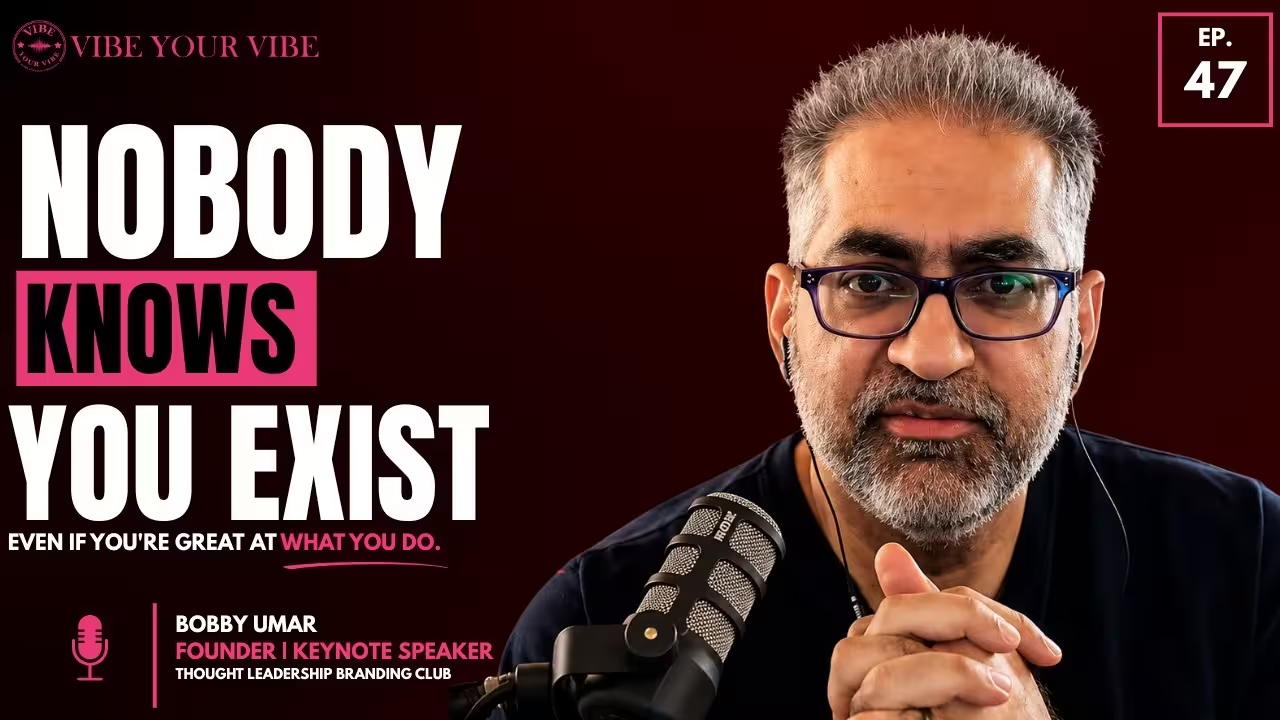
Nobody Knows You Exist: Bobby Umar on Visibility, Influence & Personal Branding
Bobby Umar Learn More About Bobby Play Episode Facebook Instagram Youtube Linkedin Keep Listening...
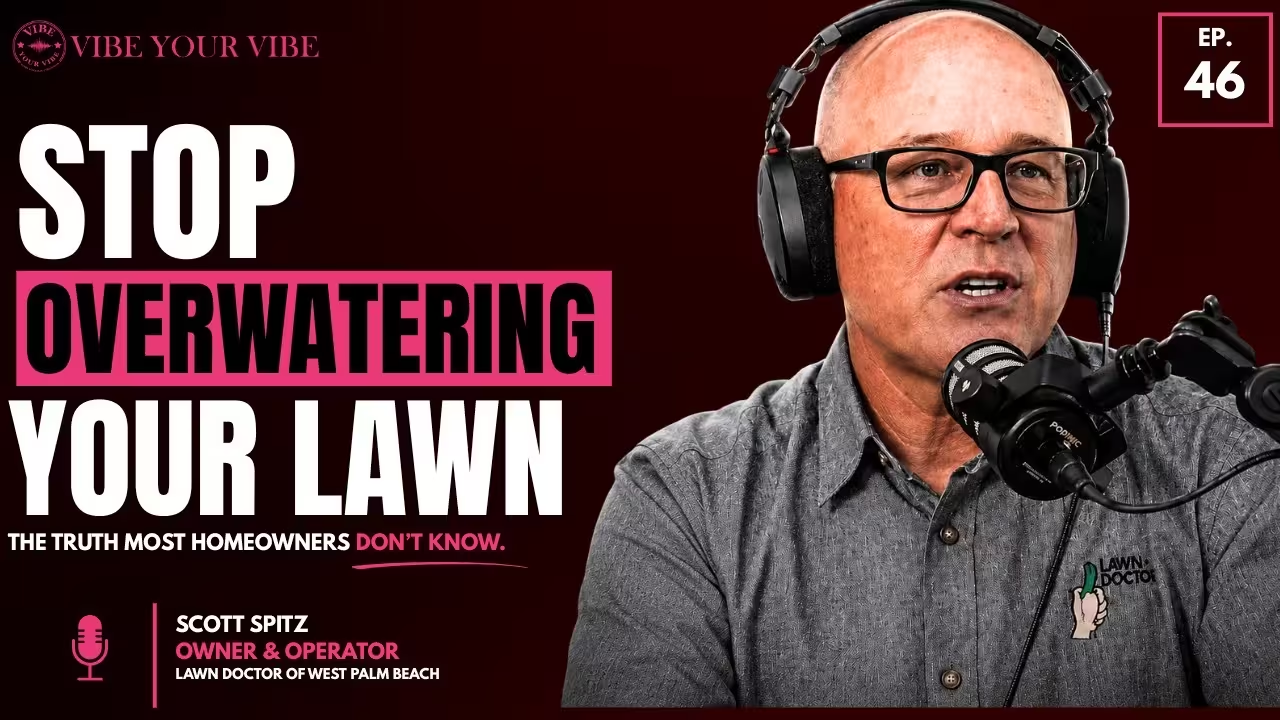
Stop Overwatering Your Lawn (And Every Other Mistake Florida Homeowners Make)
Scott Spitz Learn More About Scott Play Episode Facebook Instagram Youtube Linkedin Keep Listening...
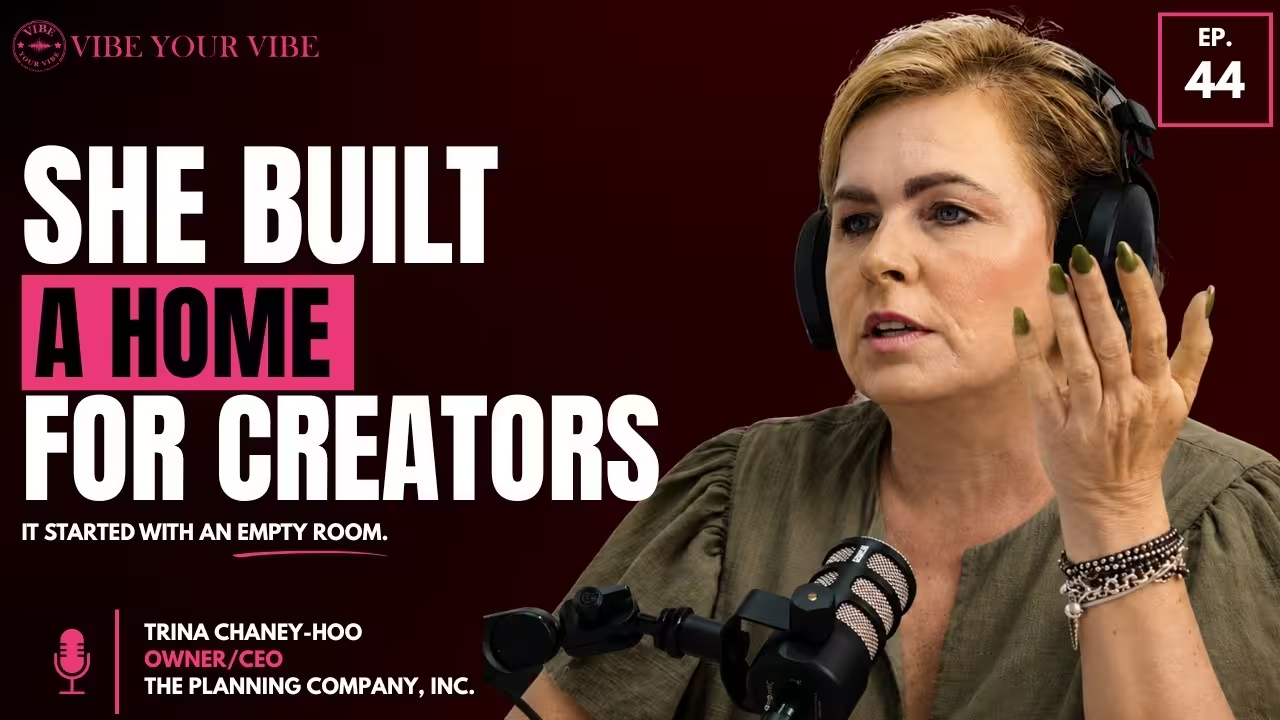
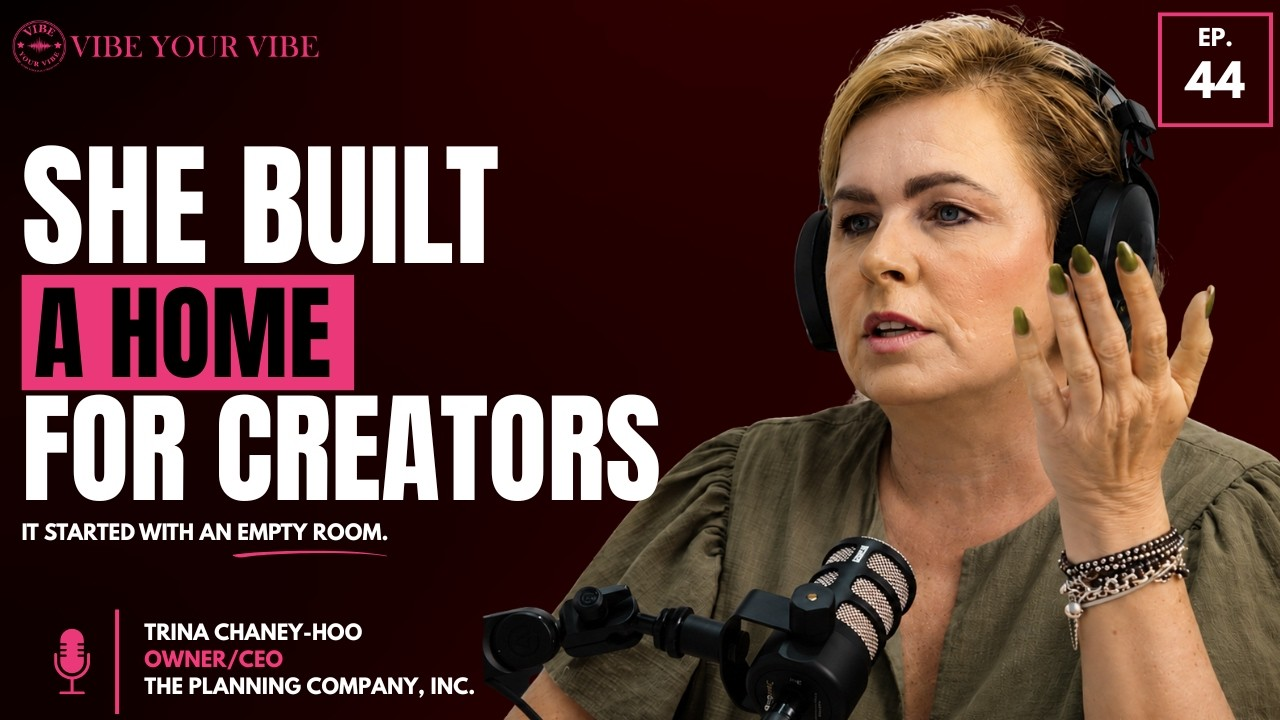
From Empty Warehouse to 120 Creators: Trina’s Studio 1016 Story
Trina Chaney-Hoo Learn More About Trina Play Episode Facebook Instagram Youtube Linkedin Keep Listening...
- How turning unused space into a thriving business creates new opportunities
- Why adapting during difficult times is essential for business survival
- How building a creative community drives long-term business growth
- Why solving real problems leads to successful business ideas
- The importance of creating experiences instead of just offering services
- How strong partnerships help entrepreneurs scale faster
- Why embracing change is key to staying relevant in business
- The value of leading like a conductor instead of doing everything yourself
- How wellness retreats help people reconnect with themselves
- Why taking extended breaks can improve creativity and decision-making
- Turn challenges into opportunities by adapting instead of giving up.
- The best businesses often grow from solving your own problems.
- A strong community creates more opportunities than working alone.
- Great leaders bring the right people together to achieve bigger goals.
- Creativity and innovation help businesses stand out in competitive markets.
- Reinventing yourself is sometimes the key to long-term success.
- Meaningful experiences create more value than simply selling a service.
- Taking time to disconnect helps you reconnect with your purpose.
- Trusting experts allows you to deliver a better customer experience.
- Staying open to change leads to new ideas, growth, and lasting success.
[00:00:00] The studio was empty for a year.
[00:00:02] >> Wow.
[00:00:02] >> It was really scary. Like I didn't know
[00:00:04] what I was going to be.
[00:00:05] >> Wow, a complete year?
[00:00:06] >> A year. So I had to recreate myself and
[00:00:09] come up with ideas of how I was going to
[00:00:11] keep money coming in.
[00:00:24] >> Hi, this is Kirk. I'm with uh Trina
[00:00:26] Chaney who and she's a creative
[00:00:28] entrepreneur, visionary, builder, and
[00:00:30] long-time force in the luxury event and
[00:00:33] experience space. She had a 13-year
[00:00:36] career in Miami's hospitality and
[00:00:38] tourism industry and she relocated to
[00:00:40] Palm Beach in 2002 and founded the
[00:00:43] Planning Company, a luxury event
[00:00:45] planning and design firm that has since
[00:00:47] produced countless high-end celebrations
[00:00:48] across South Florida and worldwide
[00:00:50] destination events. As her production
[00:00:52] team grew, so did the need for space and
[00:00:54] the practical need sparked a bigger
[00:00:56] vision. She began a shared workspace for
[00:00:59] her team that evolved into the Studio
[00:01:02] 1016, a 7,000 sq ft industrial chic
[00:01:06] creative warehouse designed as a
[00:01:08] collaborative home base for
[00:01:10] entrepreneurs, creators, business
[00:01:11] owners. Today, more than 120 members
[00:01:13] call the Studio's 1016 their
[00:01:15] professional creative hub. We're here
[00:01:17] today doing this recording. She
[00:01:19] approaches life with a curiosity and
[00:01:21] humor, often saying that she's not sure
[00:01:24] what she needs to be when she grows up.
[00:01:26] At her core, she's fearless approach for
[00:01:28] growth, her willingness to leap into the
[00:01:29] unknown, and ability to turn blank
[00:01:31] slates into thriving ecosystems. So here
[00:01:34] we are. I just wanted to have her here
[00:01:36] because I thought I've been recording
[00:01:38] here for a few sessions and I thought
[00:01:39] it'd be really cool to find out who's
[00:01:41] the person behind the space.
[00:01:44] >> I'm an event planner of 25 years and we
[00:01:47] kept outgrowing our space, basically.
[00:01:50] So I found this space. It was very empty
[00:01:53] and ugly and it smelled terrible. But it
[00:01:56] had a lot of space and we needed
[00:01:57] production space.
[00:01:58] >> smell terrible anymore.
[00:01:59] >> No, it didn't. It doesn't now. But, we
[00:02:01] needed space to have all of our
[00:02:03] inventory housed and to be able to
[00:02:05] produce florals and different things for
[00:02:07] events that we need to do. So, for
[00:02:09] example, when we'd have a wedding for
[00:02:11] 300 people, we'd have to produce
[00:02:14] 200 big bags like this, you know, filled
[00:02:17] with waters and towels and chocolates
[00:02:19] and whatever. So, we need to produce
[00:02:21] those somewhere. And when we do flowers,
[00:02:24] we need to do 20 huge floral
[00:02:26] centerpieces and have a place to
[00:02:28] refrigerate flowers. So, in the back of
[00:02:31] the studio, I still have a commercial
[00:02:33] refrigerator and all the stuff I need to
[00:02:35] produce, but my inventory is offsite
[00:02:37] because I kept outgrowing the space as
[00:02:40] people kept wanting to come here and
[00:02:42] work here. I said no for the first 8
[00:02:44] months. I didn't want anyone working
[00:02:46] here. That wasn't the plan. And then,
[00:02:48] the bills kept coming, so I decided that
[00:02:50] maybe I'd let a couple people work here
[00:02:53] and see how it went. And it just kept
[00:02:55] growing into more and more work space.
[00:02:58] Um I built 10 partition walls
[00:03:02] that I ended up I had to keep moving
[00:03:04] them back back back back and putting
[00:03:06] more desks and build more offices
[00:03:08] because that paid the bills. You know,
[00:03:10] that was like bread and butter. And
[00:03:11] then, after like a year and a half or 2
[00:03:14] years, I decided I created this thing. I
[00:03:17] didn't know it was called coworking or
[00:03:19] shared workspace, but I knew I invented
[00:03:20] something.
[00:03:22] I had never heard of WeWork back then.
[00:03:24] If I did, I would know that I didn't
[00:03:26] create coworking, but we were the first
[00:03:29] um coworking space in West Palm Beach.
[00:03:31] So, clearly we were ahead of our times
[00:03:33] and we had something going that we
[00:03:35] thought was really cool and we figured
[00:03:36] out that coworking was a word. And it
[00:03:38] took a lot of people a long time to
[00:03:40] catch on to that. Back then, it wasn't
[00:03:41] really uh people just weren't aware.
[00:03:44] Even like the city didn't know how to
[00:03:46] handle us with a lot of things. We're
[00:03:47] like a gray area. We still are a gray
[00:03:49] area because we are a space,
[00:03:52] you know, with membership, we don't
[00:03:54] sublease space. We have memberships and
[00:03:56] we have people who use our space, you
[00:03:58] know, like by the hour, by the day, by
[00:04:00] the month, whatever. So, it's a little
[00:04:02] bit like like a gym kind of. You know,
[00:04:04] with memberships. So, that's how I I
[00:04:06] convey that to people who don't
[00:04:07] understand what we do. So, I'm like,
[00:04:10] it's kind of like a gym. You know, you
[00:04:12] rent a space or you rent a membership
[00:04:13] that has certain different levels to it,
[00:04:16] but you can also rent an office
[00:04:17] long-term. We just call it a membership.
[00:04:20] By having memberships, um that just puts
[00:04:22] me in a different category of business,
[00:04:24] which allows me certain things, certain
[00:04:26] liberties, and on other things it's a
[00:04:28] little bit more complicated. Um but
[00:04:30] every business has pros and cons.
[00:04:33] >> Sure.
[00:04:33] >> So, I just found it's like the best way
[00:04:36] for me to handle things is having a
[00:04:37] membership-driven business. And at the
[00:04:39] core of my business here as Studio 1016,
[00:04:43] the most important thing to me is to
[00:04:44] stay creative and not be like a cubicle
[00:04:47] space. I'm not a buttoned-up space. I'm
[00:04:49] not a space that where every single
[00:04:51] office looks the same. We're not a space
[00:04:53] that's quiet. We have quiet spaces
[00:04:55] within our space, but we're a space that
[00:04:58] you know, has movement and noise and fun
[00:05:01] and music and ping pong and
[00:05:04] >> soccer
[00:05:05] >> soccer upstairs. Yeah. There's all kinds
[00:05:07] of Yeah,
[00:05:08] all kinds of cool things going on that
[00:05:10] we have to work around, but we we
[00:05:12] figured out a flow somehow.
[00:05:14] And then the other thing behind, you
[00:05:16] know, the main piece of my business is
[00:05:18] still being able to do events. So, right
[00:05:20] now we're loading in for a 250-person
[00:05:23] event for Tuesday.
[00:05:24] >> Oh, wow.
[00:05:25] >> Yeah, so at
[00:05:26] >> That's what the balloon's for?
[00:05:27] >> Mhm. Yeah, I'm measuring the wall to do
[00:05:29] an installation. So, my event business
[00:05:33] thrives outside of here and in inside of
[00:05:35] here.
[00:05:36] So, the expertise in that field has
[00:05:39] crossed over to what I've created here.
[00:05:42] So, it keeps me excited because I don't
[00:05:44] want to just rent offices. I like to do
[00:05:46] different things. Yeah.
[00:05:48] So
[00:05:48] >> like the photo studio for example, last
[00:05:50] weekend we had a yoga retreat. So people
[00:05:53] flew in from out of state. We had 25
[00:05:56] people here Friday, Saturday, Sunday all
[00:05:58] day. We shuttled them back and forth
[00:05:59] like to the beach on the island, did you
[00:06:02] know tours with them. We had food and
[00:06:03] beverage service in the studio. They had
[00:06:05] something in the tea house and then they
[00:06:07] had their
[00:06:08] >> So they had they were here in this room?
[00:06:10] >> Yeah, and they did their yoga sessions
[00:06:11] in here and they made it into hot yoga.
[00:06:13] We shut the vents, we put in heaters, we
[00:06:16] closed up the vent on the door,
[00:06:17] transformed the space. So
[00:06:19] >> Wow, that's really cool.
[00:06:20] >> Mhm. So it it keeps things exciting and
[00:06:23] that's what I like about the studio so.
[00:06:25] >> So where did where did they just cuz
[00:06:27] there's a hotel just around the corner,
[00:06:28] right?
[00:06:29] >> There's hotels everywhere.
[00:06:30] >> Cuz we're downtown West Palm Beach. I
[00:06:32] mean
[00:06:32] >> Yeah, they stayed at Airbnbs and hotels.
[00:06:34] They were different places.
[00:06:35] >> were different places.
[00:06:36] >> Yeah, because some people like the Ben
[00:06:38] and some people like the Hyatt and some
[00:06:40] people like Marriott and some people
[00:06:41] stay with a friend, you know, so they
[00:06:44] were all over.
[00:06:45] >> All over and they came here and they had
[00:06:46] a central place that they could meet up.
[00:06:49] >> We hopped on a shuttle. They had a
[00:06:50] really great shuttle service that we
[00:06:52] hired and it took them on a tour.
[00:06:54] >> So did did your event company do that?
[00:06:58] >> Yeah.
[00:06:58] >> Okay.
[00:06:59] >> Yep. So and then they did meditation at
[00:07:00] the beach. We had catering service on
[00:07:03] the shuttle.
[00:07:03] >> This is a paid yoga retreat and then
[00:07:06] your organization helped organize it.
[00:07:09] >> Right.
[00:07:09] >> So it ran smooth.
[00:07:10] >> Correct. And they rented my space from
[00:07:12] the studio.
[00:07:13] >> Mhm.
[00:07:14] >> So there's some kind of planning help
[00:07:17] that we give in general just because
[00:07:18] that's my nature. But if somebody wants
[00:07:20] us to organize their whole event like
[00:07:22] this corporate group has never been
[00:07:24] here. The one that's coming on Tuesday
[00:07:25] for 250 people, they've never been here
[00:07:27] before. So they hired my planning
[00:07:29] business to coordinate the whole entire
[00:07:31] event. So we hired all the vendors, we
[00:07:33] planned the design with them
[00:07:35] incorporating some of our furnishings
[00:07:37] and adding other things to create like a
[00:07:39] disco tropical event. We're bringing in
[00:07:42] alpaca, taco truck, portable restroom
[00:07:45] trailers, luxury restroom trailers, a
[00:07:48] cigar lounge outside an airstream, just
[00:07:50] all kinds of fun things, so
[00:07:52] >> So I had a a friend of mine, um, I don't
[00:07:55] think she does anymore. What was her
[00:07:56] name? Um, Teresa. She's a competitor of
[00:07:59] yours.
[00:08:00] >> Okay.
[00:08:01] >> But I remember
[00:08:02] I hired her for my daughter's
[00:08:03] quinceañera.
[00:08:04] >> Okay.
[00:08:05] >> And she just completely
[00:08:08] transformed
[00:08:09] We were had it at our clubhouse
[00:08:11] >> Okay. Mhm.
[00:08:12] >> and it was just
[00:08:14] it was amazing.
[00:08:15] >> Nice.
[00:08:16] >> Just completely, you know, brought in
[00:08:17] uplights, brought in plants and this and
[00:08:20] that and, you know, the entire space was
[00:08:23] transformed and actually, I guess she
[00:08:26] just she didn't deal with the billing. I
[00:08:27] guess she found like a DJ and then she
[00:08:30] was curious what your thoughts on this.
[00:08:31] She was just cuz she's a friend of mine,
[00:08:33] she's like, "You have to have an MC." I
[00:08:35] go, "Well, isn't that the job of the
[00:08:37] DJ?" She's like, "No."
[00:08:38] >> No, it isn't.
[00:08:39] No.
[00:08:41] Some DJs
[00:08:42] >> the music.
[00:08:43] >> Yes.
[00:08:43] >> And the MC is to keep the party going.
[00:08:47] >> And some DJs don't speak. And some DJs
[00:08:50] you don't want them to speak either.
[00:08:51] >> And you don't want them to speak.
[00:08:54] >> So that's the, you know, that's the
[00:08:55] value of having a planner.
[00:08:58] >> that So I have a little bit of
[00:08:59] experience with hiring a planner and
[00:09:02] wow, it's just, you know, and she's
[00:09:04] running around
[00:09:06] taking care of stuff that frankly, I
[00:09:08] guess she probably like you, taking care
[00:09:11] of stuff that she's probably not even
[00:09:13] really supposed to be taking care of.
[00:09:14] >> Yeah, it goes above and beyond usually.
[00:09:16] >> Um, but it just the the party went
[00:09:18] without a hitch. Um
[00:09:20] >> That's awesome.
[00:09:20] >> and we had a really great time.
[00:09:23] >> So for example, like when you came out
[00:09:25] to get me just now, I was measuring a
[00:09:26] balloon.
[00:09:27] >> Mhm.
[00:09:27] >> Something really simple, but the balloon
[00:09:29] says 18 in.
[00:09:31] But when you blow it up, it's not 18 in.
[00:09:34] So I need to make sure it's going to go
[00:09:35] wall to wall.
[00:09:36] >> Right. If it's a wall
[00:09:38] >> Right. And you don't want to have a gap
[00:09:40] because
[00:09:40] >> 1 or 2 in per balloon
[00:09:43] multiplies really fast when it's an
[00:09:45] entire wall.
[00:09:46] >> So, you have to try things and see how
[00:09:48] things work in a specific space because
[00:09:50] just because it works here on this
[00:09:52] cinder block wall doesn't mean it'll
[00:09:54] work on the drywall without damaging it.
[00:09:56] So, it's a lot of like trial and error
[00:09:58] stuff.
[00:09:59] >> Pre-planning and having the plan for
[00:10:01] everything.
[00:10:02] >> Mhm.
[00:10:02] >> Interesting. I had no idea that that was
[00:10:04] another part of So, that was like what
[00:10:05] spurred this whole space.
[00:10:07] >> Yes. I've been with The planning
[00:10:09] company's been in existence 25 years
[00:10:11] now.
[00:10:12] >> Oh, wow.
[00:10:12] >> Yeah. And so, we do destination work. I
[00:10:14] don't do as much local event work as I
[00:10:17] used to. I used to work at The Breakers
[00:10:19] a lot, Mar-a-Lago, really high-end
[00:10:21] weddings and different celebrations. So,
[00:10:23] now for the past Well, since COVID,
[00:10:26] probably, we do more destination work.
[00:10:28] >> More destination work. Okay. Yeah.
[00:10:30] >> Yeah. It's more interesting to me. It's
[00:10:32] my passion. I like to travel a lot, so
[00:10:34] I'd rather do one or two really great
[00:10:37] projects a year. Or, you know, could be
[00:10:39] five.
[00:10:39] >> you focus on destination work, is it
[00:10:41] destination to West Palm Beach or
[00:10:42] destination in general? Could be
[00:10:44] anywhere.
[00:10:45] >> It could be anywhere. I prefer to go
[00:10:46] somewhere else.
[00:10:47] >> Mhm.
[00:10:47] >> But, there's a lot of people who come
[00:10:49] here and this is a destination like this
[00:10:51] corporate group.
[00:10:51] >> Right. Or the yoga group is also a
[00:10:53] destination.
[00:10:55] >> It's smaller, but it is a destination.
[00:10:56] So, those things don't count in my big
[00:10:58] two projects for the year.
[00:11:00] >> I have an idea for a project that we're
[00:11:01] going to have to talk about.
[00:11:02] >> Okay. All right. So, the yoga retreat,
[00:11:05] the lady who was who was organizing that
[00:11:07] was really impressed with how this all
[00:11:09] went, and she was really excited. So,
[00:11:10] she said, "You know, I really like to
[00:11:12] repeat this every quarter and make this
[00:11:14] the base for it." And then we talked
[00:11:16] about my favorite place in the planet,
[00:11:18] which is in Guatemala. It's called Lake
[00:11:20] Atitlán. And they have a big like yoga
[00:11:23] following there.
[00:11:24] >> Mhm.
[00:11:24] >> And I was telling her one of my visions
[00:11:27] for the future was to start creating
[00:11:29] retreats to go to Lake Atitlán and
[00:11:31] reset. Whether you're into yoga or not,
[00:11:33] has nothing to do with yoga. So, it's an
[00:11:35] it's called a line. It's a retreat that
[00:11:37] I'm putting together. And part of it
[00:11:39] will be to, you know, bring a yoga
[00:11:41] instructor with me and, you know, bring
[00:11:43] different people with me, but I'm the
[00:11:45] one orchestrating the whole retreat. And
[00:11:46] it's for people to realign yourself.
[00:11:48] Whether it's, you know, mentally,
[00:11:50] physically, whether you are a yogi, it
[00:11:52] could be all of the above. You can take
[00:11:54] whatever piece from it that you want,
[00:11:56] but basically it's tapping out from
[00:11:58] whatever you normally do
[00:11:59] >> Mhm.
[00:12:00] >> and resetting. Because when I go there,
[00:12:02] that's what I go there to do. And it's
[00:12:03] really amazing there. Um I started to
[00:12:06] put it together during COVID because I
[00:12:08] felt like people needed to align. We
[00:12:09] didn't know what was happening. We all
[00:12:11] This place was empty. The planning
[00:12:13] company, there was no gathering, there
[00:12:15] were no events, there was no travel. So,
[00:12:17] that was like dead. The studio was empty
[00:12:19] for a year.
[00:12:20] >> Wow.
[00:12:21] >> It was really scary. Like I didn't know
[00:12:23] what I was going to be.
[00:12:24] >> a complete year?
[00:12:25] >> A year.
[00:12:26] So, I had to recreate myself and come up
[00:12:28] with ideas of how I was going to keep
[00:12:30] money coming in. So, what value could I
[00:12:32] give people who didn't want to come here
[00:12:34] and work anymore because they're scared
[00:12:35] to gather and they couldn't gather for a
[00:12:37] certain period of time. So, I created a
[00:12:39] lot of virtual services for people. I
[00:12:41] would physically be here all the time
[00:12:43] because my staff had to go and I would
[00:12:45] receive packages or mail. I'd open them
[00:12:47] up. I'd send them pictures. You know, if
[00:12:50] they needed to deliver something to
[00:12:52] someone, I would go do it and
[00:12:53] communicate with that person that it was
[00:12:55] on their step and make sure I sat in the
[00:12:56] car and waited to see that they got
[00:12:58] whatever they needed or somebody needed
[00:13:01] something notarized. So, I started a
[00:13:02] mobile notary concierge service. So, we
[00:13:04] still have that service available, but
[00:13:06] that was all like stuff I did to survive
[00:13:08] during COVID. And during that my
[00:13:10] downtime when I had to be here, I
[00:13:13] created the align retreat because I'm
[00:13:15] like, when this is over
[00:13:17] >> Right.
[00:13:17] >> we all need to like align ourselves
[00:13:19] again and tap out and just kind of tap
[00:13:22] in, get reconnected with who we are,
[00:13:24] what we want to do and what we need to
[00:13:25] fill our cup because we're all just
[00:13:27] really stressed. And I didn't haven't
[00:13:29] put that into action yet because after
[00:13:31] things started coming back together, I
[00:13:33] needed to do a lot of work here and stay
[00:13:35] on the ground. So now I'm kind of ready
[00:13:37] to put that together. So that connection
[00:13:39] with the person who came here for the
[00:13:40] yoga retreat, she's like, I want to do
[00:13:42] that with you. I want to be your yoga
[00:13:44] person. So now we're talking about that.
[00:13:46] So things just kind of feed off of each
[00:13:48] other.
[00:13:48] >> What's the size of a retreat like that
[00:13:51] need to be to be at the same time
[00:13:54] effective
[00:13:56] so that each person gets the attention
[00:13:58] they need but at the same time, you
[00:13:59] know, you probably
[00:14:01] if you were only had five people, it'd
[00:14:03] be priced pretty extravagant.
[00:14:05] >> For me, it's more of a passion project
[00:14:07] than a money-making thing.
[00:14:09] Um
[00:14:10] >> Well, it still needs to cover its cost
[00:14:12] though.
[00:14:12] >> It needs to cover its cost but people
[00:14:13] would cover their costs in general. Um
[00:14:17] and I would have to just figure out my
[00:14:18] costs for the organizing part and the
[00:14:20] rest of it would be
[00:14:21] >> And do you envision this being like 10
[00:14:23] people, 25 people, 100 people?
[00:14:26] >> Not 100. Um under 40.
[00:14:28] >> Under 40. That's kind of what I was
[00:14:29] getting like like yeah, you know, cuz
[00:14:31] you just said you're doing an event. You
[00:14:33] obviously have the experience, you can
[00:14:34] handle it. You could have 250, probably
[00:14:36] 1,000 people. You can handle it cuz
[00:14:38] you've done those.
[00:14:38] >> Yeah, that's like a convention then to
[00:14:40] me.
[00:14:40] >> that's
[00:14:41] you're going to lose
[00:14:44] >> the one-on-one stuff.
[00:14:44] >> The the the the whole part of aligning
[00:14:47] if there's 1,000 people or maybe I don't
[00:14:49] know. Tony Robbins does it, right?
[00:14:52] >> You know, same kind of same kind of
[00:14:54] thing but it's a whole different vibe I
[00:14:56] think at a Tony Robbins. But they still
[00:14:58] do the break breakouts. And you're going
[00:15:00] to have to have people I guess that's
[00:15:01] the thing about him, he has an
[00:15:03] organization and he's got these people
[00:15:05] that can do the small group breakouts so
[00:15:07] people are getting the attention they
[00:15:09] need to get the alignment that they're
[00:15:11] looking for.
[00:15:12] >> So that's where the the partnerships
[00:15:14] come in. You know, me partnering with
[00:15:17] different people who can bring different
[00:15:18] pieces to the puzzle. It
[00:15:20] >> Which is which is what you've been doing
[00:15:21] for
[00:15:22] >> That's what I do.
[00:15:23] >> decades.
[00:15:23] >> Mhm.
[00:15:24] >> Cuz you you obviously can't be a DJ and
[00:15:26] an MC and a photographer and a
[00:15:28] videographer and a caterer and
[00:15:31] >> Right.
[00:15:31] >> you know, bartender and all these
[00:15:33] things. Your your job is just to pull
[00:15:35] all these the conductor. Okay, that's a
[00:15:37] good way to put it.
[00:15:38] >> I always explain it to people. You need
[00:15:40] the conductor to conduct the orchestra.
[00:15:42] >> Mhm.
[00:15:42] >> You can't be the violinist and the
[00:15:44] saxophonist and run the show.
[00:15:46] >> time.
[00:15:47] >> Yeah. Not at all.
[00:15:48] >> Right. And it's a special skill.
[00:15:50] >> It is.
[00:15:50] >> Working with Tre I used to do some of
[00:15:52] her photography for her still
[00:15:53] photography for her.
[00:15:55] >> It's a little challenging sometimes.
[00:15:56] >> It is and then it's really it's really
[00:15:58] interesting cuz some some of her clients
[00:16:00] are really got it put together and
[00:16:02] understand what they want and then other
[00:16:04] clients are they just know that they
[00:16:05] want the photography but they don't
[00:16:07] really know what they want.
[00:16:08] >> They're a hot mess some some of them.
[00:16:11] And you have to tell them the value of
[00:16:13] certain things. You'd explain certain
[00:16:14] things to them and you have to insist on
[00:16:17] other things because when you're
[00:16:18] professional it's not a question.
[00:16:20] >> Like she insisted on the MC.
[00:16:22] >> I mean it just needs to happen.
[00:16:23] >> "If you want your party to go real real
[00:16:28] well and run well and everybody have a
[00:16:30] really good time and people participate,
[00:16:32] you need the MC. And this is the guy you
[00:16:35] need to hire cuz I've worked with him
[00:16:36] and I know that he can do it."
[00:16:38] >> Yeah.
[00:16:38] >> Yeah, I didn't like spending the money,
[00:16:40] I'll be honest.
[00:16:41] >> I'm sure.
[00:16:41] >> But I didn't regret it after we had the
[00:16:43] party.
[00:16:44] >> That part. I mean you hire somebody
[00:16:46] because you trust them.
[00:16:47] >> Mhm.
[00:16:47] >> You should trust them and you're
[00:16:50] trusting them with their expertise. So
[00:16:52] you want a level of confidence from that
[00:16:53] person.
[00:16:54] >> Right.
[00:16:55] >> people if I tell them something, they
[00:16:57] just do it. They don't even ask. And if
[00:16:59] it's an option, I'll say, "Well, there's
[00:17:00] different options. You can do this. You
[00:17:02] don't have to do this but this is what
[00:17:04] it's going to look like if you don't and
[00:17:05] this is what it'll look like if you do."
[00:17:07] >> Right. Like I think I probably spent
[00:17:09] more money on Teresa and her decorations
[00:17:12] than anything else.
[00:17:14] >> Right. I'm sure.
[00:17:15] >> That's where the bulk That was more than
[00:17:16] even the DJ and the MC.
[00:17:18] >> It should be.
[00:17:19] >> And more than the room and the food.
[00:17:21] >> Mhm.
[00:17:22] >> I'm I'm going to just say it it's what
[00:17:24] made the party.
[00:17:25] >> Yeah, it's there's value to that.
[00:17:27] >> that she was able to create and
[00:17:29] transform. It I'm still amazed to this
[00:17:31] day to think about it cuz it was just a
[00:17:33] very vanilla room, a little bit less
[00:17:35] vanilla than say this photo studio cuz
[00:17:37] this is actually a blank slate. So, she
[00:17:38] didn't really have a blank slate. She
[00:17:40] had to work with what she had.
[00:17:41] >> Right.
[00:17:41] >> At the same time though, it really
[00:17:43] turned on the atmosphere of the party
[00:17:46] and we had a really good time the way
[00:17:47] she had it all laid out. And here's the
[00:17:50] thing, I didn't think about nothing.
[00:17:53] >> That's good.
[00:17:53] >> just there to have a good time.
[00:17:55] >> Mhm. Nice.
[00:17:56] >> And that's that was that's I guess
[00:17:58] that's a sign of a successful event,
[00:18:00] right?
[00:18:01] >> That the person that's putting it on,
[00:18:03] having the planner there to have
[00:18:05] everything planned out, it just went
[00:18:07] without a hitch.
[00:18:08] >> Nice.
[00:18:09] >> You know? And yeah, the other tough part
[00:18:11] for me was the the photographer cuz
[00:18:13] that's like the milkman having to buy
[00:18:16] milk.
[00:18:18] >> Yeah, I'm sure that's tough.
[00:18:20] >> So, so I I wanted to kind of go there
[00:18:23] cuz you have this event and you're the
[00:18:25] one planning it. Are you going to be
[00:18:27] bringing on maybe an assistant to
[00:18:29] assistant planner so that you can
[00:18:31] participate in it or is your idea to be
[00:18:34] just the planner for that event?
[00:18:36] >> No, I'm the planner.
[00:18:37] >> You're the planner. Okay.
[00:18:38] >> it's a small enough venue that I don't
[00:18:40] really need an assistant for that. But I
[00:18:42] have a team of people working so I don't
[00:18:44] I don't have an assistant planner, but I
[00:18:46] have nine people working with me.
[00:18:48] >> Okay.
[00:18:48] >> That I'm bringing in.
[00:18:49] >> That you're going to be bringing in for
[00:18:50] this event over in Guatemala.
[00:18:52] >> Oh, in Guatemala?
[00:18:53] >> For the Alliance
[00:18:54] >> you meant for this one. Okay. No, I
[00:18:56] probably wouldn't I don't know. It just
[00:18:58] depended. I guess
[00:18:59] >> you going to be a participant in the
[00:19:01] Align or are you going to just plan it
[00:19:03] and have people there?
[00:19:04] >> I would be the leader for sure, but all
[00:19:07] the partner people that I would bring
[00:19:09] would be my team and they would be the
[00:19:11] ones doing certain pieces. So like the
[00:19:14] morning meditation or
[00:19:16] >> So that you can be part of it.
[00:19:18] >> Yes, because I'm not that person, you
[00:19:20] know, not I'm not a yogi, I'm not a
[00:19:22] meditation person, you know, I'm I'm not
[00:19:24] the caterer when I'm there, you know,
[00:19:26] there's just a lot of pieces to the
[00:19:28] puzzle that you need to have happen when
[00:19:30] you're there. I still would just be the
[00:19:32] conductor. I would participate in it,
[00:19:34] but I'm always going to be behind the
[00:19:35] scenes planning the next piece.
[00:19:38] >> Mhm.
[00:19:38] >> So participating fully doesn't really
[00:19:40] happen. I would participate before they
[00:19:42] come.
[00:19:44] I would do my own aligning before they
[00:19:45] come.
[00:19:46] >> Oh, I see.
[00:19:47] >> Yeah.
[00:19:47] >> As you're as you're preparing for the
[00:19:49] event to happen. Like curious for an
[00:19:52] event like that, what does that look
[00:19:53] like? Like how long is it and what's
[00:19:55] your preparation time?
[00:19:56] >> I almost feel like I want to demand 3
[00:19:59] weeks of people because if you can't
[00:20:00] carve out 3 weeks for yourself, which a
[00:20:02] lot of people find that to be a big
[00:20:04] challenge.
[00:20:05] >> Mhm.
[00:20:05] >> But if you can't, you you really can't
[00:20:07] tap out. You cannot tap out in a week.
[00:20:09] Halfway through a week, you're still
[00:20:10] looking at your cell phone. You're still
[00:20:12] communicating, did I do this? Did I pay
[00:20:14] this bill? Did I book this appointment
[00:20:16] for when I come back? You know, I'm
[00:20:17] talking to my wife, whatever it is that
[00:20:19] you need, you know, that people do. It
[00:20:21] takes the first week to stop doing that.
[00:20:23] And to settle your mind. I mean, I've
[00:20:25] had experience with traveling for a long
[00:20:27] time, but for the past at least 10
[00:20:30] years, I've done a minimum of 3 weeks a
[00:20:32] year because someone else taught me
[00:20:33] that. I was in shock. I'm like, 3 weeks,
[00:20:35] that's crazy. And she's like, it's not
[00:20:38] crazy. People in the US don't do that,
[00:20:40] but everywhere else they do.
[00:20:42] >> Yeah, we did we did we did 3 weeks
[00:20:44] this past fall.
[00:20:46] >> And when you can understand what it
[00:20:48] means to kind of like shut down and tap
[00:20:51] out tap out and really have a break, a
[00:20:53] mental break, when you experience that
[00:20:54] once, you don't want to go back. So it's
[00:20:56] different if you're going on a vacation
[00:20:57] with your family, you know, to on a
[00:21:00] cruise or to Disney or something, you
[00:21:01] have intention to do this these
[00:21:03] activities and to do this kind of thing,
[00:21:05] maybe that's a week. That's not a
[00:21:07] tap-out type of vacation. You know,
[00:21:08] that's not a like
[00:21:10] filling your cup situation at all.
[00:21:13] That's a lot of work and you come home
[00:21:14] tired.
[00:21:15] >> Right.
[00:21:15] >> Right. So, when you
[00:21:17] >> the Disney trips where it's like I need
[00:21:19] a vacation now from my vacation.
[00:21:21] >> I mean, it's really fun.
[00:21:22] >> up every day, you're paying all that
[00:21:23] money for those tickets and you want to
[00:21:24] make sure that like pre-living in
[00:21:27] Florida where I had the Florida pass.
[00:21:29] >> Right.
[00:21:29] >> Or I came from Missouri coming down here
[00:21:33] and I'd buy so many days and it's like
[00:21:35] you really wanted to maximize those
[00:21:36] days.
[00:21:37] >> So, 20-hour days.
[00:21:38] >> Yeah, yeah, literally. Literally, you're
[00:21:40] like up at 6:00 a.m. and you're not
[00:21:41] getting back home until, you know,
[00:21:44] 1:00 2:00 a.m. in the morning after they
[00:21:45] do the fireworks.
[00:21:46] >> And that's what that is. And that's
[00:21:48] okay. But that's not what this is. It's
[00:21:50] just different. This is more about
[00:21:52] filling your cup.
[00:21:53] >> So, you had somebody teach you that you
[00:21:55] need at least 3 weeks cuz the first week
[00:21:58] is kind of winding down.
[00:22:00] >> It's winding down and starting to
[00:22:02] understand that you need to shut down at
[00:22:05] all because we don't ever. So, the first
[00:22:07] week is that. The second week is you're
[00:22:09] finally kind of on vacation. You're kind
[00:22:11] of
[00:22:12] you know, exploring and enjoying and
[00:22:15] relaxing and breathing
[00:22:18] and taking stuff in. The third week,
[00:22:20] you're preparing to go back mentally
[00:22:22] already.
[00:22:23] >> That's interesting cuz when I organized
[00:22:24] this last trip, I organized it. We did 8
[00:22:28] hours in London,
[00:22:30] 3 days in Paris, 2 days in Bordeaux,
[00:22:33] traveled from Bordeaux to Rioja for 1
[00:22:35] day.
[00:22:36] >> Mhm.
[00:22:36] >> And then we went to Lyon and started our
[00:22:39] 1-week bicycle trip on the on the Camino
[00:22:42] in Spain.
[00:22:43] >> Nice.
[00:22:43] >> And that was our week to It was a little
[00:22:46] different than a vacation or Disney cuz
[00:22:47] we woke up every day and we had to ride
[00:22:49] our bikes
[00:22:49] >> Right.
[00:22:50] >> and
[00:22:52] >> really became that was like completely
[00:22:56] detached.
[00:22:57] >> Right.
[00:22:57] >> In the sense of, you know, okay, we're
[00:22:59] It was It was strange. It was a It was
[00:23:01] an odd experience in the sense of we're
[00:23:03] waking up every day and we know we got a
[00:23:05] big bike ride in front of us.
[00:23:06] >> You're right.
[00:23:07] >> And it was It was a neat experience for
[00:23:09] me.
[00:23:09] >> I'm sure.
[00:23:10] >> And we've had a few long vacations, but
[00:23:13] I'm just trying to think this one was
[00:23:15] intentionally built for that middle week
[00:23:18] to be that week on the Camino.
[00:23:20] >> Mhm.
[00:23:21] >> And it's interesting what you're saying
[00:23:22] >> Right.
[00:23:23] >> about that's when you can really
[00:23:25] >> You really enjoy yourself. And as soon
[00:23:27] as you know you're going back, it's it
[00:23:29] you're constantly in that mode of oh, I
[00:23:31] need to do this. I need to do that. You
[00:23:32] know, I have to make the most of my
[00:23:34] time. So, 3 weeks to me is the minimum.
[00:23:37] 4 weeks is ideal. 5 weeks is really
[00:23:40] great, but not everybody can get away
[00:23:42] that long.
[00:23:43] >> Mhm.
[00:23:43] >> Um if I'm gone more than a month, you
[00:23:46] know, I already plan that I have to
[00:23:48] work. And that's okay, but I just limit
[00:23:50] what that is.
[00:23:51] >> You're having to work while you're away.
[00:23:53] >> Yeah.
[00:23:54] >> So, you're not really completely
[00:23:56] >> Right.
[00:23:56] >> untethered.
[00:23:57] >> So, I plan to be untethered for at least
[00:23:59] 3 weeks. And then if I'm gone for 5, I
[00:24:01] know that I have to work for a couple of
[00:24:03] those weeks. So, maybe I'll work on on
[00:24:06] the the front end and the back end.
[00:24:08] >> and the back end.
[00:24:09] >> Or just randomly
[00:24:11] >> you can wind down and that 1 week in the
[00:24:13] middle is really focused
[00:24:15] >> So, it's like two two and a half weeks
[00:24:18] in the middle would be really focused if
[00:24:20] I'm gone 5 weeks.
[00:24:21] >> Oh, okay.
[00:24:22] >> like 3 weeks of really
[00:24:24] >> That's interesting.
[00:24:25] >> Yeah. And when you can get 5 weeks, you
[00:24:28] really can you know, like
[00:24:30] submerge yourself in the culture.
[00:24:32] >> Well, that's the big part of it. Yeah.
[00:24:34] >> And if you're not traveling from town to
[00:24:36] town to town to town, which is really
[00:24:38] fun. I did that this summer, too. That's
[00:24:40] great, but that's not what this is.
[00:24:41] Staying in one place and really
[00:24:45] getting getting to know people and
[00:24:46] getting to know
[00:24:47] >> It's an amazing experience. I was I was
[00:24:50] fortunate to be able to do that in
[00:24:51] Honduras. I was able to stay
[00:24:53] back in 2021. I was able to stay in
[00:24:55] Honduras for 5 weeks.
[00:24:56] >> Nice.
[00:24:57] >> And so, you're having to go to the
[00:24:58] grocery store, you're having to go get a
[00:24:59] haircut, you're having you know, I took
[00:25:02] scuba lessons while I was there. So,
[00:25:03] that's kind of what my activity ended up
[00:25:05] being. And then you're talking to the
[00:25:07] locals and where do you go for lunch and
[00:25:10] >> Exactly.
[00:25:10] >> Then you you find, you know, I got a
[00:25:12] picture, I'll have to show it to you. My
[00:25:13] wife So, when she came and joined me, I
[00:25:16] took her to the lunch spot and it's like
[00:25:18] you're literally reaching through some
[00:25:20] barbed wire and and some wood covering
[00:25:23] the window to like bars on the window
[00:25:26] and you're reaching through and getting
[00:25:27] your lunch. But it was like
[00:25:29] this is where all the people that work
[00:25:30] at the resort go.
[00:25:31] >> Yeah.
[00:25:32] >> And it was really good.
[00:25:33] >> Yeah, it's really great. Exactly. So,
[00:25:36] you can't experience those types of
[00:25:38] things, you know,
[00:25:39] >> Cuz if you're staying at the resort for
[00:25:40] a week or even 2 weeks,
[00:25:41] >> Right.
[00:25:42] >> you're you're
[00:25:44] you're too caught up in having to do all
[00:25:46] that you have Okay, I got to go see,
[00:25:48] you know, the dolphin show and I want to
[00:25:50] go make sure that I go do so many days
[00:25:52] scuba and I want to
[00:25:53] >> doing that.
[00:25:54] >> Yeah, you're not doing all that.
[00:25:56] >> Now, that
[00:25:56] >> It's almost like the Disney example,
[00:25:58] right? You're running around trying to
[00:25:59] make sure you can check check check
[00:26:01] check and you get all these check marks
[00:26:02] off.
[00:26:03] >> And there are experiences to have there,
[00:26:05] but
[00:26:06] the idea of being away 3 to 5 weeks is
[00:26:10] you find those experiences. They
[00:26:12] organically happen.
[00:26:14] >> Right.
[00:26:15] >> obviously we can connect the dots and
[00:26:16] kind of lead you in the right direction.
[00:26:18] Like are you interested in drum circles
[00:26:20] and yoga? These are the places you want
[00:26:22] to check out. Are you interested in
[00:26:24] fishing? You know, this is place you
[00:26:26] want to check out. Would you like to go
[00:26:27] to Spanish classes every day or three
[00:26:29] times a week or whatever? You know,
[00:26:31] these are the places that you can go.
[00:26:33] But it's it's more of a self-directed
[00:26:36] exploration, you know, where you meet
[00:26:37] somebody at the mango hut and you find
[00:26:40] out that that little girl sells banana
[00:26:41] bread from her mom every morning. You
[00:26:43] know, like you experience those things
[00:26:44] yourself. We don't have to dictate all
[00:26:46] of those things. There's not just
[00:26:48] restaurants in a resort that are open
[00:26:51] from this time to this time. You know,
[00:26:52] we'll give you specific things like you
[00:26:54] should be back at your place before it's
[00:26:57] dark, you know, certain rules and
[00:26:58] guidelines of what you need to do. And
[00:27:00] then you have to figure out the rest. Or
[00:27:01] hey, it rains between 12:00 p.m. and
[00:27:04] 5:00 p.m. So, if you want to go
[00:27:05] somewhere, get there before 12:00 and
[00:27:08] know that you're going to end up staying
[00:27:09] there until 5:00 so that you can come
[00:27:11] back on a boat, you know, to to go back
[00:27:13] home after 5:00. So, make sure that you
[00:27:15] plan your day accordingly. Wake up with
[00:27:16] the chickens, be back in your place
[00:27:18] before it's dark.
[00:27:19] >> that she mentioned that. I just had a
[00:27:21] guest previously in here and she was in
[00:27:23] um Nicaragua
[00:27:25] and she was talking about how, you know,
[00:27:27] she had a little bit of culture shock
[00:27:29] coming back because
[00:27:31] you wake up with the chickens everywhere
[00:27:33] and same same way for me when I was down
[00:27:36] in Honduras, too.
[00:27:37] >> Mhm. And it's it's a beautiful thing.
[00:27:39] You just really get in touch with
[00:27:40] nature.
[00:27:41] >> I can't say that word. What's it? The
[00:27:42] sarc- sarconium?
[00:27:44] >> Circadian
[00:27:44] >> Circadian rhythm.
[00:27:45] >> Mhm. It's a real thing.
[00:27:47] >> It's a real thing. It really is.
[00:27:48] >> don't even we're not even aware over
[00:27:50] here in America because we don't take
[00:27:53] enough time. We're not still enough to
[00:27:54] figure it out.
[00:27:55] >> When I was talking with her, she was
[00:27:56] talking about how a lot of people have
[00:27:57] like a TV I talked about how a lot of
[00:27:59] people have a TV in their bedrooms and
[00:28:01] they go to sleep with the blue light
[00:28:03] from the TV. It's just like it's it's
[00:28:05] just throwing their whole system out of
[00:28:07] whack.
[00:28:08] >> The place that I stay when I'm there has
[00:28:10] no TVs. The it's just nature.
[00:28:13] >> The whole entire wall opens up to see
[00:28:16] the lake and the three volcanoes. It's
[00:28:18] just amazing.
[00:28:19] >> Yeah, I've been to a place like that. It
[00:28:20] was called uh Pico Bonito
[00:28:22] >> Mhm.
[00:28:23] >> and um near La Ceiba in Honduras. And
[00:28:26] it's no TVs in the rooms, no Wi-Fi. I
[00:28:29] think they had internet available maybe
[00:28:31] at like the guest services or something.
[00:28:34] Well, there's not even a coffee shop.
[00:28:35] There's there's no restaurant. I mean,
[00:28:36] there's a there's a kitchen. They cook
[00:28:38] food. You have to eat their food cuz
[00:28:40] there's you got to drive like an hour to
[00:28:43] get to a restaurant.
[00:28:45] >> Mhm.
[00:28:45] >> But there's not really a restaurant
[00:28:47] restaurant. So chef, what you'd like to
[00:28:49] eat and
[00:28:50] >> And they figure it out. Nice.
[00:28:52] >> You know.
[00:28:53] >> But those types of things just take us
[00:28:54] out of like automatically instantly take
[00:28:57] you out of your norm. You know, if you
[00:28:59] go somewhere else on vacation in
[00:29:01] Colorado or Wyoming or anywhere to a
[00:29:03] hotel, you're still in your norm cuz you
[00:29:05] can go to Costco, you can go to Publix,
[00:29:07] you can call Uber Eats, you can call an
[00:29:09] Uber and go somewhere.
[00:29:10] >> going to Hawaii I was surprised. Yeah,
[00:29:11] there's there's Sam's Club and Costco
[00:29:13] and we can go there and get our stuff.
[00:29:15] >> None of that.
[00:29:15] >> Yeah, there's Costco.
[00:29:16] >> There's no Ubers. There's There's not
[00:29:18] even cars. You have to walk.
[00:29:20] >> You mentioned taking a boat.
[00:29:21] >> Mhm. There's boats. You go across the
[00:29:23] lake for everything. So if you want to
[00:29:25] go party, you go to San Pedro. If you
[00:29:27] want to go shopping, you go to
[00:29:29] Panajachel. If you You know, there's
[00:29:31] just like different places you go for
[00:29:33] different things.
[00:29:33] >> Hablas español, también?
[00:29:34] >> Sí. Un poquito.
[00:29:35] >> All right.
[00:29:37] So that's very helpful, too.
[00:29:38] >> Yes.
[00:29:38] >> Uh you take lessons when you're there?
[00:29:40] >> Um I did a long time ago, but I don't
[00:29:43] really need to do that at this point.
[00:29:44] I'm probably going to live there
[00:29:45] part-time.
[00:29:46] >> Okay.
[00:29:47] >> I'm going back in a couple months to go
[00:29:49] look at property.
[00:29:50] >> Oh, wow. That sounds exciting.
[00:29:52] >> Yeah, it's pretty beautiful.
[00:29:53] >> That's part I never even knew. It's nice
[00:29:55] to have this sit down and have these
[00:29:57] conversations.
[00:29:58] >> I've been talking about it for years, so
[00:30:00] I'm going to start looking.
[00:30:01] >> Start looking seriously. Okay.
[00:30:03] >> And then I can do my retreats at my own
[00:30:05] property, maybe. So
[00:30:06] >> Maybe. Yeah.
[00:30:07] >> But the place that I stay usually is
[00:30:09] owned by a French gentleman. It's very
[00:30:12] private and it has like a big metal
[00:30:15] fortress. It's like a fortress, like a
[00:30:16] big metal wall um surrounding the
[00:30:19] property. So um lots of private
[00:30:20] properties have They're enclosed like
[00:30:23] that. Um and there's other properties
[00:30:24] that are not. So when people who never
[00:30:27] go to Guatemala, they feel, you know,
[00:30:29] more protected and they are because
[00:30:31] they're they're on someone's private
[00:30:32] property. So that person takes a vested
[00:30:34] interest in making sure their people are
[00:30:36] good and that their people are accounted
[00:30:38] for and like you know, if you're missing
[00:30:39] for for days, they would notice.
[00:30:41] >> Right.
[00:30:42] >> Because it's just it's a private
[00:30:43] property. But it's really big and you
[00:30:45] don't even know anybody else is there
[00:30:47] when you're there. You feel like you're
[00:30:48] the only person there.
[00:30:49] >> Oh, wow.
[00:30:50] >> So all of the villas are like really
[00:30:52] spread out and once in a while you'll
[00:30:54] see somebody else unless you
[00:30:56] intentionally are planning to gather
[00:30:58] somewhere on the property. So it's just
[00:31:00] really cool.
[00:31:00] >> So how do people find out about this
[00:31:02] retreat?
[00:31:02] >> Um I would have to market it.
[00:31:04] >> Oh, it's not marketed yet.
[00:31:05] >> No.
[00:31:05] >> Oh, okay.
[00:31:06] >> had put it together during COVID COVID
[00:31:09] and it's stayed in my computer since.
[00:31:10] >> Okay.
[00:31:11] >> just have been busy and
[00:31:12] >> When when do you think they're going to
[00:31:13] be doing this? Is it this year or more
[00:31:16] next year or something?
[00:31:17] >> I think it'll be this year to be honest.
[00:31:18] >> This year?
[00:31:19] >> Yeah.
[00:31:19] >> Oh, wow.
[00:31:20] >> Maybe like in the fall or something.
[00:31:22] >> Okay.
[00:31:22] >> Mhm.
[00:31:23] >> Yeah, is that a good Is that a good time
[00:31:25] to go there?
[00:31:26] >> Um well, I usually go in the summer,
[00:31:28] which is the rainy season, and I like
[00:31:29] the rainy season because I love when it
[00:31:31] rains, but it rains a lot in the rainy
[00:31:33] season.
[00:31:34] >> Right.
[00:31:34] >> Like 5 hours a day, but I think it's
[00:31:36] amazing to be in a place and all the
[00:31:38] windows are open and it's pouring rain
[00:31:40] and you see volcanoes in a lake and it's
[00:31:43] just fantastic. Because you you get up
[00:31:45] at like 5:00 6:00 in the morning with
[00:31:46] the chickens literally and you go
[00:31:49] explore and shop and whatever you do,
[00:31:52] whatever you're doing for the day, and
[00:31:53] you can be back before noon. That's
[00:31:55] usually what I do. Or you go across the
[00:31:57] lake to another place where they have
[00:31:59] places where you can just hang out. Like
[00:32:01] there's this really great place called
[00:32:02] Zula and it's like a outside tent, this
[00:32:05] huge tent with these cool like arts
[00:32:08] artful like balls hanging from the
[00:32:10] ceiling and there's low tables and
[00:32:12] there's mats where you can lay down and
[00:32:14] read a book for hours and just have a
[00:32:16] coffee or a sandwich or I play chess
[00:32:20] with random people there. Then I take a
[00:32:22] nap and then I catch the next boat. So
[00:32:24] wherever you go to eat lunch or dinner,
[00:32:25] you usually hang out like 2 3 hours
[00:32:27] because you're either around a fireplace
[00:32:30] or in a situation like I was explaining.
[00:32:32] The climate like is this high in the
[00:32:33] mountains?
[00:32:34] >> Yeah, the altitude's really high. So
[00:32:36] it's very challenging physically as
[00:32:38] well, which is great. And after like a
[00:32:40] week, you start to feel the the shift.
[00:32:44] >> Us flat landers here in Florida,
[00:32:45] >> Mhm. But, it's awesome.
[00:32:47] >> It's a thing, let me tell you. I'll
[00:32:49] never forget going to uh Haleakala
[00:32:52] in Hawaii and being out of shape and
[00:32:56] literally at 10,000 ft, we couldn't
[00:32:58] breathe.
[00:32:59] >> Yeah. I was I was going to say I think
[00:33:01] it's like 9,000.
[00:33:02] >> Okay, yeah. That's That's getting up
[00:33:03] there.
[00:33:04] >> So, it was like really tough to breathe.
[00:33:06] >> I remember people in um I went to a
[00:33:08] conference in Denver, which is 5,000 ft.
[00:33:11] >> Okay.
[00:33:12] >> And there were a few folks there that
[00:33:14] just were having a tough time even at
[00:33:16] 5,000 ft. So, it just
[00:33:18] >> I think it's a great challenge. It's a
[00:33:19] great physical challenge. It's a great
[00:33:21] mental challenge, spiritual challenge,
[00:33:24] just being by yourself and not
[00:33:26] constantly being, you know, what we're
[00:33:28] doing.
[00:33:28] >> phone.
[00:33:29] >> Like, you just don't see people doing
[00:33:30] that.
[00:33:31] >> I couldn't believe it the other day, so
[00:33:32] I decided to try to start walking every
[00:33:34] day.
[00:33:35] >> Mhm.
[00:33:35] >> And I'm walking around school starting
[00:33:38] time, and the kids walking to the bus, I
[00:33:41] had to like I didn't say anything other
[00:33:43] than I just would say pretty loudly,
[00:33:45] "Good morning." Cuz if I didn't say good
[00:33:47] morning to them, they were going to run
[00:33:49] into me.
[00:33:50] Cuz they're all on their phone.
[00:33:52] >> Yeah.
[00:33:53] >> It's like they can't even They can't
[00:33:54] even walk to the bus stop without being
[00:33:57] on their phone.
[00:33:58] >> Yeah, it's crazy.
[00:33:59] >> Don't know what we're going to do as a
[00:34:00] society with all of these folks that are
[00:34:02] just stuck on their phone. And I'm I'm
[00:34:04] as guilty as anybody else. I know my
[00:34:06] daughter went to the doctor. So, she
[00:34:08] pipettes in the laboratory daily. So,
[00:34:11] pipette you're doing this. But, she's
[00:34:13] having I guess carpal tunnel, and the
[00:34:15] doctor asking her about her uh social
[00:34:19] media time that she's been on social
[00:34:21] media, and she had to literally delete
[00:34:23] Instagram. Her doctor like, "You need to
[00:34:25] delete Instagram." She's like, "What
[00:34:27] social media?" He find out. I guess he
[00:34:28] looked on the phone. There's a way to
[00:34:29] check.
[00:34:30] >> Yeah. How many hours?
[00:34:31] >> She's on it. Instagram was the specific
[00:34:34] platform that she was on and literally
[00:34:36] he's like, you're going to have to
[00:34:37] delete that else you're going to have
[00:34:38] problems with your thumb.
[00:34:40] >> That's crazy.
[00:34:42] Yeah, I'm actually thinking about the
[00:34:44] Align retreat like, you know, having a
[00:34:46] gathering session where I have a bag and
[00:34:48] we put all the phones in there in the
[00:34:50] morning and they get it back like an
[00:34:52] hour in the evening or something.
[00:34:53] >> Make sure it's a Faraday bag.
[00:34:54] >> What is that?
[00:34:55] >> It blocks all the signals, too.
[00:34:57] >> Oh, okay.
[00:34:59] And I'm just like, you know, people need
[00:35:00] to communicate with their family, you
[00:35:02] know, or whatnot. So, they have to have
[00:35:03] access to check things sometimes, but
[00:35:06] limiting people's access immediately
[00:35:08] would be interesting.
[00:35:10] >> I think so.
[00:35:11] >> Really challenging for people.
[00:35:12] >> I think it, you know, I don't know if
[00:35:13] you want to require it, but I think it'd
[00:35:14] be great. I bet you'd be surprised how
[00:35:16] many people would maybe volunteer to
[00:35:18] give it up or at least to try.
[00:35:19] >> Or like have some type of, you know,
[00:35:21] locker or something that's not in their
[00:35:23] villa that you'd have to go out to go
[00:35:25] use your phone. You can use it whenever
[00:35:27] you want, but you have to go out to go
[00:35:28] >> Right, it's locked up.
[00:35:30] >> Then it makes you think about it.
[00:35:32] >> you got to actually
[00:35:34] Yeah, you got to actually put some
[00:35:35] thought. I got to get up out of my chair
[00:35:37] or off the bed or
[00:35:38] >> Yeah.
[00:35:39] >> You know, and and I got to go walk over
[00:35:41] there.
[00:35:42] >> And it just like kind of forces you to
[00:35:44] ground yourself and to like let it go.
[00:35:46] >> To to really consider, do I really need
[00:35:50] to be looking at that phone?
[00:35:52] >> Right.
[00:35:53] >> So, I don't know if I shared with you
[00:35:54] while I was over in Europe, um, Meta
[00:35:56] decided to deplatform me. It happened
[00:35:59] while we were actually just the
[00:36:01] beginning of starting on the Camino. I
[00:36:03] didn't really even have almost a chance
[00:36:05] to think about it because I'm in that
[00:36:08] week that you're talking about where I
[00:36:10] needed to be focused on what I was
[00:36:12] doing. And so, between not having good
[00:36:14] service, having them shut down my
[00:36:16] account, yeah, I didn't even appeal it
[00:36:18] until I got back to Madrid because I
[00:36:20] didn't
[00:36:21] there wasn't
[00:36:23] really a way to do it.
[00:36:24] >> Right.
[00:36:24] >> And um,
[00:36:26] it was interesting and I've gotten to
[00:36:27] the point now that I don't even care
[00:36:31] about it. Like I've had people like,
[00:36:32] "Well, you should, you know, maybe see
[00:36:34] if you can get a lawyer." I've seen some
[00:36:35] people they file a small claims lawsuit
[00:36:38] and then they don't get anything out of
[00:36:39] it, but they at least turn their account
[00:36:40] back on. I mean, I guess I miss maybe my
[00:36:43] photos that I had there that I may not
[00:36:46] have on my phone cuz I think if you take
[00:36:47] a photo and post it, it doesn't actually
[00:36:49] save into my photos on my phone. I think
[00:36:52] it just directly goes into meta. But um,
[00:36:55] I'm almost to the point now I don't want
[00:36:57] I don't even want an account.
[00:36:58] >> Right.
[00:36:59] >> Like if they came to me and said, "Oh,
[00:37:01] we're going to give you an account."
[00:37:02] Like, "Yeah, well, you can just keep
[00:37:03] it."
[00:37:04] >> Right. Exactly. But there's something
[00:37:06] interesting about um, so in a scenario
[00:37:09] like what I'm talking about, you know, a
[00:37:11] lot of us would think, "Well, I don't
[00:37:12] want to go to a new country or a new
[00:37:14] place without my phone because I need
[00:37:15] GPS to figure out where to go." And in
[00:37:17] this scenario, you don't need it at all.
[00:37:20] You think you need it, but you're
[00:37:21] challenged to speak to people. You're
[00:37:23] challenged to, you know, find the big
[00:37:26] tree that everybody talks about where
[00:37:27] you make a right at the big tree or
[00:37:29] where the yellow dog sits on the corner.
[00:37:30] You know, things like that.
[00:37:32] >> Well, here's the reality of that
[00:37:34] and having just experienced that on the
[00:37:36] Camino.
[00:37:36] >> Mhm.
[00:37:37] >> The GPS doesn't know crap.
[00:37:39] >> Exactly.
[00:37:40] >> got us lost lost more times than it
[00:37:42] helped us find out where we were going.
[00:37:44] >> Right.
[00:37:45] >> We were on our way to this town called O
[00:37:47] Cebreiro and we were at this other stop
[00:37:51] and had breakfast. It told us to go this
[00:37:53] way, we went that way and then after we
[00:37:56] got to our destination told people how
[00:37:57] we went, they're like, "Why would you go
[00:37:59] that way?"
[00:38:01] That way we had to climb, I forgot how
[00:38:03] many thousands more feet of climb on our
[00:38:05] bikes. I think it was technically the
[00:38:07] shorter way,
[00:38:09] but much more difficult to cycle. And we
[00:38:12] could have gone maybe an extra couple of
[00:38:14] I mean, you know how the GPS routes you
[00:38:16] routes you shortest distance, but maybe
[00:38:18] you go 1 or 2 km, which is nothing to
[00:38:20] ride on the bike if you considered you
[00:38:22] didn't have to go an extra 2,000 ft and
[00:38:24] climb.
[00:38:25] >> You're right. Yeah, yeah. That's right.
[00:38:27] >> I'd much rather go a few extra
[00:38:29] kilometers or miles, you know, flatter.
[00:38:32] And yeah, trust me, being out in the
[00:38:33] middle of nowhere where you don't know
[00:38:34] where you're going, I'd have been much
[00:38:36] better off just getting a map.
[00:38:37] >> Exactly.
[00:38:38] >> And then looking at the elevation.
[00:38:40] Here's a little map and showing it to
[00:38:41] somebody. It's like, "Hey, we're going
[00:38:43] here. Which way do you recommend?"
[00:38:45] >> Right.
[00:38:45] >> That way we would have been far more
[00:38:47] better off.
[00:38:48] >> Yeah. I feel like that's
[00:38:49] >> 100% right on that one. You think you
[00:38:52] need that phone, you don't need it for
[00:38:54] nothing.
[00:38:54] >> So, it's just kind of taking you back to
[00:38:56] to nothing, you know, just taking people
[00:38:58] back to nothing to the simplicity of
[00:39:01] just nothing. No noise, no other people
[00:39:04] begging for your attention, distracting
[00:39:06] you all day long. And there's there's
[00:39:08] all these distractions all the time for
[00:39:09] us. So, what happens when it's quiet?
[00:39:12] That's hard. It's hard to be quiet.
[00:39:14] >> Oh, it is.
[00:39:15] >> It's a really hard to be quiet. After
[00:39:16] like the first week, it's really hard.
[00:39:18] It's a challenge. And you start to You
[00:39:20] have to try to figure out things to
[00:39:22] entertain yourself or to avoid yourself
[00:39:24] sometimes because sometimes the the mind
[00:39:29] is
[00:39:29] >> mind.
[00:39:30] >> Yeah.
[00:39:31] It gets a little crazy.
[00:39:32] >> yoga instructor calls it, the monkey
[00:39:33] mind.
[00:39:34] >> It's true.
[00:39:34] >> The monkeys get you thinking.
[00:39:36] >> You start thinking about things that you
[00:39:37] haven't thought about because you've
[00:39:39] kept yourself distracted all the time.
[00:39:41] And now you're really thinking about
[00:39:42] things like, "Wow, right. What do I
[00:39:44] really think about that? You know, those
[00:39:47] relationships or things that, you know,
[00:39:49] maybe you're holding on to, you know,
[00:39:51] work through certain things. You have no
[00:39:53] idea what you're going to experience
[00:39:54] until you get there.
[00:39:55] >> And so, who who was it that Are you able
[00:39:57] to share who was it that taught you
[00:39:58] this?
[00:39:59] >> So, I have a friend who's a teacher. So,
[00:40:01] they get the summer off.
[00:40:02] >> Mhm.
[00:40:03] >> I used to kind of resent her because she
[00:40:06] always got to go traveling during the
[00:40:08] summer. And I would have to work all the
[00:40:10] time. And I was a single parent. And
[00:40:12] she's like, "You can do whatever you
[00:40:13] want to do as long as you can figure out
[00:40:15] your son, you know, which was Justin
[00:40:17] back then. And
[00:40:18] >> your son?
[00:40:19] >> Yeah.
[00:40:19] >> I didn't know that. Okay.
[00:40:20] >> Yeah, he's my firstborn.
[00:40:22] >> Okay.
[00:40:23] >> I did figure him out. And she's like,
[00:40:24] "Figure him out and I'll show you this
[00:40:27] really great place. It's my favorite
[00:40:28] place on the planet." That's what she
[00:40:29] told me. And she said, "I'll plan
[00:40:31] everything. You don't have to do
[00:40:32] anything. Just show up." So, I did. And
[00:40:34] she's like, "This is going to be tough
[00:40:35] for you, but it's going to be the most
[00:40:37] amazing thing you're ever going to
[00:40:38] experience." And it just was.
[00:40:40] >> And how long ago was that?
[00:40:42] >> Like 11 years ago.
[00:40:43] >> Oh, wow. And then how often do you go?
[00:40:46] >> To Guatemala?
[00:40:47] >> Yeah.
[00:40:47] >> I've been
[00:40:49] four times. And one time I took all
[00:40:51] three of my kids because I was going to
[00:40:52] move there with them. And I wanted them
[00:40:54] to experience it and see if they felt
[00:40:56] what I felt. And if they felt like they
[00:40:58] could live there because it's not like
[00:41:00] here at all.
[00:41:00] >> No, it's not.
[00:41:02] >> And I also was challenged with, you
[00:41:04] know, am I taking my kids from a
[00:41:06] scenario where you can have access to so
[00:41:08] many things to a scenario where, you
[00:41:11] know, there's true poverty, you know,
[00:41:13] and and true challenge with schooling
[00:41:15] and different things. Like, is that a
[00:41:16] big mistake as a parent to do that? You
[00:41:18] know, there's a lot of beautiful things
[00:41:19] you get from, you know, moving somewhere
[00:41:21] like that, but there's also a lot of
[00:41:23] challenges. So, in the end we decided
[00:41:25] that we weren't moving there and I would
[00:41:26] have to wait until they grew up. My My
[00:41:28] other son said, "This is amazing. It's
[00:41:30] like a movie. It's exactly what you
[00:41:32] always described, but I don't I don't
[00:41:34] know if I could socially be here. He's
[00:41:35] like, I'd I'd miss socialization. I'd
[00:41:37] miss,
[00:41:38] you know, what I know as school. I don't
[00:41:40] think I could be here full-time." So, we
[00:41:43] didn't.
[00:41:43] >> We actually had an opportunity to do the
[00:41:45] same in San Pedro.
[00:41:47] >> Okay.
[00:41:47] >> But, um, yeah, we ultimately chose not
[00:41:50] to do that. I had a friend that had a
[00:41:51] house. The tenant moved out and didn't
[00:41:53] notify them and they were in Europe.
[00:41:55] >> Mhm.
[00:41:55] >> And so, I don't know how it is in
[00:41:57] Guatemala and Honduras, if you don't
[00:41:59] have a watchman there,
[00:42:00] >> Mhm.
[00:42:01] >> the house just disappears. So, they
[00:42:02] literally took the tile off the roof,
[00:42:05] >> Mhm.
[00:42:06] >> the cabinets from the kitchen, the
[00:42:08] bathroom fixtures, the light fixtures.
[00:42:10] >> Wow.
[00:42:11] >> And it's like I would drive by this
[00:42:12] every so many weeks or months. I had a
[00:42:14] business down there, so I was down there
[00:42:16] fairly often, but every few months I'd
[00:42:18] go by and then there'd be something else
[00:42:20] missing. There'd be something else
[00:42:21] Eventually there was no house left.
[00:42:23] >> Oh, gosh.
[00:42:23] >> They literally took the whole house.
[00:42:25] >> Wow.
[00:42:25] >> The the concrete blocks were gone. The
[00:42:28] only thing left was the
[00:42:30] the foundation of the house.
[00:42:31] >> if it's like that if it's that rough. Um
[00:42:34] I knew a realtor out there and the
[00:42:36] people that I you know that I'm
[00:42:38] associated with her that I talked to
[00:42:39] based on the property I stay at, they
[00:42:42] all own, you know, private fortresses
[00:42:44] basically. So, they all have somebody
[00:42:47] who stays on the property and mine is a
[00:42:49] >> Well, we we rented a house there and I
[00:42:50] had to I literally had to pay a guy to
[00:42:52] go sleep there.
[00:42:53] >> Yeah. Okay.
[00:42:54] >> Cuz the workers wouldn't you know they
[00:42:55] would It was a house I I rented a house
[00:42:57] and we worked out of the house.
[00:42:59] >> Yeah.
[00:42:59] >> And but there was a guy that would come
[00:43:01] and he'd sleep there at night. That was
[00:43:03] his job just to sleep there and make
[00:43:04] sure nothing got legs and
[00:43:06] >> down.
[00:43:07] >> I remember I don't know if it was my
[00:43:08] wife or her grandmother that came here.
[00:43:11] I think it was my wife actually when she
[00:43:12] first came to US and they were driving
[00:43:14] around and they saw like construction
[00:43:17] sites and then you have all the
[00:43:18] equipment just laying out there. I was
[00:43:19] like, "They just leave that out?" Yeah.
[00:43:22] "Nobody takes it?" I'm like, "No."
[00:43:24] >> Because I mean it's there's a lot of
[00:43:26] poverty there, so everything becomes
[00:43:28] valuable.
[00:43:29] >> At the point it still had a roof and
[00:43:30] stuff and it actually still I think had
[00:43:32] kitchen cabinets. They hadn't taken too
[00:43:34] much. She's like, "If you fix that house
[00:43:36] up, you can just stay there as long as
[00:43:37] you want." And so it was going to cost
[00:43:38] It wasn't going to cost that much.
[00:43:40] >> Mhm.
[00:43:40] >> We had a golden opportunity to to live
[00:43:42] there. I mean, I say all that
[00:43:44] tongue-in-cheek. It's not that it's I
[00:43:46] mean, although Honduras has had a bad
[00:43:48] bad rep in the past, it it still wasn't
[00:43:51] It wasn't dangerous.
[00:43:52] >> Right.
[00:43:53] >> And I don't think it would have been
[00:43:54] that dangerous. I don't know. Um you
[00:43:56] actually have to take precautions. And
[00:43:58] there's places you don't want to go.
[00:44:00] >> Yeah, you just need to be aware.
[00:44:01] >> You just have to know from a local kind
[00:44:03] of what to do, where to go, and that
[00:44:05] kind of thing.
[00:44:06] I don't know. Probably the same idea. I
[00:44:08] mean, cuz she grew up in that town.
[00:44:09] That's what she was there until she was
[00:44:10] 15. You know, there's no like current
[00:44:13] community that she lived in ended up
[00:44:15] being gated and fenced at that point.
[00:44:18] But when she grew up, there was, you
[00:44:19] know, no gates. It was just open.
[00:44:21] Anybody could just come in. You know,
[00:44:23] she rode her bike over to her friend's
[00:44:24] house, and that stuff just doesn't
[00:44:26] happen anymore, unfortunately, down
[00:44:27] there. But I don't I think that's kind
[00:44:29] of even the nature even in the US a
[00:44:31] little bit, too.
[00:44:32] >> Even in Wisconsin.
[00:44:34] >> With the gated communities and stuff
[00:44:36] like that. I saw a comedian, and he was
[00:44:39] saying, it was kind of funny. He's like,
[00:44:40] it's not that it didn't exist back in
[00:44:43] the '60s and '70s. It's just we didn't
[00:44:44] know
[00:44:45] >> Right.
[00:44:46] >> that was happening.
[00:44:47] >> Exactly.
[00:44:48] >> It is just, you know, I think the
[00:44:49] awareness factor is just what is
[00:44:51] different today than it was back then.
[00:44:53] Yeah, it's interesting you had that same
[00:44:55] thought. I'm still glad we we went from
[00:44:57] St. Louis to South Florida, though.
[00:44:59] >> Mhm.
[00:44:59] >> I'm still glad we made that move for the
[00:45:01] kids.
[00:45:01] >> Yeah.
[00:45:02] >> And one of them speaks Spanish,
[00:45:04] fortunately, and the other two know a
[00:45:06] little bit, but the oldest is actually
[00:45:08] fluent.
[00:45:09] >> Oh, nice.
[00:45:10] >> So, that's nice for her.
[00:45:12] >> That's great.
[00:45:12] >> And um so, did your kids ever pick up
[00:45:14] Spanish being here in South Florida?
[00:45:16] >> Um they did. They, when they grew up, we
[00:45:19] had a nanny who only spoke Spanish.
[00:45:21] >> Oh, okay.
[00:45:22] >> were tiny, they did sign language and
[00:45:25] spoke Spanish before English.
[00:45:27] >> Before English. Okay.
[00:45:29] >> Now, they've lost most of it, and they
[00:45:32] only speak a little bit.
[00:45:33] >> Yeah. Well, if they got back in the
[00:45:34] environment, they'd probably pick it up
[00:45:36] pretty quick.
[00:45:36] >> But my oldest, he speaks a lot.
[00:45:39] >> Oh, he speaks a lot. That's good.
[00:45:40] >> from Chile.
[00:45:41] >> Okay.
[00:45:42] >> So, they speak a lot of Spanish, but he
[00:45:44] he talks a lot of in Spanish,
[00:45:45] basically.
[00:45:47] So, if he has to do like a professional
[00:45:49] discussion, it probably
[00:45:50] >> wouldn't work very well. Yeah.
[00:45:52] >> That's what's interesting. So, the
[00:45:53] oldest is actually getting tutored, and
[00:45:55] her interest level is learning
[00:45:57] scientific Spanish, like actual
[00:46:00] >> Mhm.
[00:46:00] >> So, like you would learn, I guess,
[00:46:01] business Spanish.
[00:46:03] >> Right.
[00:46:03] >> You know, everyday conversation she's
[00:46:05] fine. She can, like your son, she can do
[00:46:07] that, but then she had to actually speak
[00:46:09] academically or something like that, she
[00:46:11] wouldn't
[00:46:13] wouldn't be able Well, maybe she can now
[00:46:14] cuz she's been getting tutoring for a
[00:46:15] while.
[00:46:16] >> Right.
[00:46:16] >> But yeah, it's a whole different level,
[00:46:18] right?
[00:46:18] >> whole different level. When I worked in
[00:46:20] a bank back in the day, I worked in
[00:46:23] Homestead, and I asked them to send me
[00:46:26] to school to learn banking terminology.
[00:46:28] I mean, where would you learn that?
[00:46:30] >> Right.
[00:46:30] >> you you have to learn that in English
[00:46:32] when you work in a bank. You have to
[00:46:33] learn banking terminology. So, how would
[00:46:36] you know Spanish? The same way.
[00:46:38] >> Mhm.
[00:46:38] >> So, they paid for me to go to school.
[00:46:40] >> Oh, wow.
[00:46:40] >> Mhm.
[00:46:41] >> And they taught you like business
[00:46:43] Spanish?
[00:46:43] >> doing commercial lending to people who
[00:46:45] only spoke Spanish.
[00:46:46] >> Oh, wow.
[00:46:47] >> And the documents were in English. So
[00:46:49] >> But you had to kind of explain it to
[00:46:50] them so they could understand.
[00:46:52] >> And I got them to translate the
[00:46:54] documents in Spanish on the back.
[00:46:56] >> Okay.
[00:46:56] >> Because I couldn't understand why 90% of
[00:46:59] the population only spoke Spanish, but
[00:47:01] you have English documents. It doesn't
[00:47:03] even seem legal to me that they're
[00:47:04] signing commercial lending documents in
[00:47:06] a different language.
[00:47:08] >> Right.
[00:47:08] >> Seems really crazy. So, I got that to
[00:47:11] happen, so I was really excited about
[00:47:12] that. But I've always taken a
[00:47:14] a liking and an interest in, you know,
[00:47:17] Latin music, Latin culture, Latin food,
[00:47:20] dancing. I don't know, it just it
[00:47:22] resonates with me, so.
[00:47:23] >> Right. Yeah, I worked I worked in an IT
[00:47:25] department down in Miami, and they had
[00:47:28] offices all throughout Central, South
[00:47:30] America, and the Caribbean. And yeah, I
[00:47:33] didn't get to go to a class. I did I
[00:47:34] think they got me a copy of Rosetta
[00:47:36] Stone. That was the extent that I was
[00:47:37] able to get trained. But I I was able to
[00:47:41] take quite a few phone call support
[00:47:43] calls and learning the terminology of
[00:47:45] the business and then the terminology of
[00:47:47] the application and then like computer
[00:47:50] type terminology, you know, printer and
[00:47:53] toner and I can't remember all of it
[00:47:55] now, but
[00:47:56] >> Right.
[00:47:56] >> they you know, literally, yeah, they
[00:47:58] they
[00:48:00] knew no English.
[00:48:01] >> Wow.
[00:48:02] >> So, he just kind of had to jump in with
[00:48:05] both feet
[00:48:05] >> Yeah, figure it out.
[00:48:07] >> and figure it out.
[00:48:08] >> Hand motions.
[00:48:09] >> Well, I'm on the phone, so it makes it
[00:48:11] even harder. That really forces you that
[00:48:13] you have to speak. That's like the
[00:48:15] hardest part for me now is cuz you're
[00:48:17] I'm embarrassed, but I'm trying to get
[00:48:19] past that.
[00:48:19] >> Mhm.
[00:48:20] >> And just just blurt it out there, no
[00:48:22] matter how horrible it sounds.
[00:48:24] >> out.
[00:48:24] >> Then slowly, I know Elena is speaking
[00:48:26] more Spanish with me. So, but her first,
[00:48:28] even though she grew up in Honduras, her
[00:48:30] first language
[00:48:32] is still English.
[00:48:33] >> Okay.
[00:48:33] >> Cuz her mother was a stay-at-home mom
[00:48:36] who's American.
[00:48:37] >> Okay.
[00:48:37] >> dad was the Honduran.
[00:48:39] >> Okay.
[00:48:39] >> And then she went to bilingual school.
[00:48:41] So, most of the courses were in English.
[00:48:43] >> Mhm.
[00:48:44] >> And so, the only Spanish she learned
[00:48:46] really was Spanish class and I think
[00:48:48] civics
[00:48:50] and
[00:48:51] um the playground.
[00:48:53] >> Okay.
[00:48:54] >> You know.
[00:48:54] >> Yeah.
[00:48:55] >> And her dad spoke English at home.
[00:48:57] >> Okay.
[00:48:57] >> Cuz he wanted I mean, at that point,
[00:48:59] they never thought they would move back
[00:49:00] to the US.
[00:49:01] >> Right.
[00:49:02] >> So, he wanted to make sure that they
[00:49:03] knew English. So, they did they they
[00:49:05] were suc- definitely successful there.
[00:49:07] >> Right.
[00:49:08] >> So, they all there's four of them and
[00:49:10] they all four speak English very well.
[00:49:12] >> Nice.
[00:49:13] >> But I think Elena is probably the one
[00:49:15] that's
[00:49:16] still the most fluent in Spanish.
[00:49:18] Although her sister, who's older, is is
[00:49:21] picking up on it more. But we're going
[00:49:23] to go see them this weekend. I guarantee
[00:49:25] that conversation's going to be 99%
[00:49:27] English.
[00:49:30] Cuz that's I mean, I guess they just go
[00:49:31] back to what they had when they were
[00:49:32] growing up as kids, right? So, when your
[00:49:34] kids were little doing the signing in
[00:49:35] the Spanish, did they talk with each
[00:49:37] other
[00:49:38] >> No.
[00:49:38] >> Spanish? Just to the just to the nanny?
[00:49:40] >> To the nanny or to the parents, to
[00:49:42] myself and my husband then. But they
[00:49:44] didn't talk to each other in Spanish.
[00:49:46] >> They didn't talk to each other in
[00:49:47] Spanish. So, we have a friend that that
[00:49:50] she
[00:49:51] um up with that actually moved to
[00:49:52] Missouri and we were neighbors in
[00:49:53] Missouri if you can believe that. So,
[00:49:55] she went from Honduras to St. Louis,
[00:49:57] Missouri. Elena went from Honduras to
[00:49:59] St. Louis, Missouri.
[00:50:00] >> Wow.
[00:50:00] >> And then we ended up being neighbors in
[00:50:01] the same neighborhood. And so we got to
[00:50:03] watch them and so she spoke Spanish,
[00:50:07] which is her native first language, and
[00:50:09] her husband spoke English.
[00:50:11] And it was so interesting watching the
[00:50:12] kids cuz I knew they knew that mom knows
[00:50:15] English and can speak English.
[00:50:17] >> Right.
[00:50:17] >> So, she talked to them in Spanish and
[00:50:19] they would answer in English. But if her
[00:50:22] mother or father was there who only
[00:50:24] spoke Spanish and they spoke Spanish to
[00:50:26] the kids, they would respond in Spanish.
[00:50:29] >> Spanish. Okay.
[00:50:30] That's funny how that works. Yeah.
[00:50:32] >> Cuz their preference is English cuz they
[00:50:34] grew up in the States.
[00:50:35] >> Mhm.
[00:50:36] >> But they they could, you know, they had
[00:50:38] to they would
[00:50:39] >> They'd do it.
[00:50:40] >> They would do it. Yeah, I just thought
[00:50:41] that was interesting.
[00:50:42] >> That is interesting.
[00:50:43] >> So, I don't know I don't know how much
[00:50:45] they speak now, but I mean their entire
[00:50:48] growing up years I had their mom and I'm
[00:50:51] sure they still understand it.
[00:50:52] >> Right.
[00:50:53] >> know if you
[00:50:54] The understanding I think is what goes
[00:50:55] last probably.
[00:50:56] >> I think so, too.
[00:50:57] >> Like the listening part.
[00:50:59] But the speaking I think goes pretty
[00:51:01] quick if you don't speak and practice
[00:51:02] speaking.
[00:51:03] >> Yeah, you have to practice for sure.
[00:51:04] >> But that's just really interesting. So,
[00:51:05] I guess keep me posted on that retreat.
[00:51:08] >> I
[00:51:08] >> Oh, I do have a question. It's like what
[00:51:10] kind of budget are you thinking you're
[00:51:11] going to need to do something like that?
[00:51:13] >> I haven't even figured that out yet.
[00:51:15] >> Okay.
[00:51:16] >> Honestly, because things have changed a
[00:51:18] lot, too, since I've been to Guatemala.
[00:51:20] So, I think once I go back again now
[00:51:23] >> So, you're going to have to go you're
[00:51:24] going to have to go.
[00:51:25] >> I have to go. I know. Just I have to.
[00:51:28] >> You're going to have to go to do a
[00:51:29] research trip to find out what things
[00:51:31] are going to how it's all going to work
[00:51:32] out.
[00:51:33] >> changed so much because when I used to
[00:51:35] go, it was like $500
[00:51:37] to stay in a waterfront villa
[00:51:40] overlooking the volcanoes with a
[00:51:42] fireplace and somebody who can bring
[00:51:44] fresh fish and fresh wood to your villa.
[00:51:48] Like amazing. It was like $500 for 5
[00:51:51] weeks.
[00:51:52] >> What?
[00:51:52] >> Yeah. It's not that anymore.
[00:51:54] >> Oh, wow.
[00:51:55] >> Yeah. Things have changed.
[00:51:56] >> know I was sticker shocked in Honduras.
[00:51:58] When I was in Honduras, what I spent the
[00:52:00] most money on wasn't the actual place.
[00:52:03] >> Mhm.
[00:52:03] >> It was the water and the electric cuz I
[00:52:05] I paid the water the actual So, we took
[00:52:07] a meter reading
[00:52:08] >> Mhm.
[00:52:09] >> on both the water and the electric
[00:52:10] before I on the initial day
[00:52:13] >> Right.
[00:52:13] >> and on the last day.
[00:52:14] >> Yeah. Mhm.
[00:52:15] >> We took another reading and wow. Cuz
[00:52:18] we're on an island.
[00:52:19] >> Okay.
[00:52:19] >> Roatán's an island. So, yeah, that cost
[00:52:22] more than the actual place.
[00:52:24] >> Yeah, the place and the food were
[00:52:25] negligible before. Now, the place is
[00:52:27] going to make a shift, but the food
[00:52:29] is usually not something to worry about.
[00:52:32] >> Well, I remember doing a lobster dinner
[00:52:34] and I paid for five or six lobster
[00:52:37] dinners and I had We all had drinks,
[00:52:41] dessert, and I think my bill was less
[00:52:43] than $300.
[00:52:45] >> Yeah, that sounds good.
[00:52:46] >> And this was at like a premium
[00:52:48] >> A nice place.
[00:52:49] >> A nice place. Yeah. Yeah.
[00:52:51] >> Well, if they have lobster, it probably
[00:52:52] is.
[00:52:53] >> Yeah. So, it was Yeah, I don't know if I
[00:52:55] I'm I'm curious, too, myself. Like We're
[00:52:57] actually going to Guatemala in October.
[00:52:59] >> What part?
[00:53:00] >> No, no. No, I'm sorry. They changed it.
[00:53:03] The venue wouldn't The venue I should
[00:53:06] connect you with them. Maybe you could
[00:53:07] do their wedding.
[00:53:08] >> Maybe I can help.
[00:53:09] >> in Mexico City.
[00:53:10] >> Okay.
[00:53:11] >> It was going to be in Guatemala, but the
[00:53:12] venue didn't They're having to pay so
[00:53:15] much extra money to go to I think 11:00.
[00:53:17] >> Okay.
[00:53:18] >> And then they really wanted to go to
[00:53:19] like midnight or one I mean, this is a
[00:53:22] This is a Spanish wedding. Like
[00:53:25] >> It's supposed to end at 4:00.
[00:53:26] >> Right. Exactly.
[00:53:27] >> Yeah.
[00:53:29] >> And the venue's like giving them
[00:53:30] trouble, you know, and they're finally
[00:53:32] they they just they were trying to pay
[00:53:33] more money to get it to stay open longer
[00:53:35] and they just were getting in a battles
[00:53:37] with that. So, they just
[00:53:38] >> a planner.
[00:53:39] >> Yeah, well, see, that's the thing. Yeah.
[00:53:41] So, maybe I'll I'll connect connect you.
[00:53:43] >> Nice. I'll give you my card.
[00:53:45] >> Yeah, for sure. For sure, definitely.
[00:53:47] Well, Trina, it was a pleasure to have
[00:53:50] you here. We're going to have to meet
[00:53:51] again to get details on this retreat
[00:53:54] that you're talking about.
[00:53:55] >> together as soon as I go there.
[00:53:57] >> Really? And that's going to be when?
[00:53:59] >> Um it should be in the end of April.
[00:54:02] >> Oh, so you're going soon?
[00:54:03] >> Mhm. I just have to wait until things
[00:54:04] settle down here.
[00:54:05] >> And then you like it you're thinking if
[00:54:07] you do it this year it'd be sometime in
[00:54:08] October?
[00:54:09] >> Yeah, I think it'll have to be fall.
[00:54:11] >> Okay.
[00:54:12] >> Probably not November because people
[00:54:13] start to think about holidays and stuff.
[00:54:15] >> Mhm.
[00:54:15] >> Uh in October people are already in
[00:54:17] holiday mode. So it'd have to be like
[00:54:19] August or September.
[00:54:21] >> August September.
[00:54:21] >> I'm thinking maybe August because people
[00:54:24] are still in vacation mode.
[00:54:25] >> Mhm.
[00:54:26] >> It's still summer and maybe they can
[00:54:27] figure out, you know, children and jobs
[00:54:30] and stuff like that.
[00:54:31] >> Right.
[00:54:32] >> Um you have to make it realistic for
[00:54:33] people to tap out.
[00:54:35] So
[00:54:35] >> Right.
[00:54:36] >> do something like the end of fall. I
[00:54:38] mean the end of summer. And then
[00:54:40] something for next year. So maybe I have
[00:54:43] a smaller test group, you know, this
[00:54:45] year and then something a little bit
[00:54:47] bigger for next year so people can plan.
[00:54:49] >> All right, so um let's get the specifics
[00:54:52] on Studio 1016.
[00:54:54] >> So the website is thestudio1016.com.
[00:54:57] >> Okay. And the plan the event planning?
[00:55:00] >> Is the planningcompany.net.
[00:55:02] >> .net. Okay. So if you needed any kind of
[00:55:04] event planned
[00:55:06] >> the planningcompany.net.
[00:55:08] >> is Trina is your planner.
[00:55:11] >> I'm your planner. Whether it's local or
[00:55:12] destination, we do it all from small to
[00:55:14] big.
[00:55:15] >> Small to big.
[00:55:16] >> Yeah, I just like to do memorable
[00:55:17] things, so.
[00:55:18] >> Reach out to Trina if you need any kind
[00:55:20] of event planning.
[00:55:21] >> Awesome. Thank you.
[00:55:22] >> connect again to talk about uh I thought
[00:55:25] we were going to go down the direction
[00:55:27] of
[00:55:27] >> I know, the studio.
[00:55:29] >> Studio, but we'll do that later. This
[00:55:31] was fun. I really enjoyed this. Thanks
[00:55:33] so much.
[00:55:33] >> Thank you.
[00:55:34] >> All right.
[00:55:34] >> Bye.
[00:55:35] >> your side.
[00:55:39] Fight on your side.
The Full Conversation
Dive deeper into the ideas, stories, and lessons from this episode with our complete written recap.
Adapt to Change – Reinventing yourself creates new opportunities.
Build Community – Strong connections fuel business growth.
Solve Real Problems – The best businesses start with a genuine need.
Stay Creative – Innovation keeps your business relevant.
Lead Through Collaboration – Great leaders bring the right people together.
Create Memorable Experiences – Exceptional experiences leave lasting impressions.
Turn Challenges Into Growth – Difficult times can inspire your biggest breakthroughs.
Take Time to Reset – Stepping away helps you return with clarity and purpose.
Follow Your Passion – Meaningful work leads to long-term fulfillment.
Embrace New Opportunities – Being open to change unlocks future success.
Beyond Events: Building a Creative Community
Most people think event planning is about organizing weddings, parties, or corporate gatherings.
But behind every successful event is an entrepreneur who knows how to solve problems, bring people together, and adapt when circumstances change.
In this episode, Trina Chaney, founder of The Planning Company and Studio 1016, shares how she transformed an empty warehouse into a thriving creative coworking community. Along the way, she discusses entrepreneurship, creativity, collaboration, resilience, wellness, and why building meaningful experiences matters more than simply offering a service.
The conversation isn't just about events.
It's about creating opportunities by embracing change.
From Event Planner to Community Builder
After years of producing luxury events, Trina needed more space for her growing business.
What started as a warehouse for event production quickly became something much bigger. As more entrepreneurs asked to work from the space, Studio 1016 evolved into one of the area's first creative coworking communities.
Sometimes the best business ideas aren't planned.
They grow from solving a real problem.
Why Reinvention Is Every Entrepreneur's Greatest Skill
When the pandemic brought events to a halt, Trina faced one of the biggest challenges of her career.
Instead of waiting for business to return, she created new services, supported existing members in different ways, and searched for new opportunities to provide value.
Her experience shows that resilience isn't about avoiding change.
It's about adapting when change becomes unavoidable
Creativity Goes Beyond Design
For Trina, creativity isn't limited to decorating events or designing beautiful spaces.
It's about finding new solutions, creating memorable experiences, and building environments where people can collaborate, connect, and grow together.
The most successful businesses don't simply sell products.
They create experiences people remember.
Great Leaders Bring People Together
Throughout the conversation, Trina compares her role to that of a conductor leading an orchestra.
She doesn't try to do every job herself.
Instead, she brings together talented people, trusted partners, and specialists who each contribute their expertise to create something greater than any individual could accomplish alone.
Leadership is often about coordination rather than control.
Success Also Means Taking Time to Reset
One of Trina's newest passions is creating retreats that help people disconnect from daily responsibilities and reconnect with themselves.
She believes true rest requires more than a quick vacation. Taking meaningful time away from work allows creativity, clarity, and personal growth to return naturally.
Sometimes stepping away is exactly what helps us move forward.
Final Thoughts
Trina Chaney's story is a reminder that successful businesses are built through curiosity, adaptability, and genuine human connection.
Whether she's planning world-class events, building creative workspaces, or designing transformational retreats, her focus remains the same.
Create value.
Build community.
Stay open to change.
Because when you're willing to reinvent yourself, new opportunities often appear where you least expect them.
Have a story worth sharing?
Every great conversation starts with someone willing to share their journey. Join Kirk Francis on Vibe Your Vibe and inspire others through an authentic conversation.