More Episodes to Explore
Find your next favorite episode and keep the conversation going.
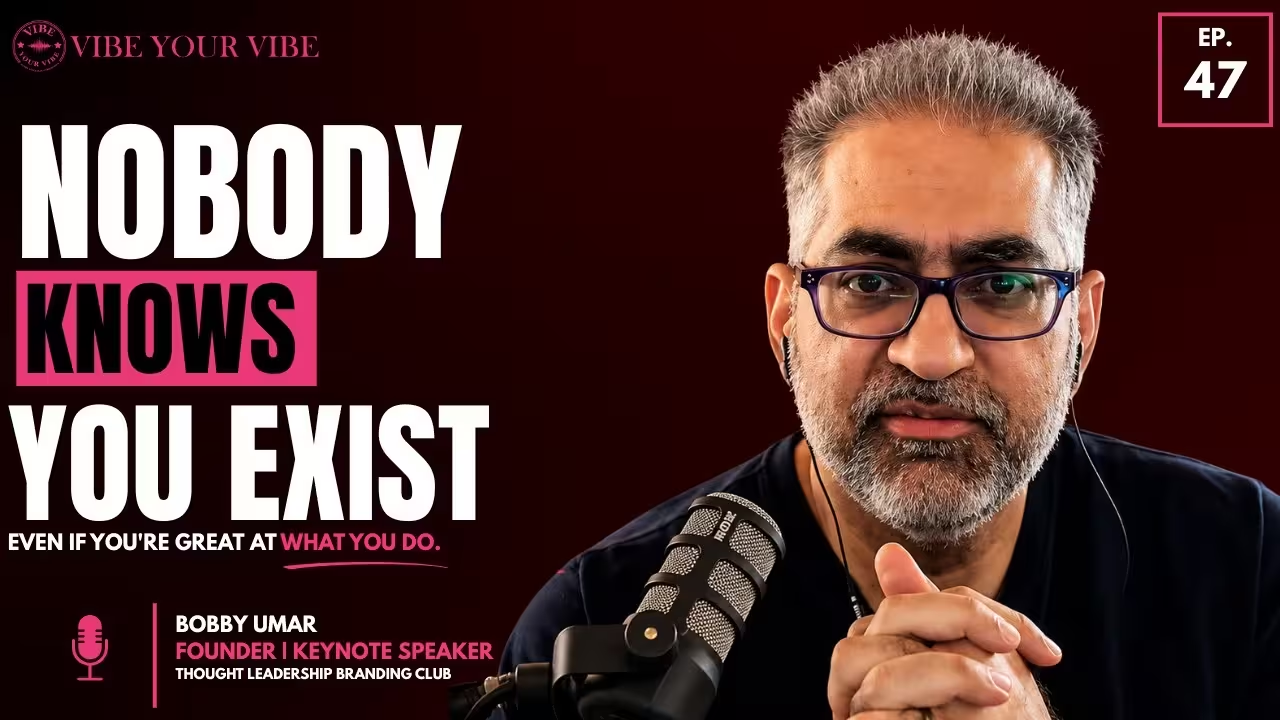
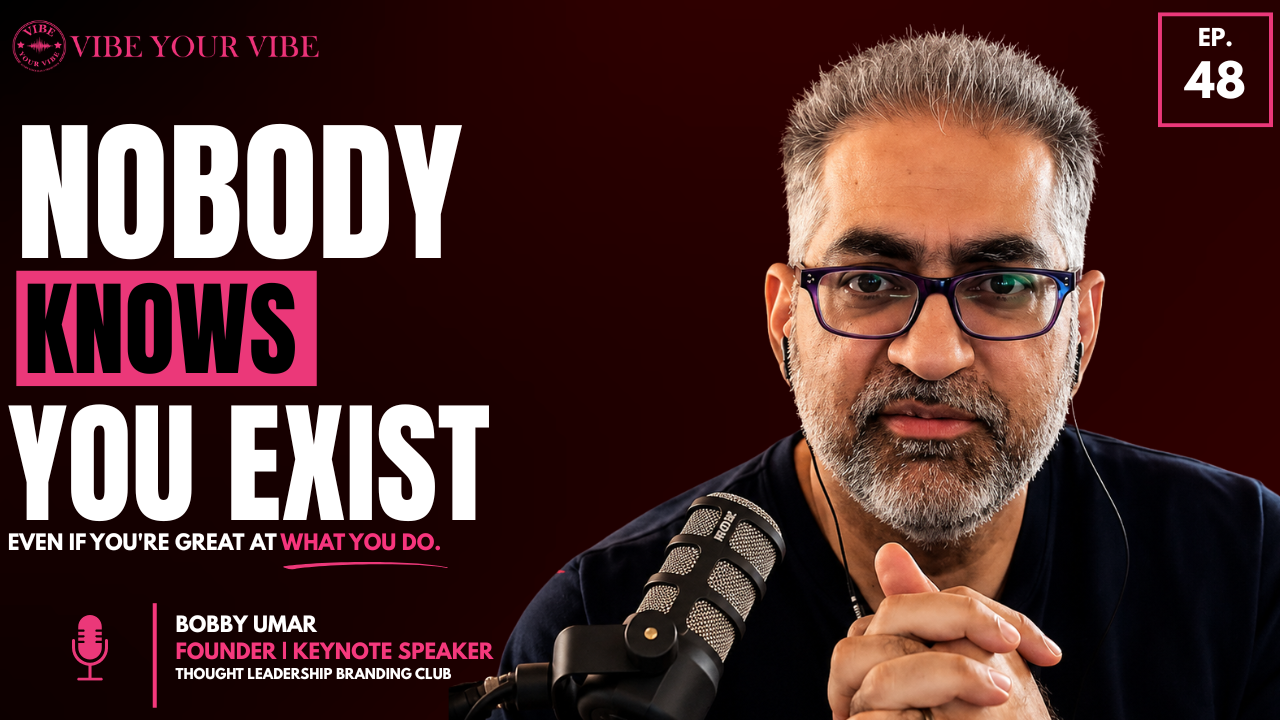
Nobody Knows You Exist: Bobby Umar on Visibility, Influence & Personal Branding
Bobby Umar Learn More About Bobby Play Episode Facebook Instagram Youtube Linkedin Keep Listening...
Stop Overwatering Your Lawn (And Every Other Mistake Florida Homeowners Make)
Scott Spitz Learn More About Scott Play Episode Facebook Instagram Youtube Linkedin Keep Listening...
From Empty Warehouse to 120 Creators: Trina’s Studio 1016 Story
Trina Chaney-Hoo Learn More About Trina Play Episode Facebook Instagram Youtube Linkedin Keep Listening...
- Personal branding and the importance of clarity
- Bobby's career path through engineering, marketing, teaching, and performing arts
- Getting his first TEDx talk and leveraging it for business growth
- Building and growing an audience on LinkedIn, Twitter, and Substack
- Why he shares vulnerable content about health, family, and personal struggles
- The 80/20 rule for balancing professional and personal content
- Dealing with online haters, trolls, and negative messages
- Curating your audience and training the social media algorithm
- Building trust through storytelling, consistency, and authenticity
- Overcoming imposter syndrome and developing a growth mindset
- Understanding attachment styles and overcoming personal barriers
- The "one thing" philosophy for maintaining focus and avoiding burnout
- His TEDx talk on 22-second hugs and the science of human connection
- What entrepreneurs should stop chasing to achieve long-term success
- Building a strong personal brand starts with knowing who you are and what you want to be known for.
- Your career doesn't have to follow a straight path—every experience can contribute to future success.
- TEDx talks can become powerful credibility tools when paired with consistent content and networking.
- Authenticity and vulnerability help build trust far more effectively than trying to appear perfect online.
- The 80/20 content strategy keeps your audience engaged while still reinforcing your personal brand.
- Curating your social media feed and audience shapes the opportunities and conversations you attract.
- Online criticism is inevitable, but staying focused on your mission matters more than pleasing everyone.
- Consistency in speaking, writing, and sharing valuable insights builds long-term authority and influence.
- Focusing on one clear goal instead of chasing every opportunity leads to greater impact and less burnout.
- Lasting success comes from meaningful relationships, continuous learning, and creating value rather than chasing likes or followers.
[00:00:00] Most people think personal branding is
[00:00:01] about becoming more visible online. So
[00:00:04] what do you think the real goal of
[00:00:06] personal branding should be?
[00:00:07] >> I think that uh for personal branding
[00:00:09] the main thing is clarity. What's really
[00:00:12] important is the clarity gives you if
[00:00:14] you dive deep in knowing who you are and
[00:00:16] how people interact with you and what
[00:00:18] happens is you're going to be able to
[00:00:19] have clarity, purpose, direction, focus
[00:00:22] on the path you're going to take, right?
[00:00:23] And if you understand that the impact,
[00:00:25] the standing out is even better. So for
[00:00:28] me like that is the biggest aspect of
[00:00:29] personal brand that a lot of people
[00:00:31] forget about. [music]
[00:00:38] >> Find your [music] tribe where truth
[00:00:40] can't hide.
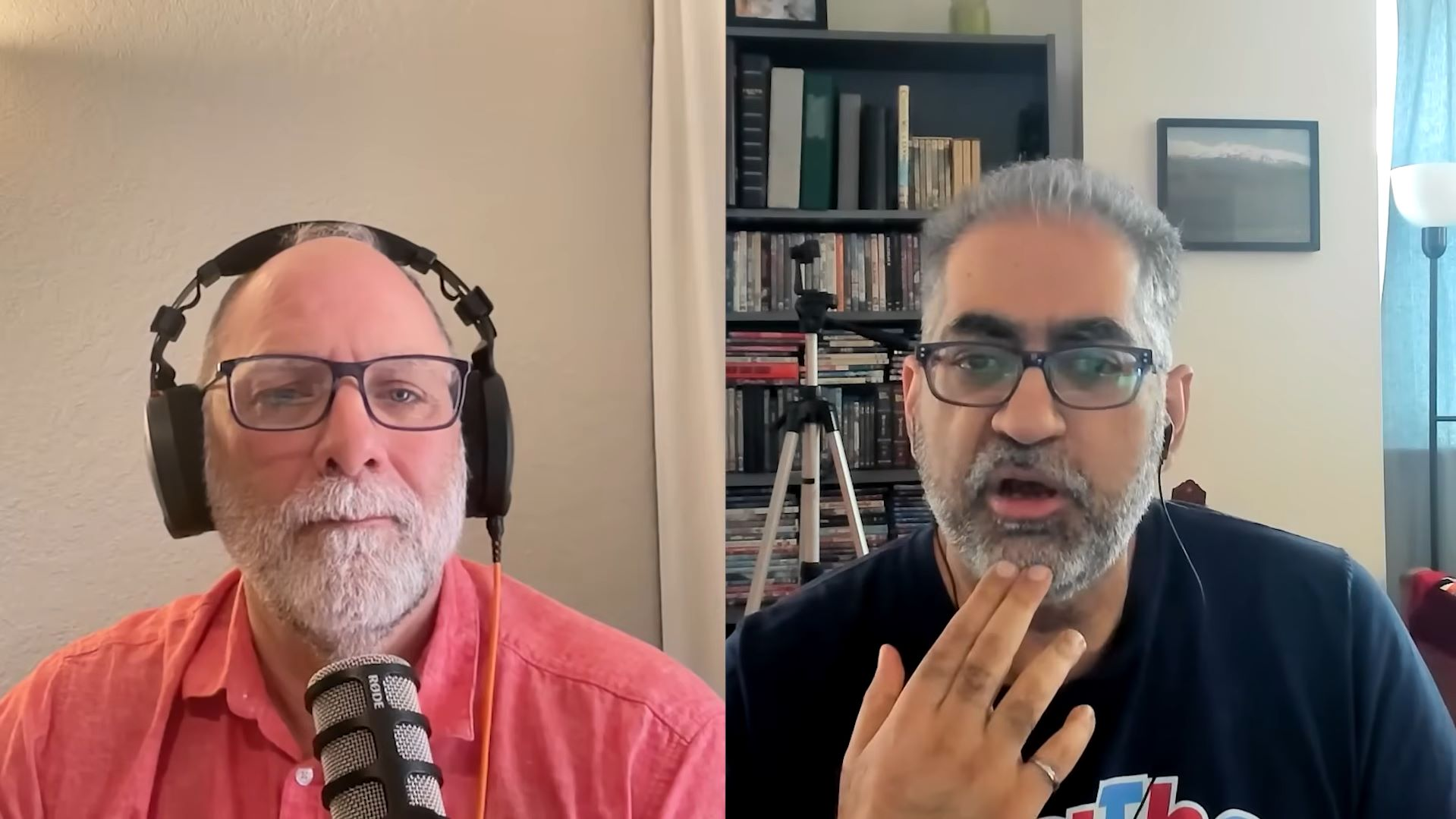
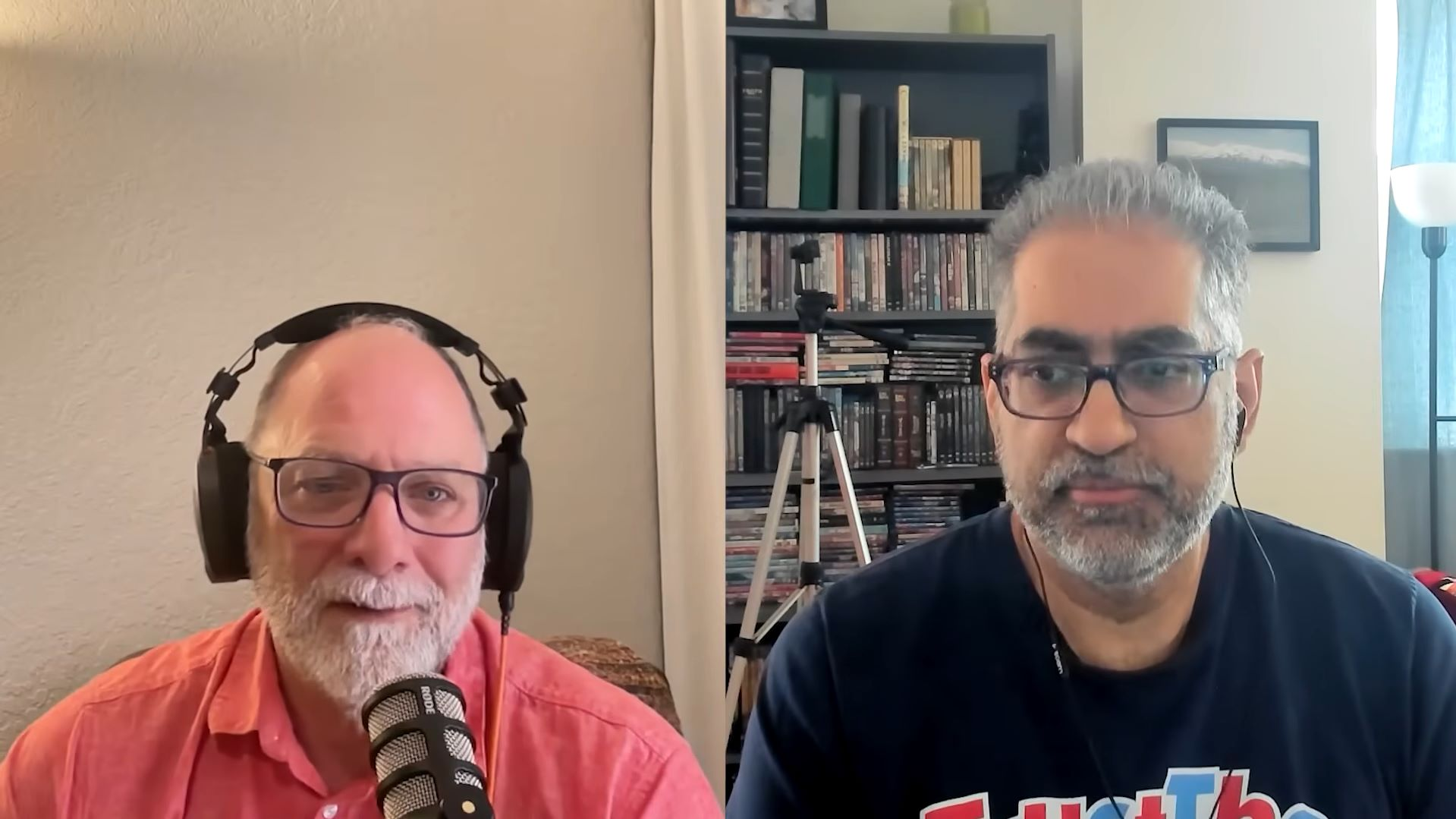
[00:00:44] >> So today's guest is Bobby Umar and he's
[00:00:48] a 5X TEDex speaker, a two-time LinkedIn
[00:00:51] top voice and was named Inc. Magazine's
[00:00:54] top 100 leadership speakers. That's
[00:00:56] pretty impressive. President of I'm
[00:00:58] gonna say it wrong. Raleigh.
[00:01:01] >> Ray Allen.
[00:01:02] >> Ray Ray Allen. [laughter]
[00:01:04] >> There's a famous basketball player named
[00:01:06] Ray Allen. So that's kind of how I like
[00:01:08] to
[00:01:08] >> Oh, Ray. Oh, and you said it together.
[00:01:10] Now that you said Ray Allen, it clicked.
[00:01:13] I gotcha. CEO of Discover Your Personal
[00:01:16] Brand and founder of Thought Leadership
[00:01:18] Branding Club. It's a business growth
[00:01:20] community helping entrepreneurs turn
[00:01:22] visibility into authority,
[00:01:23] relationships, and revenue. So today
[00:01:26] we're just going to chat about all of
[00:01:27] that. And uh you weren't always a a uh
[00:01:31] speaking kind of person or coach, were
[00:01:33] you?
[00:01:34] >> Uh no,
[00:01:35] >> this is this is somewhat I'm not going
[00:01:37] to say new because you've been doing it
[00:01:39] quite some time now.
[00:01:40] >> Yeah. So what I what
[00:01:41] >> but prior to that I because I remember
[00:01:43] we connected on LinkedIn.
[00:01:44] >> What I like to say is that um you know I
[00:01:48] had four careers. So I had a career in
[00:01:50] uh four engineering, brand marketing,
[00:01:52] teaching and performing arts. Those are
[00:01:53] four careers I had. But then about 20
[00:01:55] years ago, I launched my speaking
[00:01:57] career. So speaking was the main thing I
[00:01:59] did. And then a started after I started
[00:02:02] doing that. Um eventually I got my first
[00:02:05] TEDx talk. I've done five TEDex talks
[00:02:07] and I've rejected four four other TEDx
[00:02:08] talks. But when I got the first one, I
[00:02:10] started to really get more high level,
[00:02:11] more pro high-profile. And things
[00:02:13] started I started traveling around the
[00:02:14] world, which is great. But one of the
[00:02:16] things I started realizing is that, you
[00:02:18] know, I'm not a speaker. And people are
[00:02:20] like, you know, Bobby, they're like,
[00:02:20] Bobby, write a book. Okay, so I wrote a
[00:02:22] book. But what I realized was is that
[00:02:24] you're not a speaker. I'm an expert in
[00:02:25] topics and then that manifests in
[00:02:27] speaking and coaching and books and
[00:02:29] whatever and content whatever. So I
[00:02:31] started focusing more on my expertise
[00:02:34] which was at the time networking soft
[00:02:36] skill leadership. Eventually transition
[00:02:38] into personal branding and then I
[00:02:39] started talking about digital marketing
[00:02:41] and influence because I built a strong
[00:02:43] um digital platform particularly
[00:02:46] initially on Twitter first. I had a half
[00:02:48] a million followers there, but then I
[00:02:49] started building that up on LinkedIn and
[00:02:51] Instagram and other platforms, too. So,
[00:02:53] that's kind of how it's been, but I've
[00:02:55] been speaking for the last 20 plus
[00:02:57] years.
[00:02:57] >> So, the Twitter, is that still going for
[00:02:59] you?
[00:02:59] >> Sure. I mean, uh, you know, certainly
[00:03:02] the powers [clears throat] that be on
[00:03:03] that platform have made it far less
[00:03:06] useful and have even taken away my many
[00:03:09] of my followers. But, uh, for the most
[00:03:12] part, no, it's still very effective
[00:03:14] because I've done a good job of curating
[00:03:15] it, right? A lot of people, oh, it's
[00:03:16] toxic. control like well it is if you if
[00:03:19] you did it poorly but if you know how to
[00:03:21] nurture the right audience on any
[00:03:23] platform uh you can create something
[00:03:25] that's really really valid and useful.
[00:03:28] >> I didn't get a current number. Where you
[00:03:29] at on LinkedIn?
[00:03:30] >> LinkedIn at I think I'm at 56,000
[00:03:32] followers.
[00:03:33] >> Yeah. And the thing that's crazy about
[00:03:35] LinkedIn I've I've noticed some of the
[00:03:37] people I was connected with that are
[00:03:38] like in the million plus followers,
[00:03:41] their engagement has really dropped
[00:03:43] recently. What how has your engagement
[00:03:45] been? Did you notice a change in the
[00:03:47] algorithm? Are you constantly having to
[00:03:49] rework how you're doing LinkedIn to keep
[00:03:51] the engagement up?
[00:03:52] >> Yeah, look, as somebody who's been a
[00:03:53] social media guy for a long time across
[00:03:56] many platforms, you know, being mindful
[00:03:58] of the waves of algorithms and how they
[00:04:00] work and change and shift the advent of
[00:04:03] AI slop, you know, you have to
[00:04:05] understand how how to
[00:04:06] >> slop.
[00:04:07] >> Yeah, you have to understand how it all
[00:04:08] works and how to navigate it. Now, at
[00:04:09] the same time, there's a certain point
[00:04:11] in which you it's good to know the ways.
[00:04:13] at a certain point where you're like you
[00:04:14] don't want to move on to something else
[00:04:15] or you don't care so much. So yes, my
[00:04:18] you know my engagement stuff has uh you
[00:04:20] know it always goes down every time
[00:04:22] something new happens and then there's a
[00:04:24] new shiny object you do that and
[00:04:25] engagement goes up but for the most part
[00:04:27] yeah I mean generally speaking it's down
[00:04:28] but look the magic of LinkedIn and other
[00:04:32] platforms is not necessarily in the
[00:04:36] the impressions of the content. The
[00:04:38] content's there to build awareness, to
[00:04:40] showcase your expertise, to start
[00:04:41] conversations, but the real magic
[00:04:43] happens in the DMs and the
[00:04:45] conversations. DMing people, getting on
[00:04:47] calls, that's kind of doing live streams
[00:04:50] or podcasts, that's kind of where the
[00:04:51] magic is. And the communities, that's
[00:04:53] where the magic is for the most part.
[00:04:55] Um, so even when my content like you
[00:04:57] know I've I've had pieces like in the
[00:04:59] last like last month or two just
[00:05:01] absolute terrible like wow okay I
[00:05:04] thought they wanted videos and I have a
[00:05:06] video post like you know two people like
[00:05:07] it like what's going on whereas back in
[00:05:10] the old days you hundreds of people
[00:05:11] right so but but you know it keeps
[00:05:14] changing but you know you have to learn
[00:05:15] how to adjust it adjust it but a certain
[00:05:17] point like putting the content out there
[00:05:19] is still important to me uh but starting
[00:05:21] the conversations is is even far more
[00:05:23] important. Yeah, I I have to agree with
[00:05:25] you 100%. I I have clients and I tell
[00:05:27] them, I go, you just have to prove to
[00:05:29] the world that you have a pulse. So, you
[00:05:31] want to keep posting. You don't want to
[00:05:32] just stop. Even if it only gets one or
[00:05:34] two likes, it doesn't really matter.
[00:05:36] It's for those client, you know, or for
[00:05:38] those convers. So, you have a
[00:05:39] conversation, somebody goes, "Well, let
[00:05:40] me go look up Bobby, see what he's got
[00:05:42] going on." I don't think people really
[00:05:43] care that much anymore if if it has two
[00:05:45] likes or 2,000.
[00:05:47] >> Right.
[00:05:47] >> I think they just want to see that
[00:05:49] you're active.
[00:05:49] >> Yeah. I don't think I don't think
[00:05:50] >> that you're still doing things.
[00:05:51] >> Exactly. I mean, it's that it's that
[00:05:53] triangle, right? There's your profile,
[00:05:54] which if they look at your profile, they
[00:05:56] check out your content and maybe message
[00:05:57] you. Or you message them, they check out
[00:06:00] your profile, they check out your
[00:06:01] content, or content, they like the
[00:06:03] content, they check out your profile,
[00:06:04] then maybe they message you. So, like,
[00:06:06] for the most part, if they go to your
[00:06:08] profile,
[00:06:08] >> I like that. I like that.
[00:06:09] >> I mean, they they all kind of go
[00:06:11] together, right? So, like e wherever
[00:06:13] they wherever the touch point is,
[00:06:14] they're going to do look at the other
[00:06:16] things potentially. And so,
[00:06:17] >> and if you don't have it there,
[00:06:19] >> so they go to your profile and they they
[00:06:21] see you posting some stuff. If you say,
[00:06:23] "Hey, here's Bobby talking about AI and
[00:06:24] Claude. Here's Bobby talking about
[00:06:25] keynote speak and vulnerable
[00:06:26] storytelling. Oh, he seems interesting."
[00:06:28] Yeah. They're not diving into, "Oh,
[00:06:30] well, this one only has two lengths and
[00:06:31] I guess he's not an important person."
[00:06:33] No, I think they see they see my face,
[00:06:35] they see the banner, they see the
[00:06:36] headline of five time speaker, two time
[00:06:39] LinkedIn top voice, and they're like,
[00:06:40] "Oh, he seems like a" and then and then
[00:06:43] they watch a video of me being, you
[00:06:44] know, say personable. uh this seems like
[00:06:46] a seems like a good guy and that's
[00:06:48] that's all you need for the most part,
[00:06:50] >> right? I noticed I've noticed also that
[00:06:52] you posted uh quite a bit about your
[00:06:53] family, too. Is that kind of a twist
[00:06:56] that you've done recently?
[00:06:57] >> No, it's been something like in the last
[00:07:00] >> I
[00:07:00] >> not like in the last few weeks or
[00:07:02] months, I'm seeing it seemed like when I
[00:07:04] first started following you, I didn't
[00:07:06] see a lot of that [clears throat]
[00:07:07] >> in
[00:07:08] >> and I'd say in the last like five or six
[00:07:09] years, I saw a definitely a uptick.
[00:07:11] >> Yeah. A long time ago I didn't do as
[00:07:13] much personal stuff and then I think you
[00:07:15] know I started sharing because I became
[00:07:17] more personal and vulnerable on
[00:07:18] platforms like Facebook and Twitter and
[00:07:21] Instagram I started to and then I think
[00:07:23] what happened on LinkedIn was two things
[00:07:25] happened. One was somebody I think it
[00:07:27] was swishwami had he he tagged me on a
[00:07:29] post saying hey # let's get honest
[00:07:31] campaign and he talked about his mental
[00:07:33] health challenges with um his stutter
[00:07:37] and his anxiety and I was like wow okay
[00:07:39] so I so I decided
[00:07:40] >> that's very vulnerable
[00:07:42] >> and so so yeah he asked me to share
[00:07:43] something vulnerable and so I started
[00:07:45] talking about um I I went I went full
[00:07:48] into it binging disorder which is what I
[00:07:51] have struggled with diabetes body image
[00:07:53] my whole life I talked about being
[00:07:54] diagnosed What's binging disorder? What
[00:07:56] does that mean? Being out of control
[00:07:57] with my food and uh and I explained how
[00:08:01] much I could possibly eat even and it
[00:08:03] would make you sick. And uh just talking
[00:08:06] about that like you know like that that
[00:08:07] was the start. And then of course you
[00:08:09] know I started talk being a parent start
[00:08:12] I love talking about my kids so I talk
[00:08:13] about my kids their birthdays. I started
[00:08:15] talk about my mother's day my mom my
[00:08:17] wife my mother-in-law and it just now
[00:08:19] whenever there's a birthday anniversary
[00:08:20] or something I will definitely talk
[00:08:22] about it. And then I think the third
[00:08:23] thing that that threw me was um politics
[00:08:25] and social activism. When George Floyd
[00:08:28] happened, I decided to talk about it.
[00:08:30] And after that, I decided, you know
[00:08:31] what, like it's like I don't do it all
[00:08:33] the time, but you know, I think that for
[00:08:34] the most part, my general rule is 8020.
[00:08:36] 80% of your content is typically
[00:08:38] targeted on brand who you want to
[00:08:40] target. The other 20% is either personal
[00:08:42] or experimental or whatever you want.
[00:08:44] You shouldn't be you shouldn't be
[00:08:46] confined to just only posting about one
[00:08:48] thing. And I think that by mixing with
[00:08:50] other things, it makes you more
[00:08:51] interesting. In fact, you know, like
[00:08:53] while we're talking now, I did do a a
[00:08:55] very vulnerable post. I don't really do
[00:08:56] vulnerable posts that often, maybe once
[00:08:58] every couple of months, but I put
[00:09:00] together a really vulnerable post just a
[00:09:01] few days ago. Um, and you know, and and
[00:09:04] obviously getting tons of engagement,
[00:09:06] which typically it does. It sparks great
[00:09:09] conversation. And the most important
[00:09:11] reason I do it is because uh people have
[00:09:14] told me time and time again, whether
[00:09:15] they tell me immediately or even 5 years
[00:09:17] after they they've seen my content, it's
[00:09:19] nice to know that I wasn't alone. And so
[00:09:22] for me, I'm I'm I'm happy to share that.
[00:09:24] Yeah,
[00:09:24] >> I I think so. I think that's the you
[00:09:26] know, I I know I got probably some
[00:09:28] unfollows or blocks because I I forgot
[00:09:30] what I posted.
[00:09:32] >> Somebody just either they commented or
[00:09:34] they sent me a DM like that seems like
[00:09:36] something for Facebook. And I was just
[00:09:37] like, "Yeah, but this is real and this
[00:09:39] is what's happening."
[00:09:40] >> Said by someone who doesn't understand
[00:09:41] social media because the truth is, you
[00:09:44] know, I used to talk about fertility
[00:09:45] issues where at work with my boss. I've
[00:09:48] tal I've talked about binging disorder
[00:09:50] where at a business conference with
[00:09:51] other colleagues because look, when we
[00:09:53] go in the workplace, we talk about our
[00:09:56] personal lives. We talk about what's
[00:09:57] going on. We talk about our favorite
[00:09:58] movie or favorite restaurant. This idea
[00:10:00] of just Facebook. No, Facebook. And then
[00:10:02] Facebook a place where people are
[00:10:03] talking about business, right? I mean,
[00:10:04] Facebook did great with business groups,
[00:10:06] right? The best groups are on LinkedIn.
[00:10:08] They're on Facebook for business. And
[00:10:11] so, so, you know, like uh this idea that
[00:10:14] people have, they just don't understand
[00:10:16] how social media works. Social media is
[00:10:18] media and it's social and even in the
[00:10:20] workplace, you're still going to talk
[00:10:21] about personal stuff and that's entirely
[00:10:23] okay. It's more about how you do it and
[00:10:26] what's the point of doing it,
[00:10:27] >> right? I mean, I just think it I guess
[00:10:29] kind of like what I said before, just
[00:10:31] makes you seem really real. you're a
[00:10:32] real person. And then so talk about um
[00:10:35] you you did this TEDex talk. What
[00:10:38] created that desire to do a TEDex talk
[00:10:41] and what was the I'm sorry I didn't
[00:10:42] watch it. What was the TEDex talk about?
[00:10:44] >> Well, I mean I've done five, but the
[00:10:46] first one happened someone told me, "Hey
[00:10:48] Bobby, I love work." He was he was
[00:10:50] actually an intern of mine and he say,
[00:10:52] "Bobby, I love working with you. I'm
[00:10:54] doing a TED talk. Can you come speak?"
[00:10:56] And I was like, "What's a TED talk? I
[00:10:57] have no idea what that And so I looked
[00:10:59] it up and I was like, "Wow, all the
[00:11:01] biggest scientists, philosophers,
[00:11:03] business leaders, political leaders, all
[00:11:06] these people around the world were were
[00:11:08] doing these talks." I was like, "Wow,
[00:11:09] this is this is quite impressive. I I
[00:11:11] should I should really work on this, do
[00:11:13] a good job." And so I agreed. And I'll
[00:11:17] tell you like that first TEDex talk was
[00:11:19] the most stressful talk I've ever had in
[00:11:20] my life. I saw the branding opportunity.
[00:11:23] I saw the power of the video, the the
[00:11:25] power of having a shorter talk than your
[00:11:27] normal hourlong keynote is like less
[00:11:29] than 18 minutes, right? They gave me 14
[00:11:30] minutes and I was like, "Okay, I really
[00:11:32] got to make this land." I I rehearsed
[00:11:35] that thing like 30 times. Every single
[00:11:37] time something went wrong in my in my
[00:11:38] head
[00:11:39] >> and uh and when I when I did it, it went
[00:11:42] great. I was relieved. [laughter]
[00:11:44] But
[00:11:45] >> but it was, you know, it was a really
[00:11:46] big deal and I was like, "This is fant."
[00:11:48] And after that um man everything
[00:11:50] happened like you know it was that that
[00:11:52] year and and of course I did a good job
[00:11:54] of leveraging and a lot of people do
[00:11:55] TEDex talks or they launch a book and
[00:11:57] they do they don't leverage it. So I
[00:11:58] leveraged I was like big on leveraging
[00:11:59] and I was already big on social media at
[00:12:01] that time. I was like you know let me
[00:12:02] leverage this thing. So I was able to
[00:12:04] convert that into increasing my my uh
[00:12:07] keynote feed by two and a half times uh
[00:12:09] to getting 40% more gigs that year. And
[00:12:11] then people started asking me hey Bobby
[00:12:13] uh you know do you want to do you want
[00:12:15] to do coaching and consulting? I'm like,
[00:12:16] "Oh, okay. They want me to come into
[00:12:17] their company and and coach and consult.
[00:12:19] That's different. Sure. I hadn't even
[00:12:21] thought about that." And that's also
[00:12:23] where I started shifting my perspective
[00:12:25] of not being just a speaker, but an
[00:12:26] expert in something that I could be that
[00:12:29] could manifest itself in different
[00:12:30] different ways. So, that was a great u
[00:12:32] moving that that that changed my life.
[00:12:35] >> Really?
[00:12:35] >> Yeah.
[00:12:36] >> It really I mean 40% that's a that's a
[00:12:38] pretty big jump, isn't it?
[00:12:39] >> Yeah. Yeah. So, and and getting to
[00:12:41] travel around the world and being known
[00:12:43] and getting opportunities like Yeah.
[00:12:45] That was f within two years I had done
[00:12:47] four TEDex talks. So I was a four-time
[00:12:49] TED tech speaker for a long time. I only
[00:12:51] did the fifth TEDex talk because someone
[00:12:53] said, "Hey, Bobby, there's a there's one
[00:12:54] you should pitch." I'm like, so I did
[00:12:56] and I did it and it was it was great.
[00:12:58] >> So we're all So these weren't all in uh
[00:13:00] You're originally Are you originally
[00:13:02] from Toronto or that's where you
[00:13:04] currently? I live in
[00:13:05] >> That's what I had in my mind.
[00:13:05] >> Yeah, I mean I grew up on the east coast
[00:13:07] of Canada, but I' i've been in Toronto
[00:13:08] for most of my well my entire kids'
[00:13:10] lives and most of my life now. Is it was
[00:13:13] this the Toronto TEDex or was it a
[00:13:15] >> uh there there's Well, they're all
[00:13:18] around the various places. So, all five
[00:13:20] of them were different places, but the
[00:13:21] first one Oh, wow.
[00:13:22] >> The first one was in London, Ontario,
[00:13:24] the University of Western Ontario.
[00:13:26] >> How do you address like you're coaching
[00:13:28] people and how to get on on uh online
[00:13:30] and be real? How much do you deal with
[00:13:33] folks that you're talking to about like
[00:13:35] imposttor syndrome?
[00:13:36] >> Well,
[00:13:37] >> like how how big of a part does that
[00:13:38] play in a lot of this stuff? In the
[00:13:40] beginning of all the things I've done
[00:13:42] whether I was teaching people about
[00:13:43] personal branding teaching my speaker
[00:13:45] mastermind program teaching about how to
[00:13:47] land a tetics talk and even now with TB
[00:13:49] club with the you know small business
[00:13:50] owners and what they're trying to do and
[00:13:52] grow mindset is the primary thing we
[00:13:55] talk about it comes up all the time so
[00:13:56] impos imposter syndrome
[00:13:58] >> every single time there's something
[00:14:00] going on there and I mean even in even
[00:14:03] the vulnerable even the personal
[00:14:04] vulnerable stuff I mean me sharing me
[00:14:06] talking about you know diabetes and body
[00:14:07] image and issues with my with my liver
[00:14:10] uh just a couple of days ago. I mean
[00:14:12] people think impost syndrome like you
[00:14:14] know oh who am I to share this and you
[00:14:16] know people are probably going to be
[00:14:17] embarrassed to to work with me but no
[00:14:18] like people feel impost syndrome and the
[00:14:21] mindset stuff all the time. It comes up
[00:14:23] all the time. So learning and in that
[00:14:25] post I was definitely talk about a
[00:14:26] mindset piece that was challenging
[00:14:29] because no one's perfect at mindset
[00:14:32] despite people who think they are. I I
[00:14:35] I've I've even seen many mindset coaches
[00:14:37] who clearly have mindset issues, but but
[00:14:40] they
[00:14:40] >> they have mindset issues themselves.
[00:14:43] They coach others.
[00:14:43] >> Yeah. I just find that really funny um
[00:14:45] when I talk to them, but yeah. So, I
[00:14:47] think
[00:14:47] >> Well, it's kind of hard to look in a
[00:14:48] mirror, right?
[00:14:49] >> Yeah. We don't we don't know, right? So,
[00:14:50] I think I think the the imposter thing
[00:14:52] comes up in every single speak thing.
[00:14:55] Speaking, networking, TEDex talks,
[00:14:57] content creation, relationships, going
[00:14:59] on a podcast, doing a video, like it's
[00:15:02] everywhere.
[00:15:03] >> Yeah. I even had a I was actually kind
[00:15:05] of happy about it. I don't know what
[00:15:07] they intended to be, but I had uh my
[00:15:11] first podcasting was where I did it for
[00:15:14] me was uh last year. In fact, I'm going
[00:15:16] to the same event Saturday at this Miami
[00:15:19] International Fitness Expo and it was
[00:15:21] super loud in there. Now, this year
[00:15:22] we're going with the same gear, but we
[00:15:25] have a lot more knowledge, so the audio
[00:15:27] is going to be massively cleaned up and
[00:15:29] we won't have the audio issues that we
[00:15:31] had last year. But it was interesting
[00:15:33] like somebody said, "What the f are you
[00:15:34] trying to do at a I think it was a DM
[00:15:37] like what do you think you're trying to
[00:15:38] do? You why are you trying to do a
[00:15:40] podcast there? It's we can't hear you."
[00:15:42] And I'm like, "I don't know. Why not?"
[00:15:45] [laughter] That was my That was my But I
[00:15:47] think I answered him back and I go, "Oh,
[00:15:49] thanks. My first hater. I guess I'm
[00:15:50] successful." [laughter]
[00:15:52] >> Yeah.
[00:15:52] >> How many? So this landed my next one. I
[00:15:55] do you get a lot of haters?
[00:15:56] >> Sure.
[00:15:57] >> Cuz you're out there quite a bit. Yeah.
[00:15:59] And now you're you're putting a lot of
[00:16:00] personal stuff out there.
[00:16:01] >> Yeah. I think that um I would say uh the
[00:16:03] haters uh yeah there's always been
[00:16:05] haters across every platform and this
[00:16:08] there's always people who again I
[00:16:09] naively think they don't understand
[00:16:10] social media haters are everywhere they
[00:16:13] just start they started off on websites
[00:16:15] and then they were prolific on Twitter
[00:16:17] and then they say oh you know Twitter is
[00:16:18] a cesspool but you know Facebook,
[00:16:20] Instagram and LinkedIn have haters and
[00:16:22] I've dealt with haters on those
[00:16:23] platforms and then all of a sudden
[00:16:25] threads came oh threads and blue sky
[00:16:27] it's great there's no hate here. No, no,
[00:16:29] just wait. It It doesn't [laughter]
[00:16:31] like it. It's coming. It's gonna come.
[00:16:33] Like, and so now I have haters on those
[00:16:35] platforms, too. But I think um it
[00:16:38] definitely got it was really bad. Um
[00:16:40] well, it it really it really got bad in
[00:16:41] 2015, 2016 for for a variety of reasons.
[00:16:44] as you probably understand politically.
[00:16:46] But we start people started becoming
[00:16:48] doubling down on just you know lying and
[00:16:52] saying whatever you want and being you
[00:16:54] know very very um I don't know like uh
[00:16:58] dis disingenuous untruthful and you know
[00:17:02] just and and being just say whatever you
[00:17:04] want without consequence and uh it's and
[00:17:07] so that started a lot in 2016 I think
[00:17:10] now like you know um and so it was a lot
[00:17:13] it was a lot back then now because I've
[00:17:15] been more mindful of it. I'm curating
[00:17:17] things better. So after after 2016 and
[00:17:20] 2020, I was kind of off Twitter. I was
[00:17:22] like, I want to take a break because it
[00:17:23] was it was just too much. And then as I
[00:17:25] started building on other platforms and
[00:17:27] you see it now, I recognize that it's a
[00:17:30] it's also something you have to be
[00:17:32] mindful of. So if you're going to do a a
[00:17:33] very controversial post, you have to be
[00:17:35] willing to emotionally get into it. Like
[00:17:37] I I did a post, I think uh maybe two
[00:17:39] years ago. It was specifically about
[00:17:40] about pride pride month, which is in
[00:17:43] June. And I and I and I was specifically
[00:17:45] targeting people who were uh I would say
[00:17:49] people from my from my culture and and
[00:17:52] religion plus other people who are
[00:17:53] religious. And I talked and I talked
[00:17:55] about you know values of love and
[00:17:57] forgiveness. But I also talked about how
[00:17:59] we need to support everyone every one of
[00:18:00] us who are marginalized. And I got a lot
[00:18:03] of a lot of hate from uh from religious
[00:18:07] folks and on on LinkedIn mind you. And
[00:18:12] you know the qu
[00:18:13] >> DMs or public comments
[00:18:14] >> public comments.
[00:18:16] >> Wow.
[00:18:16] >> I still I got DMs too.
[00:18:17] >> Pretty bold.
[00:18:18] >> Yeah. Yeah. Well, that's the thing. And
[00:18:20] so the question but but again do I want
[00:18:22] to go and engage these people because
[00:18:24] that's an emotional investment I have to
[00:18:26] be willing to take and that's on any
[00:18:28] platform and but but because I posted
[00:18:30] it, I knew I would get stuff. So I was
[00:18:32] ready to take it on. And so you go in
[00:18:34] and decide, okay, what am I going to
[00:18:35] delete? What am I going to reply to?
[00:18:37] What am I going to block? You have to
[00:18:38] figure that stuff out. And that's
[00:18:39] exactly what I did. And so, you know,
[00:18:42] but I I think that I I find because I've
[00:18:44] curated that the hate is less for me.
[00:18:47] So, I don't see as much like on Twitter,
[00:18:49] I don't see very much any anymore. Uh I
[00:18:51] find the biggest hate or the biggest
[00:18:53] trolling is the ones who go into DMs.
[00:18:56] I'm a big believer that you as soon as
[00:18:58] you go if you go into a DM unsolicited,
[00:19:02] that's cyber bully. That's trolling
[00:19:03] because you're you you don't want to be
[00:19:05] public. You want to go after that
[00:19:06] person, say whatever the hell you want,
[00:19:08] and they're going to feel trapped in
[00:19:10] terms of how to respond or not respond
[00:19:11] or ignore, but it hurts more than when
[00:19:14] it's public. Public is because like,
[00:19:16] what kind of fool what foolish thing are
[00:19:17] you saying here? That's crazy. Um, but
[00:19:19] when they when they go in there and then
[00:19:21] DMs, I make it really clear. Don't don't
[00:19:22] invite people to DMs on the particularly
[00:19:24] sensitive topics. Don't ever give DM
[00:19:26] advice unsolicited. You know, like for
[00:19:29] me, that's that's how you become a bully
[00:19:31] or troll. And this even happens among
[00:19:33] colleagues and friends. And there have
[00:19:34] been colleagues on LinkedIn and friends
[00:19:36] on Facebook who have done that and I
[00:19:38] think it uh you know it's it's harmful
[00:19:40] to everybody
[00:19:41] >> right
[00:19:41] >> but it's less now I think for me I think
[00:19:44] there are people who are definitely
[00:19:45] trolling more I agree but for me
[00:19:46] personally it's actually less because
[00:19:49] I've done a good job of curating it and
[00:19:51] I've learned better how to respond.
[00:19:53] >> Can you explain more about curating?
[00:19:55] What does that mean for you?
[00:19:56] >> You curate your audience, right? So you
[00:19:58] curate your audience in terms of who you
[00:20:02] follow, who you engage, who the
[00:20:05] algorithm will show you, and then also
[00:20:07] you also curate your audience in terms
[00:20:08] of how you respond to things and how you
[00:20:11] don't respond to things.
[00:20:13] >> Because
[00:20:14] >> I had a guest Yeah. I had a guest the
[00:20:16] other day and somebody was talking about
[00:20:19] like all the crap on social media.
[00:20:21] >> Yeah.
[00:20:22] >> And he's like, "Well, let me take a look
[00:20:23] and see who you're following."
[00:20:25] >> Right. the algorithm is only going to
[00:20:26] give you what you're asking for and how
[00:20:29] you ask for it is who you're following
[00:20:31] and then you get more because they were
[00:20:34] I guess what is it called on Twitter
[00:20:36] something like for you or found for you
[00:20:38] or
[00:20:39] >> well I mean uh yeah yeah they might
[00:20:42] >> is there something
[00:20:43] >> they might have suggested follows which
[00:20:44] is also what you have on
[00:20:45] >> suggested well not just but just even
[00:20:47] suggested uh content
[00:20:49] >> and and this person was explaining to
[00:20:51] this guest of mine you know how I get
[00:20:52] all this you know there's all this junk
[00:20:54] out there and he's like, "Well, you're
[00:20:56] getting that because of who you're
[00:20:58] following." So, that's a good tip on
[00:20:59] your curating. Like, you need to go
[00:21:01] through and pair down who you're
[00:21:02] following to make sure you're following
[00:21:03] the right people, giving you the right
[00:21:05] >> um content
[00:21:07] >> because that they're the algorithm is
[00:21:08] only going to look at who you're
[00:21:09] following and who you're engaging with.
[00:21:11] >> Yeah.
[00:21:11] >> And then give you more of that.
[00:21:13] >> Yeah. The the other thing the other
[00:21:14] thing happens too is like when someone
[00:21:15] sends you a let's say a tweet, let's use
[00:21:17] a tweet and they reply to something and
[00:21:19] they and it sounds it's it's pretty it's
[00:21:21] bad. I will then retweet it publicly,
[00:21:24] tag them and say, "Hey, based on what
[00:21:26] you said, here's what it doesn't make
[00:21:27] sense to me. One, two, three." And I
[00:21:29] make it so obvious and plain that if
[00:21:32] they want to double down on, they're
[00:21:34] going to look silly. [laughter] And so
[00:21:36] so they so they don't and so they'll
[00:21:38] either unfollow me or they'll stop
[00:21:39] commenting because that's also me curing
[00:21:42] my audience by sending them a message.
[00:21:44] >> I like that a lot. Works very well.
[00:21:46] Yeah. So you just we retweet it out
[00:21:49] >> and then say, "Hey, can you give me some
[00:21:51] clarity on points one, two?"
[00:21:52] >> Well, no, no. More specifically, I'll
[00:21:54] say why what they're saying makes no
[00:21:55] sense in a polite way. Like, you know,
[00:21:58] based on what you said, here's what
[00:22:00] people that they are going to perceive.
[00:22:01] one, two, three, and I'll point out what
[00:22:04] why it's all wrong and how absolutely
[00:22:05] silly it is, but in a very nice way, and
[00:22:07] they they stop engaging.
[00:22:09] >> Yeah. Because there's no need to go down
[00:22:11] into the make it nasty, right? No, not
[00:22:13] really. I don't see any reason for that.
[00:22:15] >> Um especially when I mean, I don't know
[00:22:18] why people don't seem to haven't figured
[00:22:19] this out yet, but it's
[00:22:21] >> once it's out there.
[00:22:22] >> Yeah,
[00:22:22] >> it's out there. Well, well, well, one my
[00:22:25] my pinned tweet on Twitter that I have
[00:22:27] at the top of my profile, it's the same
[00:22:29] I've had for years, which is basically
[00:22:31] divisiveness creates more divisiveness,
[00:22:33] right? You you can't, you know, there's
[00:22:36] no point putting people down, right? So,
[00:22:39] what you should do is just try to engage
[00:22:41] in a nice kind empathetic way or a
[00:22:43] curious way or an exploratory way and
[00:22:46] that's it. So, for me, uh, empathy is
[00:22:48] the way to go and understanding is a way
[00:22:50] to go and don't put people down. Don't
[00:22:53] be divisive because that just breeds
[00:22:54] more divisiveness. So for me, I won't do
[00:22:56] that. I I'll call things out and I'll
[00:22:58] certainly point it out, but I'm not
[00:23:00] going to do it in in a manner that
[00:23:02] attacks that person personally or or
[00:23:04] things like that.
[00:23:04] >> Right. It's the behavior, not the person
[00:23:06] themselves.
[00:23:07] >> What do you think builds trust the
[00:23:09] fastest online? Is it the expertise, the
[00:23:12] story test, storytelling, the
[00:23:14] consistency, or vulnerability? Because
[00:23:16] you've you've kind of cover all of that.
[00:23:20] You're very consistent. I think you
[00:23:22] pretty good storyteller. You've got a
[00:23:25] wealth of expertise and then you've also
[00:23:27] shared vulnerability. I mean, is there
[00:23:29] is it all four or is it what what what
[00:23:32] do you think works best?
[00:23:34] >> Well, to answer your question, what
[00:23:35] builds authority and trust the best? Uh,
[00:23:40] generally speaking, it is speaking.
[00:23:43] So, speaking is the best way versus say
[00:23:46] a blog, a book, you know, an imagebased
[00:23:49] content piece. Um, so being able to hear
[00:23:52] my voice, my tone, my personality that
[00:23:55] whether it's on a podcast, a video, on a
[00:23:58] panel, keynote, workshop, whatever, even
[00:24:01] content, TEDex, that's one thing. The
[00:24:04] second piece is the vulnerable piece,
[00:24:08] which is, you know, Bernie, my my first
[00:24:09] TEDex talk was about the five C's of
[00:24:11] connection. I cited Bernie Brown's
[00:24:13] study, which said that vulnerability is
[00:24:15] a deep connector. And so if you're a
[00:24:18] able to do that that so you if you
[00:24:21] combine vulnerability with speaking and
[00:24:24] storytelling storytelling also helps too
[00:24:26] but I think that just being able to
[00:24:27] speak speak your truth speak your mind
[00:24:30] just talking the people are talking on
[00:24:32] Tik Tok and talking on Instagram and
[00:24:33] talking on YouTube they're just talking
[00:24:35] now how they do it also makes a big
[00:24:38] difference but I think the vulnerability
[00:24:39] piece if you want to build greater trust
[00:24:42] goes a long way but if you want to build
[00:24:43] trust when it comes to expertise well
[00:24:45] then again speaking and doing it
[00:24:47] consistently in a in a manner that
[00:24:49] reaches people. Storytelling is a great
[00:24:50] way to reach people. Facts are a great
[00:24:52] way to reach people. Dynamic energy and
[00:24:54] personality is a great way to reach
[00:24:56] people. But I think that if you had to
[00:24:58] pick one thing, I always say I say TEDex
[00:25:01] talks because TEDex talks is speaking,
[00:25:04] it's storytelling, it's content, and
[00:25:07] it's very human. And so if you want to
[00:25:09] 10x your authority and your trust
[00:25:12] quickly, TEDx is the best way to go
[00:25:14] versus anything else. all the other
[00:25:15] things there's a longer it's a longer
[00:25:17] game networking is a is like a longer
[00:25:19] play um content strategy is a longer
[00:25:22] play a book is a longer a longer
[00:25:24] timeline but speaking and particularly
[00:25:26] TEDex you know one of the things I tell
[00:25:29] people is that you know TEDex is
[00:25:31] basically 40 50 hours of work over a 3
[00:25:35] to nmonth time period to 100x your brand
[00:25:38] trust and authority very quickly whereas
[00:25:40] everything else takes way longer a book
[00:25:42] can take longer than 40 50 hours and the
[00:25:44] timeline for some of these things like
[00:25:46] content strategy can be a year, a year
[00:25:47] and a half to two years before you start
[00:25:48] to getting the results you want. So
[00:25:50] that's why I say doing TEDex talks and
[00:25:52] speaking is the best way to go.
[00:25:53] >> Interesting. I just know I got I was
[00:25:55] requested to speak at an event down in
[00:25:57] Miami University of Miami. It was a
[00:25:59] interesting experience. I basically
[00:26:01] froze. I completely what do you call it?
[00:26:03] I just crashed and burned.
[00:26:04] >> Yeah. Yeah. No, freezing is a common
[00:26:06] thing.
[00:26:07] >> And what was interesting is that um the
[00:26:10] guy who had requested me to speak, he's
[00:26:11] like, "Dude, what happened?" He goes,
[00:26:12] "You just need to get up there and
[00:26:14] talk." He goes, "I know you know this
[00:26:15] stuff." It's like, "You weren't talking
[00:26:17] about anything you didn't." It's like,
[00:26:19] "You know this." And I was like, "I
[00:26:21] don't know." He goes, "Next time, just
[00:26:23] put your notes down. Don't bring any
[00:26:24] notes."
[00:26:25] >> Yeah.
[00:26:25] >> Yeah. [laughter]
[00:26:26] >> So, we had me do it again like in an
[00:26:28] interview style and it worked out a lot
[00:26:30] better. Um,
[00:26:32] just So, is that part of what you kind
[00:26:35] of help people with so they don't get up
[00:26:36] there and just freeze?
[00:26:38] >> I I I would say for the
[00:26:39] >> You said it takes like 40 50 hours. Is
[00:26:41] that 4050 hours working with you?
[00:26:42] >> That's 40 50 40 50 hours of of their
[00:26:45] time to then land the TEDx talk. Now
[00:26:47] what I would say in terms of who I work
[00:26:49] with is like look speaking is a is a is
[00:26:52] a a journey right from A to Z A to Z.
[00:26:55] ABC would be people who don't know how
[00:26:57] to speak have no confidence and you know
[00:26:59] they sit there sit at their desk and
[00:27:00] they don't know how to speak up. Then
[00:27:02] there's you know people later on who are
[00:27:04] trying to get out and speak more maybe
[00:27:05] do a presentation at work and they're
[00:27:07] struggling with that. I don't work with
[00:27:08] those people. I work with people who are
[00:27:10] seasoned executives, business leaders
[00:27:12] who are now at the point where they've
[00:27:14] had 20 plus years experience. They know
[00:27:16] what they like. They know what they want
[00:27:17] to talk about. They want a TEDx talk.
[00:27:18] They want to do more speaking. They want
[00:27:20] to build authority. I will this is PQRS
[00:27:23] of that journey. I will take these
[00:27:25] people and show them how to get clear on
[00:27:27] their brand, figure out what they want
[00:27:28] to speak about and then elevate their
[00:27:30] authority and brand by getting them TEDx
[00:27:32] talk, building their, you know, building
[00:27:33] their uh digital presence, building
[00:27:35] their storytelling and getting them to
[00:27:37] that next level if they want to build
[00:27:38] speaking or business. So, uh, for me, I
[00:27:40] I look more for established speakers or
[00:27:42] at least established professionals
[00:27:44] because you look once you've had 20
[00:27:45] years experience in your industry,
[00:27:47] you're probably pretty confident talking
[00:27:49] about the stuff in your industry. It's
[00:27:51] not like you you don't you don't need a
[00:27:53] speaker coach unless you're extremely
[00:27:54] awkward or or something like that. But
[00:27:56] that that's rare. So I'm not really
[00:27:58] working with those folks. Although you
[00:27:59] know most of my stuff will teach them
[00:28:00] how to do those things. I mean all the
[00:28:02] things I talk about storytelling or how
[00:28:04] to be confident. Like the biggest thing
[00:28:06] about confidence which I teach people is
[00:28:07] say look your confidence wins their
[00:28:10] confidence. If I'm confidently talking
[00:28:13] about if I talk about, you know, Widget
[00:28:15] X and how it's going to save save your
[00:28:16] life and I do it with confidence, you'll
[00:28:18] start to believe me even if I'm
[00:28:20] completely making it up. But like, you
[00:28:22] know, if you if you can understand how
[00:28:23] to be confidently talking about your
[00:28:24] stuff, I think that that's fine. Now,
[00:28:26] the truth is the brain farts happen on
[00:28:28] stage and that's a normal uh common
[00:28:30] thing. I mean, I've certainly had it on
[00:28:32] stage like when I do musicals and you
[00:28:34] just kind of have to roll with it. You
[00:28:36] smile and you just keep going and that's
[00:28:38] fine. But I I also think owning it goes
[00:28:41] along, hey, sorry, just have a bit a bit
[00:28:42] of a like you, sorry, I have a little
[00:28:44] bit of a a slip here. Let me quick take
[00:28:46] my notes. Okay, put it down. Let's get
[00:28:47] back to it. And that's fine.
[00:28:49] >> Yeah, I remember who's the guy that
[00:28:50] wrote the book? Um he was like a
[00:28:53] television announcer and he talks about
[00:28:56] the uh he has a video that he does where
[00:28:58] he's bounce trying to bounce the ball
[00:29:00] like Tiger Woods and then hit it and he
[00:29:03] eventually learns how to do it. He said
[00:29:04] there's like myelin sheath and he has to
[00:29:06] build that myelin sheath and uh I don't
[00:29:08] know he would he froze on national TV
[00:29:11] live
[00:29:13] >> and uh he wrote a book I can't remember
[00:29:15] the name of it it's uh it was quite
[00:29:16] interesting because he's talking about
[00:29:18] how you develop these skills right and
[00:29:20] you develop these skills by exercising
[00:29:22] the mind and building that myon chief so
[00:29:24] the pathway gets like uh I guess I don't
[00:29:28] know uh building these pathways into the
[00:29:32] neurons and stuff
[00:29:33] >> well well as I As I always say, practice
[00:29:36] makes permanent uh it makes more
[00:29:39] permanent the habits, the attitudes and
[00:29:41] as to your point that pathways. So that
[00:29:43] becomes that you become becomes better
[00:29:45] and better. Not perfect, but it becomes
[00:29:47] better and better because perfection
[00:29:48] doesn't exist. But the path of
[00:29:49] perfection is practice and more
[00:29:51] permanence. More permanence. Yeah. So
[00:29:54] you mentioned a couple of times about
[00:29:56] leveraging the TEDex. Like can you are
[00:29:58] you able to share like some of your
[00:29:59] techniques of what you did to leverage
[00:30:01] your TEDex?
[00:30:02] >> Yes. I mean the well the general gist is
[00:30:03] that you know whether you launch a book
[00:30:05] or you launch a product or some program
[00:30:07] or technology or a TEDex talk what are
[00:30:10] you doing to leverage it for because
[00:30:11] every single person that I've met that
[00:30:13] wants a TEDex talk wants it for a reason
[00:30:15] right so they want to do more speaking
[00:30:18] they want or get paid to speak they want
[00:30:20] to build their business and get better
[00:30:22] clients or maybe charge higher fees they
[00:30:24] want to be more wellknown or more
[00:30:26] respected they want to build that
[00:30:27] authority and that trust that visibility
[00:30:29] so it's all about take it's all about
[00:30:32] really making sure you do that in the
[00:30:33] right way. So, for example, one of my
[00:30:35] clients actually just a week ago, his
[00:30:36] TEDex video came out. And so, I was
[00:30:38] like, "Look, you got to you got to
[00:30:40] promote this, man. Like, talk about it."
[00:30:42] So, I I said, "Look, do a post where you
[00:30:45] say, "Hey, my TEDex video is coming
[00:30:46] out." And then then and I'd like your
[00:30:50] help to support to build it. And then
[00:30:52] when it does come out, then you tell
[00:30:53] people. I also told them to message
[00:30:56] people. And we put together a plan which
[00:30:58] like a three or four part plan to build
[00:31:00] buzz around the launch of the test video
[00:31:02] so that when the video comes out it gets
[00:31:04] more impressions and more shares and
[00:31:05] more you know awareness because that
[00:31:07] that's really important. Same with a
[00:31:08] book launch right so uh for me that
[00:31:10] that's the big piece and then for the
[00:31:12] most part you know then how do you
[00:31:15] incorporate TEDex into your materials?
[00:31:16] Well you know like as soon as I got my
[00:31:18] first TEDex talk it went into my
[00:31:19] LinkedIn bio. It went into my email
[00:31:21] signature and I refer to it as as many
[00:31:25] times as I can. And so there's there's
[00:31:27] different things you can do to leverage,
[00:31:29] but the general the general gist is, you
[00:31:30] know, take people on that journey with
[00:31:32] you before
[00:31:34] before, during, and after and then keep
[00:31:37] talking about it over and over again.
[00:31:39] >> Do you ever have any like behind the
[00:31:40] scenes footage of of doing like your
[00:31:43] podcasts or your TEDex talks? Absolutely
[00:31:46] that you were able to share.
[00:31:47] >> Yeah, you should always do that. Uh the
[00:31:49] behindthescenes stuff is the best up
[00:31:52] because it shows again the human side of
[00:31:54] things. It's more person vulnerability
[00:31:55] more person. It's more personal. Even if
[00:31:57] it's not vulnerable, it's still
[00:31:58] personal. It's still interesting. It's
[00:32:00] still, you know, something you can you
[00:32:01] can relate to. It could be it can even
[00:32:03] be funny stuff, you know, like maybe
[00:32:04] it's like, "Oh man, you know, I'm so
[00:32:06] hungry. Let me grab a chocolate bar."
[00:32:08] And then you talk about that like it but
[00:32:10] behind the scenes stuff is like to me
[00:32:12] some of the best content you could put
[00:32:14] out there.
[00:32:15] >> I have a room that was my daughter's
[00:32:18] that is full of crap right now. It's a
[00:32:20] storage room for the house. We live in
[00:32:21] Florida. There's no basement or
[00:32:22] anything, so you have nowhere to go with
[00:32:24] anything.
[00:32:24] >> And um I've been meaning I'm going to
[00:32:26] clean it out and make it a podcast
[00:32:27] studio. And I'm like I keep telling
[00:32:28] myself I need to make like a time lapse
[00:32:30] of me cleaning that room out.
[00:32:31] >> Yeah.
[00:32:32] >> Cuz to show people like Yeah. Look at
[00:32:34] what this was. It was a complete
[00:32:35] disaster. And look what it is now when I
[00:32:38] get it all done and fixed up.
[00:32:40] >> You know, it's funny. My kids taught me
[00:32:42] that actually during the pandemic, which
[00:32:43] was we wanted to clean the living room
[00:32:45] here over here, and it was just a
[00:32:47] complete mess. But then my son set up
[00:32:49] the tripod with the the slow time lapse
[00:32:51] thing. And so we cleaned it up over a
[00:32:53] period of like probably like 30 minutes.
[00:32:56] Uh and then [laughter]
[00:32:58] you played they played the whole thing.
[00:32:59] It was like it was like a minute and a
[00:33:01] half at super fast speed and we added
[00:33:04] music to it and it was hilarious. I was
[00:33:06] like this is so cool. And he was so
[00:33:08] motivated to do that. The kids then did
[00:33:10] the same thing for their rooms. Like
[00:33:11] what what a great tool to trick your
[00:33:13] kids into cleaning their room.
[00:33:15] [laughter] I was like this is fantastic.
[00:33:18] Yeah, taking a taking a taking a hint
[00:33:20] from Tom Sawyer. E, [laughter]
[00:33:22] >> you you work with a lot of people and
[00:33:24] you coach them. What do you think? What
[00:33:25] what's like one of the things that a lot
[00:33:28] of people have that are holding them
[00:33:30] back? Is it lack of clarity? Maybe are
[00:33:33] they do they not have a community to to
[00:33:35] build them, you know, build a following?
[00:33:37] Like what what do you think's holding
[00:33:38] [snorts] folks back on their growth?
[00:33:40] There's there's there's a lot of things,
[00:33:41] but I think if I had to pick one
[00:33:44] starting thing is that either they're
[00:33:46] not willing to or they're too afraid or
[00:33:50] they
[00:33:51] >> oh fear
[00:33:51] >> or they have not they have not created
[00:33:55] the the understanding of being honest
[00:34:01] and truthful about where they are and
[00:34:04] where they want to go and what holds
[00:34:06] them back. You know, every time I try to
[00:34:09] coach people who are harder to coach,
[00:34:12] it's because they don't want to
[00:34:13] acknowledge admit that stuff. So, the
[00:34:15] people who are stuck or they hit the
[00:34:17] same ceiling every year or they go
[00:34:19] through the same stuff over and over
[00:34:20] again. It pains me to see this happen.
[00:34:23] You know, I've been somebody who's been
[00:34:25] changing and evolving everything I do
[00:34:27] because, you know, if it's not working
[00:34:28] after a certain 3 to six months, I'm
[00:34:30] going to change things. I'm going to
[00:34:30] look at I'm going to analyze it. I'm I'm
[00:34:33] fully fine with, you know, losing a
[00:34:35] chess game to learn what I what I did
[00:34:36] wrong in the moves and then play another
[00:34:38] chess game after that. But a lot of
[00:34:40] people, they don't even want to get even
[00:34:42] started on that because the starting
[00:34:44] point is really doing a deep dive into
[00:34:46] the mindset piece and most people don't
[00:34:48] want to do that. So they they're too
[00:34:49] afraid. And so, you know, I I'll say,
[00:34:51] "Hey, come on a call." They don't come
[00:34:53] on the call. I'll say, "You know what?
[00:34:54] Here's the here's the path for you.
[00:34:56] Let's move forward. Let's let's let's
[00:34:57] catch up next week." They ghost me. And
[00:35:00] these are people that are my clients,
[00:35:02] not even just people in my network,
[00:35:04] right? So, you know, people don't they
[00:35:07] don't want to do it. They don't want to
[00:35:08] face it. They don't acknowledge it. I'm
[00:35:10] actually doing a um uh a master class
[00:35:12] today with a with a guest expert uh
[00:35:14] later today. It's on it's on attachment
[00:35:16] styles around mindset. And I'm inviting
[00:35:18] people to come by and see what kind of
[00:35:20] attachment styles that we had that get
[00:35:22] us stuck in those same routines over and
[00:35:24] over again. Whatever it is, small or
[00:35:25] big, will people show up? Maybe two or
[00:35:29] three will trickle in, but the hundred
[00:35:32] that saw that post and may be
[00:35:34] interested, they're too afraid to do it.
[00:35:37] So, I think that, you know,
[00:35:39] >> what do you mean by attachment style?
[00:35:40] What does that mean?
[00:35:41] >> We no attachment style. Basically, we
[00:35:43] have a style of mindset that we repeat
[00:35:45] over and over again and we get attached
[00:35:47] to the way we deal with things and we
[00:35:49] think it's the right way or we
[00:35:50] subconsciously are doing it and we don't
[00:35:52] realize it. So for example, one of my
[00:35:55] one of my uh sabotur mindsets is I'm a
[00:35:57] people pleaser, right? So I because I
[00:36:00] like people so much, I don't want to
[00:36:01] upset them. So I don't so I avoid those
[00:36:03] those topics and I have tools to tools
[00:36:06] to you know go do to to manage that. But
[00:36:09] sometimes they're not effective, you
[00:36:11] know, just like for example me me uh me
[00:36:13] doing the maybe self-deprecating humor
[00:36:15] or oh you know what yeah whatever and
[00:36:18] then but then I keep doing that and next
[00:36:19] thing you know that thing isn't done for
[00:36:21] six months. That's an I have an
[00:36:23] attachment style to that mindset thing
[00:36:24] that I'm doing that I'm not really
[00:36:26] fixing. So that's what I'm talking
[00:36:28] about.
[00:36:28] >> That's quite that's this afternoon.
[00:36:30] >> Yeah. And that that's a fascinating
[00:36:31] topic and I think that I see people all
[00:36:34] the time in my network. I mean now that
[00:36:36] I've been doing doing this more deeper
[00:36:38] dive coaching and deeper dive mindset
[00:36:40] stuff for the last at least five plus
[00:36:42] years. You know, I can go to anybody if
[00:36:44] they're willing to. my friends, my
[00:36:47] couple friends, my entrepreneur friends,
[00:36:50] if you really want to know what I think
[00:36:53] of what's holding you back, if you give
[00:36:55] me one hour, I'll be I'll tell you
[00:36:57] everything with tough love, but with
[00:36:59] love and you can either and you know,
[00:37:01] like I've had this before where I've had
[00:37:03] people I've had friends visit me with
[00:37:05] one-on- ones. I've had, you know, a
[00:37:06] friend of mine crying and balling for an
[00:37:08] hour and uh and I gave her what I
[00:37:11] thought she should do. But did she do
[00:37:12] it? No.
[00:37:14] um you know like but I but I'm willing
[00:37:16] to do that for folks but people are you
[00:37:18] know really they're too yeah [snorts]
[00:37:21] they're they're you know the mindset
[00:37:22] piece and the vulnerability piece the
[00:37:24] fear piece the doubt the doubt piece uh
[00:37:28] those things just get in the way of
[00:37:29] everybody
[00:37:30] >> yeah I think I think even some people
[00:37:31] are even fearful even being successful
[00:37:33] would you not agree
[00:37:35] >> I think I've struggled with that myself
[00:37:36] I mean you know I I've seen I've
[00:37:39] literally seen people personally in my
[00:37:41] network who I was close to and then they
[00:37:44] find success and next thing you know I'm
[00:37:46] I'm no longer someone they'll respond
[00:37:48] to. I I don't want to become an a-hole
[00:37:51] if I become successful. So, I've often
[00:37:53] thought that maybe that's something that
[00:37:55] is in my head about becoming super
[00:37:57] wealthy or super famous, whatever it
[00:38:00] might be. So, yeah, I think I think
[00:38:01] there's that that that fear of success
[00:38:04] definitely is something that's pretty
[00:38:05] powerful. I was just having a
[00:38:07] conversation with one of my clients and
[00:38:08] um we were saying that it tends to it
[00:38:12] tends to magnify the underlying
[00:38:14] personalities good or bad.
[00:38:16] >> Yeah, maybe. I mean there are people,
[00:38:18] you know, it's it's if you if you're
[00:38:20] grounded in your values, I mean look,
[00:38:21] most people aren't aware of their
[00:38:23] values, haven't done the deep dive
[00:38:24] personal brand work, so they don't know
[00:38:25] themselves. So when they do have that
[00:38:27] success, maybe they they don't have
[00:38:28] control of it. But if you are clear on
[00:38:30] your values and who what's important to
[00:38:32] you before you have the success and
[00:38:35] you're more grounded then I think you
[00:38:36] have a better chance of you know not uh
[00:38:39] getting warped by it.
[00:38:40] >> So you have a couple of like clubs or
[00:38:43] online networking groups. Can you talk
[00:38:45] about that?
[00:38:45] >> Yeah. So I mean for the most part you
[00:38:47] know I do keynote speaking and workshops
[00:38:49] and virtual training for companies and
[00:38:51] off sites and things like that teams and
[00:38:52] whatnot. uh now when I do that there's
[00:38:55] people there that want to get access to
[00:38:57] me get access to to me and my coaching
[00:38:59] so I invite them to come to my
[00:39:01] membership community similarly I also
[00:39:03] run highlevel coaching programs and some
[00:39:06] people can't afford that they still want
[00:39:07] access to me so then I say go go to the
[00:39:10] the the the foundational level so my my
[00:39:13] my primary community is TEDex mastery
[00:39:15] which is basically teaching people how
[00:39:16] to to how to land a text talk how to
[00:39:18] leverage it for your brand your
[00:39:20] authority your trust speaking business
[00:39:22] whatever you want to do with it. And so
[00:39:24] that's my high level coaching program.
[00:39:25] That's one community that I run. The
[00:39:27] second community is TLB club. And TLB
[00:39:29] club is a membership community for small
[00:39:31] business owners, entrepreneurial people.
[00:39:32] People are trying to do more leaders
[00:39:33] development. Get and they're trying to
[00:39:35] get better at lots of things, but they
[00:39:37] don't they don't have the resources.
[00:39:38] They want coaching. They want support.
[00:39:40] They don't know who to ask where to ask
[00:39:41] questions. They want to get better at
[00:39:43] monetizing their content because most
[00:39:45] people don't do that very well. They
[00:39:46] want to get better at sales because most
[00:39:48] people don't do that very well. And so
[00:39:50] they get access to me and other people
[00:39:51] in our community and other anel experts
[00:39:53] you know once a week for calls and
[00:39:54] master classes and LinkedIn and tech
[00:39:56] clinics we talk about AI we talk about
[00:39:58] lots of things and again like you know
[00:40:00] same same as everything and though both
[00:40:02] those communities that I run and I'm
[00:40:05] part of other communities too like I'm
[00:40:06] part of other I'm part of another
[00:40:08] community that is like there's like 700
[00:40:09] people there but the number of people
[00:40:11] that actually show up to do stuff is
[00:40:13] like you know 50 to 100 in my community
[00:40:15] same thing the even though I have
[00:40:17] smaller numbers in my communities the
[00:40:18] number of who actually show up to stuff
[00:40:20] and do stuff is far less.
[00:40:23] It kind of blows my mind actually. Like
[00:40:25] people have paid at the top high level
[00:40:27] and they still don't do the work. They
[00:40:28] still don't show up. And so it it's it's
[00:40:31] a fascinating concept, but I definitely
[00:40:33] uh you know I I'm happy to serve the
[00:40:35] clients the best I can. And the ones who
[00:40:36] show up, you know, I do the best I can
[00:40:38] to serve them. And the ones that don't,
[00:40:40] I keep saying, "Hey, come come by. Come
[00:40:41] by anytime." But it's it's a I find it
[00:40:44] really fas I thought I thought I was the
[00:40:45] type of guy that, you know, you buy a
[00:40:46] gym membership and then you don't go.
[00:40:48] But this happens at every single level
[00:40:51] of corporate and business. It's actually
[00:40:54] quite uh surprising.
[00:40:56] >> I was I was actually meant I was going
[00:40:57] to say this the gym membership thing.
[00:40:59] People people want the uh is it that
[00:41:01] they want the quick fix and they're not
[00:41:03] willing to do the work or
[00:41:05] >> I don't know. I I I don't I don't I mean
[00:41:07] look if people have disposable income at
[00:41:08] a super high level
[00:41:09] >> I'll buy the gym membership. You go for
[00:41:10] me so I can lose my weight and get
[00:41:12] strength. No, I I I people I think I
[00:41:14] think I think people invest and feel
[00:41:16] good about having access to something.
[00:41:19] >> I mean, I've invested in programs where
[00:41:20] I was I had access to something, but did
[00:41:22] I use it back in the the early days? No,
[00:41:23] I didn't. Now, when I have access, I am
[00:41:25] in there asking tons of questions
[00:41:26] because I know what I want. Um, so it
[00:41:29] really depends.
[00:41:30] >> Oh, so it could be a lack of clarity.
[00:41:33] Maybe back to what you're talking about,
[00:41:34] mindset, having a lack of clarity, not
[00:41:36] really sure what you want. Well, if you
[00:41:38] don't have clarity, then sometimes you
[00:41:39] don't know what uh what what questions
[00:41:41] to ask. But I also do think that, you
[00:41:44] know, we we sign up for lots of things
[00:41:46] and do nothing with them. I also think
[00:41:48] that we have too many things going on.
[00:41:50] If you have a broad range of things
[00:41:51] going on and a broad range of issues,
[00:41:53] you're not going to move on any of them.
[00:41:54] Like that's one of the biggest struggles
[00:41:55] with with the world with with business,
[00:41:58] politics, personal relationships,
[00:42:00] family. We have 10, 20, 30, 50 things we
[00:42:02] want to do that are in our head, but
[00:42:04] when you think of all them at the same
[00:42:06] time, it's impossible to move forward on
[00:42:08] one. So, you know, if I have to think of
[00:42:11] like like let's go back to the bedroom
[00:42:13] thing that you talked about, right?
[00:42:14] That's just one of many things that are
[00:42:16] in your head. So, it's hard to move
[00:42:17] forward on. Now, if you decide we're
[00:42:20] doing this one thing over the weekend,
[00:42:23] >> then it'll probably happen. So for me,
[00:42:25] you know, I I've uh I one of my my
[00:42:28] coaching programs talked about the power
[00:42:29] of focus and there's a there's a thing
[00:42:32] called there's a book called the one
[00:42:33] thing and the philosophy is like you
[00:42:35] know what's the one thing you're trying
[00:42:36] to do and how to do it and that has been
[00:42:38] transformative for me like now it's very
[00:42:40] good when I think about the one thing
[00:42:41] for my day or my month or my year or my
[00:42:44] weekend. It definitely allows me to get
[00:42:48] stuff done. Just just last weekend we
[00:42:50] were in our bedroom. My wife and I were
[00:42:52] trying to go through some old boxes and
[00:42:53] clean up our bedroom. And I and I said,
[00:42:55] "Well, you know what? That box with all
[00:42:57] that those two boxes of all that stuff
[00:42:59] from years ago. I'm going to clear that
[00:43:02] out." And I took the box down and, you
[00:43:05] know, my wife eventually gave up on what
[00:43:07] she was doing. And I was like, I got to
[00:43:08] get this done. Maybe that's part of my
[00:43:10] ADHD hyperfocus, but I was like, I got
[00:43:11] to get this done, man. And over the
[00:43:13] period of like and and I didn't do it
[00:43:15] all at once. I took some breaks,
[00:43:16] whatever I came up, but but the box was
[00:43:18] on the bed and I had to deal with it.
[00:43:20] But within three hours it was gone. Both
[00:43:22] boxes gone. And I'm really big I'm
[00:43:25] really big on the one thing now.
[00:43:27] >> Yeah. Because I'm actually quite
[00:43:29] motivated to get that.
[00:43:30] >> Yeah.
[00:43:30] >> Just cuz it's I'm money motivated
[00:43:33] because I have a a membership to a
[00:43:35] co-working space, but to rent the studio
[00:43:38] there, it doesn't really make sense to
[00:43:40] rent it for one podcast. I try to
[00:43:41] schedule three because if I'm going to
[00:43:43] set up and do it, I might as well do it.
[00:43:45] But it's $300
[00:43:46] >> to rent it for a long enough time. So
[00:43:48] that gets kind of expensive if you're
[00:43:50] doing
[00:43:50] >> well it's like the gym membership. You
[00:43:51] don't want to you don't want to invest
[00:43:52] and then not go and use it,
[00:43:54] >> right? And and right now I'm in my this
[00:43:57] is my bedroom and which drives my wife
[00:43:59] crazy cuz now I got to tear I got to set
[00:44:03] it up and then [clears throat] I got to
[00:44:04] tear it all down because she is not
[00:44:05] going to want to see it in here. She's
[00:44:06] off tomorrow.
[00:44:08] >> So you know if I I've done that before
[00:44:10] where I've left it up there because I've
[00:44:11] had backtoback podcasts and so
[00:44:13] >> the I'm super motivated to get that
[00:44:15] done. We'll see how fast I get it done
[00:44:16] because it'd be nice just to have it set
[00:44:18] up and then I don't have to worry about
[00:44:19] it.
[00:44:20] >> Yeah, absolutely.
[00:44:20] >> I don't have to tear it back down. It's
[00:44:22] just so much extra work to set it up and
[00:44:23] tear down. Set up, tear down. Yeah,
[00:44:25] you're right. There's just uh need to
[00:44:27] focus and do that one thing this weekend
[00:44:28] instead of all the other things that I
[00:44:30] probably have also planned.
[00:44:31] >> Yeah. Yeah, it's hard. It's hard. And I
[00:44:34] think that going from one thing to
[00:44:36] another one thing to another one thing,
[00:44:38] I I love that cuz I typically was a
[00:44:40] multitasker and I still am. Like I I
[00:44:42] haven't gotten rid of it. But figure out
[00:44:44] what's that one thing I want.
[00:44:45] >> Can you really multitask though? Is it
[00:44:47] really possible? Do you think
[00:44:49] >> you people always say it's impo you
[00:44:50] can't multitask? I disagree. I mean,
[00:44:52] watch me. I'll do it all the time. I'm
[00:44:54] very good at it. But but is it super
[00:44:57] effective? I don't know. I mean, I I
[00:44:59] like to call it integration. So So I'll
[00:45:02] give an old story. You know, when you
[00:45:04] know, when the kids were little and
[00:45:06] grandma and grandpa wanted to call us on
[00:45:07] on Zoom, we would give them a bath while
[00:45:10] having grandma and grandpa call us.
[00:45:11] That's called integration. Now, when
[00:45:13] grandma calls us, we have dinner and
[00:45:15] we're and she's calling us, we it's
[00:45:17] integration. So, if uh I'm on a
[00:45:19] >> Well, that's multitasking. You're having
[00:45:21] dinner.
[00:45:21] >> It is. So, so I call I call it
[00:45:23] integration, right? So, there's there's
[00:45:25] things you can do at the same there's
[00:45:26] things you can do that uh there's a bit
[00:45:28] of multitasking involved.
[00:45:29] >> You can walk and chew gum at the same
[00:45:31] time.
[00:45:31] >> Yeah. A really good thing to do is have
[00:45:33] a uh having a business meeting while
[00:45:36] walking. I love that. Like uh I I
[00:45:38] someone actually did this to me, said,
[00:45:40] "Hey, Bobby, you want to do a business
[00:45:41] call?" Sure. And then we met up and we
[00:45:42] went for a walk versus sitting at a
[00:45:44] cafe. I thought that was great. Get some
[00:45:46] steps in like, you know, I love it.
[00:45:48] >> I can agree with that for sure, 100%.
[00:45:50] That's definitely some some multitasking
[00:45:54] going on there. Integration. Yeah,
[00:45:55] >> integration.
[00:45:56] >> And while we're walking and my wife
[00:45:58] texts me and say, "Hey, can you pick up
[00:45:59] the kid tonight?" And I pick up my phone
[00:46:01] quickly and I just say, "Yeah, no
[00:46:02] problems. Cool."
[00:46:03] >> That's multitasking, man. It's small,
[00:46:05] but I did it while we're walking and
[00:46:07] talking. So, I can do multiple things at
[00:46:09] the same time. You've been online for a
[00:46:11] long time and how do you keep showing up
[00:46:14] like without feeling like you're burning
[00:46:16] out? I mean, you did say you took a
[00:46:17] break back in the mid
[00:46:20] >> well just on Twitter everything else I
[00:46:22] was doing. Um um
[00:46:23] >> how do I keep show
[00:46:24] >> but without becoming like I guess I
[00:46:26] don't know if you want to call it fake
[00:46:28] or performative or
[00:46:30] >> well I mean part of it is
[00:46:32] so to me you know authenticity is about
[00:46:37] what is the genuine intention behind
[00:46:38] what you're doing and what is the manner
[00:46:40] in which you do it. There are people out
[00:46:43] there who are doing things not as
[00:46:45] authentically as they could be because
[00:46:47] of one of those two things or both. And
[00:46:49] so [clears throat] for me like things
[00:46:51] change and shift like so for example
[00:46:52] this year my shift has been uh on
[00:46:55] LinkedIn now I've changed my shift I
[00:46:57] focus more on keynotes and workshops and
[00:47:00] virtual training and then my TEDex stuff
[00:47:02] is entirely mostly through Instagram and
[00:47:04] Facebook ads and funnels and then
[00:47:06] Substack is my primary vehicle for small
[00:47:09] business owners and TLB club. So that
[00:47:10] that's a that that's a shift for me in
[00:47:12] terms of where I spend my time. I used
[00:47:14] to spend all my time doing all three of
[00:47:16] them on LinkedIn which again it's not
[00:47:19] the one thing it loses focus doesn't
[00:47:20] mean I don't talk about other things but
[00:47:22] 80% of my content is around keynote
[00:47:25] speaking and things like that on
[00:47:27] LinkedIn and on substack it's small
[00:47:30] business owners what are their struggles
[00:47:32] and the Facebook Instagram maner focus
[00:47:34] just on the TEDx stuff and building
[00:47:35] authority so you know for me I I um and
[00:47:38] how do I so I'm changing how I appear
[00:47:41] and how I do things but at the same time
[00:47:43] you know like
[00:47:44] Um, I don't worry so much now about, you
[00:47:47] know, the impressions it gets and, you
[00:47:48] know, whether I lost followers or lost,
[00:47:50] you know, didn't get impressions. It's
[00:47:52] more about, you know, is this something
[00:47:53] that's useful and what's the genuine
[00:47:55] intent to what I'm trying
[00:47:56] >> or is it working?
[00:47:57] >> Well, is it working? Is it not working?
[00:47:58] But look, look, even if videos don't do
[00:48:00] well on LinkedIn, I I believe the
[00:48:02] importance of video content, so I'm
[00:48:03] going to keep doing it. Maybe I don't do
[00:48:05] it as much. Like in the early days when
[00:48:06] video came out on LinkedIn, I was doing
[00:48:08] like three per week and they were
[00:48:09] getting thousands of impressions, right?
[00:48:11] But then the algorithm changed and so I
[00:48:13] started doing videos like once a month.
[00:48:15] Now I'm shifting back to you know once a
[00:48:17] week you know so like I move and adjust
[00:48:20] and evolve it. But I also if I take a
[00:48:23] couple of days off who cares. If I do um
[00:48:26] one post every day for seven days in a
[00:48:27] row. Uh if I want to talk about my mom
[00:48:31] great. Um so I don't worry so much about
[00:48:33] it.
[00:48:33] >> That's kind of my attitude. I know. Um
[00:48:37] I've seen podcasters like, "I've
[00:48:39] podcasted for four years and I've posted
[00:48:41] x number of times and haven't missed a
[00:48:43] week." And I'm like,
[00:48:44] >> "Well, don't count on Kirk about not
[00:48:46] missing a week cuz I will miss a week."
[00:48:48] >> Whenever someone says, you know, I have
[00:48:50] started a 365 day content challenge. Are
[00:48:54] you kidding me? You're posting every day
[00:48:55] for that? That's crazy. That stresses me
[00:48:58] out, man. Like, give yourself a break.
[00:49:00] Like, even the 30-day one, 30 days is
[00:49:03] fine. 365 days. I was like, "What are
[00:49:05] you doing?" Like, "Something could
[00:49:06] happen." Like, "What if you have a
[00:49:08] tennis dog? What if you have a book?
[00:49:10] What if a program? What if you have a
[00:49:11] promotion?" Like, "Oh my god, that's a
[00:49:13] huge commitment." I I think 30 days is
[00:49:16] fine to build consistency, but man, like
[00:49:19] some of those things. Yeah, they
[00:49:20] definitely stress me when I when I see
[00:49:21] them.
[00:49:22] >> Yeah, for sure. I mean, I just uh I
[00:49:24] don't know. You mentioned Substack. I
[00:49:25] mean, compared to say LinkedIn or for
[00:49:28] sure Meta, do you feel like Substack's
[00:49:31] kind of a better platform for maybe
[00:49:33] owning your audience versus some of
[00:49:35] these others? Because I mean, LinkedIn,
[00:49:38] they've made it such
[00:49:40] >> I mean, unless you choose to share your
[00:49:42] email or contact information, you're
[00:49:43] usually not going to get it.
[00:49:44] >> Yeah. Yeah. So, I mean, look, I takes
[00:49:46] some effort.
[00:49:47] >> As I go through this journey and
[00:49:48] whenever whenever I learn stuff, I share
[00:49:49] it with my networks, the TEDex network,
[00:49:51] the TB club network. So, you know, last
[00:49:53] year I did a whole deep dive into
[00:49:55] Substack, analyzed it, and I realized at
[00:49:57] a certain point this is a place to be
[00:50:00] and and so in August I launched my
[00:50:01] Substack platform and my strategy. I've
[00:50:03] been rejigging it. I just ran launched a
[00:50:05] new strategy just in May now. So,
[00:50:08] Substack is something I talk about. Same
[00:50:10] with the um same with um what's
[00:50:14] Substack. Substack is one of them for
[00:50:16] sure. Uh so, for me, that that's a big
[00:50:18] part of what I'm trying to do. Uh and
[00:50:20] and also like LinkedIn the challenge is
[00:50:22] that you know those newsletters is that
[00:50:23] you know like I have 18,000 subscribers
[00:50:25] on my newsletter but like I don't have
[00:50:27] the emails or the demographics of the
[00:50:28] people are there because you don't know
[00:50:29] who LinkedIn won't share it and I just
[00:50:31] think that's really kind of silly.
[00:50:33] Substack gives you everything and all
[00:50:35] the tools you need to promote what
[00:50:36] you're doing. So I love what what's
[00:50:39] happening there. And then similarly when
[00:50:40] it comes to AI like I I've been
[00:50:42] investing in AI for two years and I
[00:50:43] teach everything that I know in terms of
[00:50:45] how I've shifted from for example chatbt
[00:50:47] to more claude and I tell people why and
[00:50:50] I go through it all by explaining kind
[00:50:51] of my take on things but yes I
[00:50:54] >> yeah I just switched to claude. I just
[00:50:55] switched to cloud.
[00:50:56] >> Yeah it's great. It's it's it's
[00:50:57] definitely better in many many ways. Um
[00:51:00] and so so I would say so I currently am
[00:51:03] recommending Substack to everyone I
[00:51:04] know. I'm and [snorts and clears throat]
[00:51:06] one of my big launches now is I'm going
[00:51:07] to be doing a um a weekly live stream on
[00:51:09] Substack because here's the thing and
[00:51:12] I'll tell you why Substack's great and
[00:51:13] for many reason but one thing I did a
[00:51:15] live stream with somebody there and
[00:51:17] after it was done it automatically gave
[00:51:19] me 15 AI clips AI generated clips of
[00:51:23] what we talked about and
[00:51:25] >> Oh wow on sub yeah because what I used
[00:51:27] to do is I used to do I used to do a
[00:51:28] live stream on reream multi multiream to
[00:51:31] like LinkedIn and Facebook and Twitter
[00:51:32] and and Instagram and whatever and then
[00:51:34] I would put that video in like Opus clip
[00:51:37] and AI tool and then download clips.
[00:51:39] Substack took my live stream as soon as
[00:51:43] over the gaming AI clips AI generated
[00:51:45] clips right away and I could download
[00:51:48] them all to my laptop and with one
[00:51:50] button and then here's where it gets
[00:51:52] killer with the with one button I was
[00:51:55] able to take all 15 of those clips and
[00:51:57] put them on my YouTube channel as 15
[00:52:00] different shorts with with the proper
[00:52:02] titles. You know how much time that
[00:52:04] saved me? That blew my mind.
[00:52:07] >> That's incredible.
[00:52:08] >> No other platform does that.
[00:52:09] >> I guess I'm going to start doing I'm
[00:52:10] going to start doing substack. I mean, I
[00:52:12] got I just created an account recently,
[00:52:13] but I'm not really using
[00:52:15] >> like reream, for example. Yeah. You
[00:52:16] know, they'll say, "Oh, you can download
[00:52:18] some clips we generate for a modest fee.
[00:52:20] Substack gives you everything for free."
[00:52:23] That is amazing.
[00:52:24] >> Wow. Yeah. Cuz we're using um the script
[00:52:27] for that.
[00:52:27] >> Yeah. And I've used all the tools too
[00:52:29] for all my videos, all my live streams,
[00:52:30] everything. But now because Substack's
[00:52:32] doing this to me, I I can still
[00:52:34] multiream, still use Substack, then get
[00:52:36] the videos, and that's fantastic to me.
[00:52:38] >> One of the things I'm looking for, it
[00:52:40] seems like, and I'm guessing, Substack's
[00:52:42] using the transcription of the audio to
[00:52:45] do that. Do you know AI that's using the
[00:52:48] actual video that's able to analyze the
[00:52:51] video and the best clips for video? Like
[00:52:53] if there was no audio,
[00:52:54] >> well, that's that's what Opus Club does,
[00:52:55] right? Opus Club will take the video and
[00:52:57] then, you know, but it it'll it'll it'll
[00:52:59] generate post. That's what I was using
[00:53:00] before. I I would take my live stream
[00:53:02] for example for an hour and then it
[00:53:04] would bas it.
[00:53:04] >> But is it analyzing the video part or
[00:53:06] the audio part?
[00:53:07] >> It's doing both.
[00:53:08] >> So the script is
[00:53:09] >> it's doing both.
[00:53:10] >> Yeah. Like if you loaded a video up that
[00:53:12] had no audio, it would be able to pick
[00:53:15] the best.
[00:53:15] >> Oh, that's interesting. So there's no
[00:53:16] audio. Well, no, but someone's speaking
[00:53:18] though. You can't You mean you can't
[00:53:19] hear them or
[00:53:20] >> No, no speaking.
[00:53:21] >> Oh, that I don't Well, I got another use
[00:53:23] case. This is
[00:53:24] >> we're doing a video with no way that you
[00:53:25] can't hear like
[00:53:27] >> Well, it's it's um we're going to have
[00:53:29] some audio, but it's going to be more
[00:53:31] ASMR. And so what it is is for a a shoe
[00:53:35] cobbler. And so there's no talking.
[00:53:37] >> It's just um
[00:53:38] >> that I don't know about
[00:53:40] >> repairing a shoe
[00:53:40] >> that I don't know about. I'm sure there
[00:53:42] is one out there, but I mean, you know,
[00:53:43] most feet people don't do that kind of
[00:53:44] videos, so not sure. Yeah, they well he
[00:53:47] managed to do one video of them tearing
[00:53:49] off a soul from a Air Jordan and it
[00:53:52] generated three million plus views.
[00:53:55] >> So he's like winning a winning a uh to
[00:53:57] duplicate that. So but having find
[00:54:00] trying to find that video of a shoe
[00:54:03] repair like what do you what do you do?
[00:54:04] You know, how do you find it? I'm just
[00:54:06] curious about your TEDex experience.
[00:54:08] Like you've done five.
[00:54:09] >> Yeah.
[00:54:10] >> Is there one that like stands out from
[00:54:14] the rest of those? stands off in the
[00:54:16] restaurant. That's a tough question. I
[00:54:18] mean, I think the first one's always the
[00:54:20] your baby, right? So, I think I still
[00:54:22] have fondness for the first one, which
[00:54:24] was about how to create deep authentic
[00:54:26] connection with people. And I talked
[00:54:28] about the five C's of connection. And I
[00:54:30] thought that was really a cool topic,
[00:54:32] but then, you know, the the fifth one um
[00:54:35] was about um I talked about 20 second
[00:54:39] hugs, which was kind of an interesting
[00:54:40] interesting take.
[00:54:42] >> Oh, really? Because I was and my my uh
[00:54:44] my advice to the audience was like when
[00:54:46] do you hug someone for 20 seconds? Like
[00:54:48] you people talk about 3 seconds or
[00:54:50] 6second hugs. When do you hug someone
[00:54:52] for 20 seconds and they're not your kids
[00:54:55] or family members and they're not your
[00:54:56] intimate partners? When does that
[00:54:57] happen?
[00:54:58] >> And I they had to think about it.
[00:54:59] >> It happens.
[00:55:00] >> They had to think about it and it's like
[00:55:00] well it's tragedy. Oh, okay. And then I
[00:55:03] talked to maybe
[00:55:04] >> well I mean the common way to when you
[00:55:06] would hug someone that you don't know
[00:55:08] that like don't know that well they're
[00:55:09] not your intimate partner. they're not
[00:55:11] your kids or your family members. 20
[00:55:13] seconds or longer, that's a long, long
[00:55:15] hug. It's usually during crisis or
[00:55:16] tragedy because people need some sort of
[00:55:18] support. And so, um, I, you know, and
[00:55:22] the number of people I've done that
[00:55:22] with, I can count my fingers because
[00:55:24] it's so rare.
[00:55:25] >> And so, so, so I talked about that and,
[00:55:28] uh, that TEDx talk was great because
[00:55:30] that one actually got featured by
[00:55:31] TED.com, which was great,
[00:55:33] >> uh, for my for my brand.
[00:55:35] >> So, that's that's that one I also like.
[00:55:36] I even did a whole demonstration of
[00:55:38] different hug types, which is kind of
[00:55:39] fun. So, so that was a fun one. But, um,
[00:55:42] yeah, in fact, so the first one and the
[00:55:44] fifth one would be great. And then I
[00:55:46] have another one that in my back pocket
[00:55:48] that I really want to do uh someday, but
[00:55:50] you know, like I'm not not rushing to do
[00:55:51] it. Maybe when I'm much older.
[00:55:53] >> Okay. Yeah. I have Can I tell you about
[00:55:55] my 20 second hug story?
[00:55:58] >> So, I took a it was a major road trip
[00:56:01] for me. Took my son out to New Mexico,
[00:56:03] caught a train, came to St. Louis bought
[00:56:05] a motorcycle and I'm driving home on the
[00:56:08] motorcycle and I'm like pulling in this
[00:56:10] filling station like 2:00 a.m. in the
[00:56:12] morning trying to get to Florida and
[00:56:14] this guy's like, "You want a coffee?
[00:56:15] I'll buy you a coffee." Or actually
[00:56:17] wanted to buy me a beer. I'm like,
[00:56:18] "Dude, it's 2 a.m. in the morning and
[00:56:19] I'm on a motorcycle. I don't think I
[00:56:21] need a beer." [laughter]
[00:56:23] So, we still bought me a coffee and we
[00:56:25] got to talking and he just he broke down
[00:56:28] in front of me. He was having a crisis
[00:56:30] and I'm like, "Here, you look like you
[00:56:31] need a hug. You need a hug?" He's like,
[00:56:32] "Yeah." So, I gave him a hug and he he
[00:56:35] tried to like break away for a second. I
[00:56:36] go, "No, you need a longer hug than
[00:56:37] that." [laughter]
[00:56:38] >> Yeah.
[00:56:39] >> So, I I think I counted I think to 20 or
[00:56:41] 30 seconds. You know, 20 seconds is a
[00:56:43] long time.
[00:56:44] >> Like I said,
[00:56:44] >> it really like in that moment
[00:56:46] >> and that's
[00:56:47] >> it's really long.
[00:56:48] >> That's what I mean. That's what that's
[00:56:49] what I mean by crisis, tragedy, uh huge
[00:56:52] emotional upheaval.
[00:56:53] >> I still don't know what he was going
[00:56:53] through, but he obviously was going
[00:56:55] through.
[00:56:55] >> Absolutely. That's what they need.
[00:56:56] Absolutely.
[00:56:57] >> And my wife's like, "You just hug this
[00:56:58] guy, this complete stranger." And I'm
[00:56:59] like, "Yeah, he kind of needed it." He's
[00:57:02] like, "You're the only person I know
[00:57:03] that would do that." Well, I know too.
[00:57:04] >> Yeah. [laughter]
[00:57:05] >> You would have done that, too, right?
[00:57:06] >> Absolutely. When people need it. Yeah,
[00:57:08] man.
[00:57:08] >> Yeah. It's just amazing. I mean, doesn't
[00:57:10] it um What is it? I'm sure you covered
[00:57:12] this in your talks. So, everybody need
[00:57:14] to watch this talk. It takes so many
[00:57:15] seconds to have like the chemical
[00:57:17] reaction or something. Isn't there a
[00:57:19] chemical reaction that happens?
[00:57:20] >> Yeah, there is. There's that. So, I went
[00:57:22] through the science of it too and
[00:57:23] mentioned the different aspects. I mean,
[00:57:24] there's a very common uh thing called um
[00:57:27] with orphans and people who are widowed.
[00:57:30] It's called skin starvation because they
[00:57:32] don't have anyone touching them and so
[00:57:35] they need that touch. That's why a lot
[00:57:37] of orphans like to be held for a long
[00:57:40] period of time and because they're
[00:57:41] they're missing that that physical touch
[00:57:43] and there is there is science around
[00:57:44] that for sure.
[00:57:45] >> Do they suffer from that in adulthood?
[00:57:47] Does that like say they get adopted and
[00:57:49] now they have a very loving family when
[00:57:51] they're like say 10 years old or
[00:57:52] something?
[00:57:52] >> Yeah. Absolutely impacts the first 10
[00:57:55] years of all that starvation and then
[00:57:56] they have a very loving touching family.
[00:57:58] Do they still have that starvation or do
[00:58:00] you break free of that?
[00:58:01] >> Well, I think I think every single thing
[00:58:03] like if they if if if they had 10 years
[00:58:06] of not having
[00:58:07] >> that's a long time those first years are
[00:58:09] very formative.
[00:58:10] >> So having a family for another 10 years
[00:58:12] and that's great but you know you're
[00:58:13] still going to have those imp
[00:58:15] >> just doesn't make up for It helps. But
[00:58:17] yeah, it's always going to be something
[00:58:18] that you you deal with. And same with
[00:58:20] people who are widowed like people
[00:58:21] especially people are widowed early uh
[00:58:23] they start to really miss that uh that
[00:58:25] that touch and it's it affects their
[00:58:27] relationships. It affects their behavior
[00:58:29] and their mindset.
[00:58:29] >> So I need to give mom more hugs
[00:58:31] >> always. Yeah. Exactly.
[00:58:32] >> What do you think people like
[00:58:34] entrepreneurs or whatever business
[00:58:36] people what what do you think they are
[00:58:38] chasing that they need to kind of stop
[00:58:39] chasing? I would say that they need to
[00:58:41] stop chasing the social media likes,
[00:58:45] impressions of validation is number one.
[00:58:48] Number two, I think they need need to
[00:58:50] stop chasing the the million-doll dream
[00:58:53] type thing that they have because look,
[00:58:56] there are there are people who make
[00:58:58] 70,000 a year who are super happy and
[00:59:01] there are people making 10 million a
[00:59:02] year and are super miserable. And so you
[00:59:05] have to find a way to be happy and
[00:59:06] grounded no matter where you are in your
[00:59:08] life. And so, yes, we all want to grow
[00:59:11] our business and we all want to, you
[00:59:12] know, get to that that level, but if you
[00:59:16] get to that level, but then you're still
[00:59:17] unhappy with things or whatever, you're
[00:59:19] not going to be satisfied. So, I think
[00:59:21] chasing that likes and social media
[00:59:23] validation, which I think is going to be
[00:59:24] a huge problem for a lot of people,
[00:59:25] especially younger people as they grow
[00:59:26] up. And then I think for and then
[00:59:28] chasing that whole that that money thing
[00:59:32] uh to like not not that I'm saying it's
[00:59:34] bad, but to a certain extent it gets be
[00:59:36] it gets to be a bit too much. you start
[00:59:38] to lose sight of what's really really
[00:59:39] important.
[00:59:40] >> I guess what it what I'm reading from
[00:59:41] that what my response would be is that
[00:59:44] you're chasing it so hard you're not
[00:59:45] actually enjoying the moment.
[00:59:47] >> Yeah.
[00:59:48] >> You're like you're in this chase and
[00:59:50] that that's your moment yet life around
[00:59:53] you is still happening and you're
[00:59:54] missing.
[00:59:54] >> Yeah. It's the same people who get who
[00:59:56] are stuck in corporate like they it's
[00:59:57] not fun anymore like they're just you
[00:59:59] know like I remember talking to a guy
[01:00:00] who was in corporate and he said he says
[01:00:02] he said the reason he decided to finally
[01:00:04] leave which it's hard for people to
[01:00:06] leave corporate life uh and to have more
[01:00:08] autonomy and freedom with being an
[01:00:09] entrepreneur like I I do but he said he
[01:00:11] was in a meeting for three hours and
[01:00:12] they talked about you know 15 cents to
[01:00:15] the dollar on margins with Walmart and
[01:00:18] Costco and I was like he was like is
[01:00:20] this my life? I spent three hours doing
[01:00:22] this. I'm like, "Yeah, man. I feel you.
[01:00:24] You should leave." And he did. He
[01:00:26] eventually left and opened up a coffee
[01:00:28] shop. And that's great. Now, now he's
[01:00:30] much happier. So, I think that that
[01:00:32] chase of of that, the status, the money,
[01:00:35] all that kind of stuff, it's it's it's
[01:00:38] it's a chase that unless you're happy
[01:00:40] with the things that really matter to
[01:00:42] you, and again, you have to be willing
[01:00:44] to be honest and do a deep dive of what
[01:00:46] those things are, um, you're going to no
[01:00:49] matter where you go, you're not going to
[01:00:50] be as fulfilled,
[01:00:51] >> right? Yeah. Um, well, that's kind of
[01:00:54] the end of my note cards.
[01:00:56] >> Okay. [laughter]
[01:00:57] >> You have anything to cover that I didn't
[01:00:59] cover already?
[01:01:00] >> No. No. I mean, I wasn't even sure how
[01:01:01] long you wanted to go, so I mean, this
[01:01:03] has been uh
[01:01:04] >> Well, we just kind of go I I um Yeah, I
[01:01:08] don't know what time we how long Julie
[01:01:09] booked us for. Um, so I'll just kind of
[01:01:12] get into my uh my little ad card here.
[01:01:16] So, if you're actually listening to the
[01:01:18] full podcast, so you just got here and
[01:01:20] you're watching clips. Here's the deal.
[01:01:22] And uh we'll get Bobby's take on this.
[01:01:25] Send a postcard or letter to the show.
[01:01:27] Write your name and where you're
[01:01:28] listening from and we'll send you a free
[01:01:29] bar of my soap. So, you mail it to Vibe
[01:01:31] Your Vibe, 6586 Hypoxal Road, number 101
[01:01:34] Lakeward, Florida, 33467.
[01:01:37] Supplies are limited. And I'm making it
[01:01:39] very sticky. I know there's a lot of
[01:01:41] friction there. You got to actually get
[01:01:43] a card, put a stamp on it, mail it. But
[01:01:46] the soap's $16 a bar and I got to pay
[01:01:48] postage. So, I'm making it sticky on
[01:01:50] purpose.
[01:01:51] >> And if I may, if I may, can I add
[01:01:53] something here or No, you finish finish
[01:01:54] your thing.
[01:01:54] >> Sure. Go ahead. No, go ahead.
[01:01:55] >> So, for all the Gen Z and Gen Alpha
[01:01:58] people, what what a stamp is is that you
[01:02:01] take uh any sort of piece of paper and
[01:02:04] you can basically have it sent to
[01:02:05] somebody by this thing called snail
[01:02:07] mail. Now, if you want to make this
[01:02:08] happen for yourself, what you do, the
[01:02:10] easiest thing for you is I don't want to
[01:02:11] make too complicated. Take whatever you
[01:02:13] got, go to your local post office and
[01:02:15] ask them how to do it and they'll
[01:02:17] they'll do it for you.
[01:02:19] >> Yeah, just make sure you send your
[01:02:21] address.
[01:02:21] >> That's a tip for you. That's one to go
[01:02:22] on.
[01:02:23] >> Yeah, that's a good one. Um, so if you
[01:02:25] enjoyed this conversation, follow the
[01:02:27] show vibevibe.com on all the different
[01:02:29] platforms. Uh, follow and then I need
[01:02:32] Oh, I got to go back to need to call out
[01:02:34] for Bobby. So, we got Bobby LinkedIn at
[01:02:38] Bobby Umar, which is linkedin.com/bbyar.
[01:02:43] We've got discoveryoupersonal brand,
[01:02:45] which is dypb.ca.
[01:02:49] And then we got the thought leadership
[01:02:51] branding club, which is
[01:02:52] www.thoughtleershipbranding.com.
[01:02:56] And what did I miss? I missed
[01:02:58] >> rayalen.com.
[01:03:00] Ray Ray Allen.com. So, we got the I
[01:03:02] don't have the website.
[01:03:03] >> It's ray
[01:03:04] >> Oh, there it is. Ray Allen r a ll an.com
[01:03:09] just like Well, I think it's actually uh
[01:03:11] like the player
[01:03:12] >> kind of he he's r a y but
[01:03:14] >> he's got a r a y but ra a
[01:03:16] >> r he's actually part of my first name.
[01:03:18] My first name's Rahan. That's what it
[01:03:19] comes from.
[01:03:20] >> So So my handle across all platforms
[01:03:23] link uh sorry Twitter, Instagram, all
[01:03:25] that kind of stuff.
[01:03:26] >> We were right at the end though. So we
[01:03:27] made it to the end. There we go. Now
[01:03:28] you're blinking. So um and by the way
[01:03:30] I'm going to give you a bar soap. So I
[01:03:33] need an address. So, if you can email
[01:03:35] that to me, I'll send you a bar of soap.
[01:03:37] And we've got uh yeah, I just got a
[01:03:38] fresh batch out. So, we're going to we
[01:03:40] owe a few bars [music] to come.
[01:03:47] [music]
The Full Conversation
Dive deeper into the ideas, stories, and lessons from this episode with our complete written recap.
Build a Clear Personal Brand – Know what you want to be recognized for.
Every Experience Adds Value – Different careers can strengthen your expertise.
Authenticity Builds Trust – Honest stories create stronger connections.
Speaking Opens Doors – Sharing your knowledge creates new opportunities.
Consistency Beats Perfection – Show up regularly and keep creating.
Focus on the Right People – Build relationships with your ideal audience.
Ignore the Noise – Don’t let criticism distract you from your goals.
Stay Focused – One clear priority creates bigger results.
Relationships Matter Most – Strong networks lead to lasting opportunities.
Create Value, Not Validation – Success comes from helping others, not chasing likes.
How Bobby Umar Built a Powerful Personal Brand Through Authenticity and Focus
Most people think building a personal brand is all about gaining followers, going viral, or constantly promoting themselves.
But according to Bobby Umar, true influence starts with clarity, authenticity, and consistently helping others.
In this episode, the 5x TEDx speaker and personal branding expert shares how four different careers eventually led him to build a successful thought leadership business. The conversation explores personal branding, social media, TEDx talks, vulnerability, mindset, and why meaningful relationships matter more than chasing online popularity.
Rather than trying to become famous, Bobby focuses on becoming genuinely valuable.
Finding Clarity Before Building a Brand
Bobby's journey wasn't built on a single career.
Before becoming a professional speaker, he worked in engineering, brand marketing, teaching, and the performing arts.
Each experience taught him new skills that eventually shaped his approach to leadership and personal branding.
Over time, he realized he wasn't simply a speaker.
He was someone who helped people develop leadership skills, build relationships, and communicate their expertise more effectively.
That shift in perspective became the foundation of his personal brand.
Authenticity Builds Real Connections
Throughout the conversation, Bobby emphasizes that people connect with honesty more than perfection.
He openly shares personal experiences, including his struggles with binge eating disorder and health challenges, because vulnerability creates trust.
Instead of carefully presenting a perfect image online, he believes authentic storytelling allows people to see the person behind the professional.
For Bobby, credibility isn't built by appearing flawless.
It's built by being real.
Content Should Create Value
Building an online presence isn't about posting every day just to stay visible.
Bobby believes every piece of content should educate, inspire, or help someone solve a problem.
He also follows a balanced approach by sharing mostly brand-focused content while occasionally posting personal stories that allow his audience to connect with him on a deeper level.
Whether through LinkedIn, Twitter, or Substack, consistency and value remain the priority.
Focus Creates Long-Term Success
One of the strongest lessons from the episode is the importance of focus.
Entrepreneurs often try to pursue too many opportunities at once.
Bobby encourages people to identify their "one thing" and devote their energy to mastering it rather than constantly chasing the next trend.
He believes long-term success comes from doing meaningful work consistently instead of spreading yourself too thin.
Final Thoughts
This conversation wasn't just about personal branding.
It was about building a meaningful career based on authenticity, focus, and service.
Bobby's story reminds us that success isn't measured by followers or likes.
It's built through clarity, meaningful relationships, continuous learning, and consistently showing up with something valuable to share.
In the end, the strongest personal brand is simply becoming the most authentic version of yourself.
Have a story worth sharing?
Every great conversation starts with someone willing to share their journey. Join Kirk Francis on Vibe Your Vibe and inspire others through an authentic conversation.